


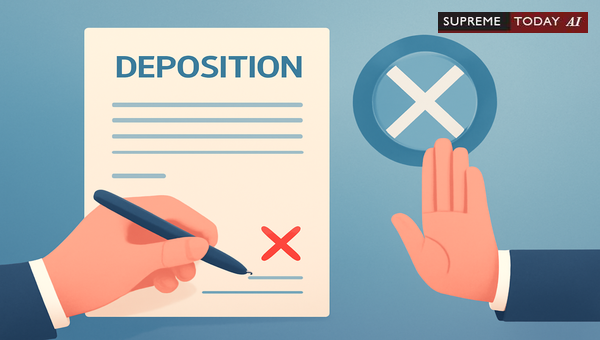
Consequences If Doesn't Sign
In legal proceedings, depositions play a crucial role in gathering witness testimony. But what happens when the — the person giving the testimony—refuses or fails to sign the sheet? This is a common concern in courtrooms, inquiries, and trials. What are the consequences when a does not sign the sheet? Generally, the does not become automatically invalid or inadmissible, but its treatment depends on procedural compliance and context. This post explores the nuances, drawing from judicial precedents and statutory provisions.
Understanding Depositions and the Role of Signatures
A is a , often recorded verbatim, read back to the witness, and certified by the presiding officer. The 's signature serves to authenticate that the recorded statement accurately reflects their testimony. However, courts have clarified that this signature is not always mandatory for . 1999 0 Supreme(Ori) 302
The primary purpose of the signature is confirmation of accuracy, but proper recording, reading over to the , and certification by the officer suffice in many cases. 1966 0 Supreme(AP) 281 As one ruling notes, the absence of signature on sheets is not fatal if the is otherwise properly recorded and certified by the Presiding Officer. 1999 0 Supreme(Ori) 302
Legal Framework: Section 80 of the Evidence Act
Under , a applies to documents purporting to be signed by a Judge or Magistrate as records of evidence. Notably, this presumption hinges on the officer's signature, not necessarily the 's. 1966 0 Supreme(AP) 281 1985 0 Supreme(Gau) 21
Courts presume such records are genuine and correctly made if procedural requirements are met. Even without the 's signature, if the was read over and certified, it retains evidentiary value. 1985 0 Supreme(Gau) 21 This provision underscores that the law prioritizes procedural safeguards over the witness's ink.
Judicial Views on Unsigned Depositions
Indian courts have consistently held that non-signing does not invalidate a outright, provided key steps were followed:- Proper recording of the statement.- Reading it back to the for verification.- Certification by the presiding officer.- Recording any refusal to sign, along with reasons. 1999 0 Supreme(Ori) 302 1919 0 Supreme(Cal) 57
In one case, the court emphasized, non-signature does not automatically invalidate depositions if objections are noted and procedures observed. 1919 0 Supreme(Cal) 57 The focus remains on whether the record truly captures the witness's statement.
Impact on Evidentiary Weight
While may hold, the lack of signature can affect credibility and weight. Opposing parties may challenge it during or trial, arguing potential inaccuracies. Refusal might even draw in criminal matters. 1987 0 Supreme(Ker) 345 1999 0 Supreme(Ori) 302
For instance, in contexts like or prior testimonies, courts caution on weight without : the weight to be attached to the statements contained in the dying , they should appreciate that the statements of the had not been tested by .
Special Contexts and Exceptions
Election Petitions and Statutory Rules
In election disputes under , witness signatures are explicitly not required. 1985 0 Supreme(Gau) 21 Similarly, and some criminal proceedings prioritize certification over signatures. 2017 0 Supreme(Ker) 645 2022 0 Supreme(Ori) 676
Document Signatures in Related Contexts
Analogous principles apply to other documents, like wills. Proving a signature requires witness identification: To prove the sign the witness has to identify the signatures on the document.
Nikhil Nanda vs State of NCT of Delhi
2021 Supreme(Online)(DEL) 1198 Unsigned or unproven documents risk rejection, but depositions benefit from officer certification.Prior Depositions Under
For using earlier depositions, conditions include the witness's unavailability and prior opportunity. Unsigned ones may still qualify if issues align. 2024 0 Supreme(P&H) 769
Practical Consequences and Risks
- Upheld: Courts act on unsigned depositions with procedural compliance. 1999 0 Supreme(Ori) 302
- Challenges Possible: Non-signature invites scrutiny; parties can seek recall or re-recording if crucial. 2022 0 Supreme(Ori) 676 2022 0 Supreme(Ori) 672
- Penalties in Criminal Cases: Refusal might lead to or penalties. 2017 0 Supreme(Ker) 645
- Suppression of Facts: Litigants concealing material facts, including details, face rejection: applicants have no respect to order of this Court... suppressing material facts. 2022 0 Supreme(All) 574
In custody disputes, tutored or shaky depositions raise credibility flags: Upon going through the it does not seem that it is an independent but tutored. 2008 0 Supreme(All) 229 2008 0 Supreme(All) 216
Recommendations for Legal Practitioners
To mitigate risks:1. Record Refusals: Note the 's refusal and reasons explicitly. 1999 0 Supreme(Ori) 3022. Verify Promptly: Read over immediately and certify thoroughly.3. Seek Alternatives: File for recall if testimony is pivotal.4. Assess Context: In statutes mandating signatures, comply strictly.
Parties should verify depositions post-recording to address issues swiftly.
Key Takeaways
- Non-signing by a generally does not invalidate a if properly handled. 1999 0 Supreme(Ori) 302
- Section 80 Evidence Act presumes authenticity via officer certification. 1966 0 Supreme(AP) 281
- Weight may suffer, but holds with safeguards.
- Always prioritize procedural compliance to avoid challenges.
Disclaimer: This article provides general information based on judicial precedents and is not legal advice. Consult a qualified lawyer for case-specific guidance, as outcomes vary by jurisdiction and facts.
In summary, while a 's signature adds assurance, its absence is not fatal under typical circumstances. Courts emphasize substance—accurate recording—over form. Stay procedural, and your remains a viable tool in justice's arsenal.
#DepositionLaw, #EvidenceAct, #LegalProcedures












