


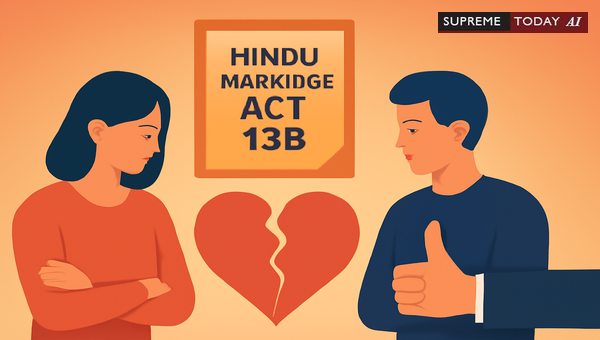
Can Courts Waive the 13B(2) Waiting Period in Divorce Cases with No Reconciliation?
In the realm of family law in India, under the , 1955 (HMA) offer a streamlined path for couples seeking to part ways amicably. However, a common hurdle is the six-month between the under (2). Many couples wonder: Waive the Second Motion of 13B on Settling the Factors no Reconciliation and Not Able to Rejoin? The short answer is yes—courts often exercise discretion to waive this period when reconciliation is impossible and all disputes are settled. This blog explores the legal framework, key factors, landmark judgments, and practical insights, drawing from established precedents.
Note: This is general information based on judicial trends and is not specific legal advice. Consult a qualified lawyer for your case.
Understanding of the
allows divorce by mutual consent, requiring parties to file a (first motion) and wait at least six months before the second motion, during which are encouraged. The provision reads that the court shall... adjourn the proceeding for the purposes of reconciliation, but interpretations have clarified its flexible nature.
The waiting period aims to prevent hasty decisions, yet it is not but . Courts can waive it under exceptional circumstances, prioritizing justice over rigid timelines. This discretion stems from evolving jurisprudence recognizing irretrievable breakdowns of marriage. 2022 0 Supreme(P&H) 333 2022 1 Supreme 723
Is the Truly ?
No. Multiple rulings affirm that the six-month period under (2) is , not . In , the Court held: the of at least six months mentioned in (2) of the was not but and that it would be open to the Court to exercise its discretion to waive the requirement of (2). 2023 0 Supreme(P&H) 2956 2023 0 Supreme(P&H) 1632
Similarly, Amit Kumar v. Suman Beniwal reiterated this, stating the period is not but , and it is open to the Court to exercise its discretion in the facts and circumstances of each case. 2024 0 Supreme(All) 482 2022 0 Supreme(All) 946
This principle allows waiver applications as early as one week after the first motion, provided reasons like failed reconciliation are furnished. 2023 0 Supreme(P&H) 2956
Key Factors Courts Consider for Waiver
Courts evaluate circumstances holistically. Illustrative factors from precedents include:
- No possibility of reconciliation: Long separation, mutual acknowledgment of irretrievable breakdown, and failed mediation efforts. For instance, parties separated since 2020 with no reunion prospects qualify. 2022 0 Supreme(P&H) 333 2022 1 Supreme 723
- Mutual settlement of disputes: All issues like maintenance, alimony, stridhan, and child custody resolved amicably. 2022 0 Supreme(P&H) 333
- Duration of separation and marriage: Lengthy separations (e.g., over 18 months) or short cohabitation periods weigh in favor. For exercise of the discretion to waive the ... the Court would consider... (i) the length of time for which the parties had been married; (ii) how long the parties had stayed together as husband and wife. 2024 Supreme(Online)(Telangana) 48229 2024 Supreme(Online)(Telangana) 48924 2022 0 Supreme(All) 733
- Genuine consent and desire to move on: Parties expressing inability to rejoin and willingness to end suffering. 2024 0 Supreme(All) 482
- Absence of children or settled custody: No ongoing disputes prolonging agony. 2023 0 Supreme(P&H) 1632
In one case, parties married in 2018, separated in January 2020 (no children), and after failed reconciliation, the court waived the period as pragmatic given circumstances. 2023 0 Supreme(P&H) 2956
Landmark and High Court Judgments
(2017)
The Apex Court laid foundational guidelines: Waiver if statutory period partly elapsed, failed, differences genuinely settled, and waiting prolongs suffering. 2022 0 Supreme(P&H) 333 2022 0 Supreme(P&H) 73
Amit Kumar v. Suman Beniwal (2022)
Factors are illustrative, not exhaustive. Emphasized circumstances where reconciliation is impossible and parties have settled all issues. Courts must record findings on no reconciliation likelihood. 2024 0 Supreme(All) 482
Other Precedents
- In a matter, after 11 years apart and failed mediation, waiver granted as no purpose would be served by subjecting parties to the same process again. 2022 0 Supreme(All) 733
- set aside a rejection, remanding for fresh consideration per factors. 2022 0 Supreme(All) 946
- allowed revision, preponing second motion where disputes were settled post-separation. 2022 0 Supreme(P&H) 73
These cases uniformly stress judicial discretion for pragmatic relief. 2023 0 Supreme(P&H) 1632
Applying to Cases with No Reconciliation and Mutual Settlement
Consider a scenario: Parties separated since , marriage irretrievably broken, all claims (maintenance, alimony) settled via joint statement, and explicit avowal of inability to rejoin. Courts typically waive here, as:
- Long separation negates reconciliation hopes. 2022 1 Supreme 723
- Mutual consent and documentation prove genuineness. 2022 0 Supreme(P&H) 333
- Prolonging wait causes undue hardship. 2024 0 Supreme(All) 482
have allowed waivers post-18 months separation with no kids, deeming it exceptional. 2023 0 Supreme(P&H) 1632
Exceptions and Limitations
Waiver isn't automatic. Courts deny if:- Reconciliation seems viable (e.g., recent filing, ongoing efforts). 2022 1 Supreme 723- Disputes unresolved (e.g., pending maintenance claims). 2022 0 Supreme(All) 733- Insufficient evidence of breakdown. Genuine efforts must precede waiver; courts record satisfaction explicitly.
Practical Recommendations for Couples
- File soon after first motion with affidavits on separation, settlement, and no-reconciliation stance.
- Provide proof: Separation date, mediation failure, settlement deed.
- Request court to note irretrievable breakdown and suffering prolongation.
- Maintain separate documentation for appeals.
Approach Family Court pragmatically, citing Amardeep Singh factors. 2023 0 Supreme(P&H) 2956
Conclusion and Key Takeaways
Courts increasingly waive (2)'s waiting period when no reconciliation is possible, disputes settled, and parties can't rejoin—favoring closure over formality. Backed by wisdom, this discretion brings relief in settled breakdowns.
Key Takeaways:- Period is ; waiver via discretion. 2022 0 Supreme(P&H) 333- Focus on separation length, settlement, no-reunion intent. 2022 1 Supreme 723- Cite Amardeep Singh, Amit Kumar for success. 2024 0 Supreme(All) 482- Always document thoroughly.
For personalized guidance, consult a family law expert. Judicial trends evolve, but these principles endure.
References:1. 2022 0 Supreme(P&H) 333: Amardeep Singh factors.2. 2022 1 Supreme 723: Discretion on no reconciliation.3. 2024 0 Supreme(All) 482: nature.4. 2023 0 Supreme(P&H) 2956, 2023 0 Supreme(P&H) 1632: Waiver timelines.5. 2024 Supreme(Online)(Telangana) 48229, etc.: Additional factors.
#DivorceWaiver #HMA13B #MutualConsentDivorce












