


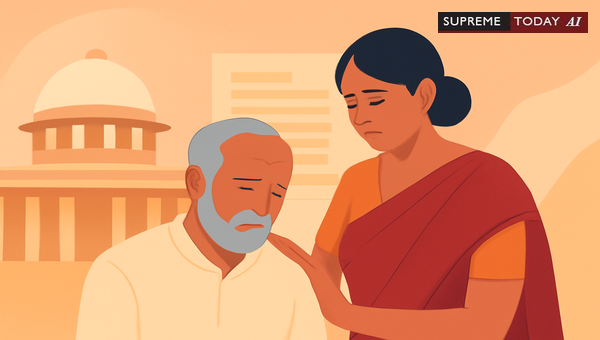
Can a Widowed Daughter-in-Law Secure for Her Deceased Father-in-Law?
In the realm of Indian employment law, compassionate appointments serve as a vital lifeline for families reeling from the sudden loss of a breadwinner. But what happens when the claimant isn't a direct child, but a widowed daughter-in-law? The question arises: Can a widowed daughter-in-law be appointed in place of her deceased father-in-law under rules?
This issue touches on evolving definitions of 'family,' , and judicial interpretations. While rules traditionally prioritize spouses, sons, and unmarried daughters, courts have progressively expanded eligibility. This blog post delves into key precedents, eligibility criteria, and practical advice, drawing from High Court rulings. Note: This is general information based on precedents and not specific legal advice. Consult a lawyer for your case.
Understanding Compassionate Appointments in India
Compassionate appointments are a government scheme to provide immediate employment to a dependent family member of a deceased public servant, mitigating financial hardship. Governed by rules like those from the , eligibility hinges on 'family' definitions and proven dependency.
Traditionally, 'family' includes the spouse, sons, and unmarried daughters. However, courts have scrutinized exclusions, especially for widowed daughters-in-law, questioning their rationality in modern contexts.
Legal Context: Redefining 'Family' for Widowed Daughters-in-Law
The Full Bench of the has clarified that while a widowed daughter-in-law may not fit the strict traditional definition of family, she qualifies for compassionate appointments due to . The court noted: The omission of the widowed daughter-in-law from the definition of family is irrational and arbitrary, especially when a widowed daughter is included. 2021 0 Supreme(All) 1153
This progressive stance recognizes that a widowed daughter-in-law remains part of her husband's family post-widowhood. Courts have ruled she should not be compelled to return to her parental home, affirming her dependency ties.
Supporting this, precedents emphasize the father-in-law's moral and legal duty to maintain her. As held: It is a settled legal position that father-in-law has moral responsibility to maintain the widowed daughter-in-law. 2021 0 Supreme(Bom) 768 This obligation strengthens claims when the father-in-law, as the deceased employee, was the primary supporter.
Key Eligibility Criteria for Widowed Daughters-in-Law
Courts have outlined clear grounds for eligibility:
: Proven need is paramount. If the widowed daughter-in-law relied on the father-in-law's income, especially with an unemployed or deceased husband, she qualifies. Authorities must reconsider rejections based solely on marital status. 2023 0 Supreme(All) 1257 2025 0 Supreme(Raj) 1540
Comparison with Widowed Daughters: No preferential right exists for a widowed daughter living in her father's house over a daughter-in-law in the father-in-law's home. Financial necessity trumps living arrangements. 2025 0 Supreme(AP) 151
Neelam Mishra VS State of U. P. - Allahabad
Evolving Views on Dependency: Marriage doesn't sever dependency. Courts challenge outdated norms excluding married daughters, urging flexible interpretations aligned with social realities. 2024 0 Supreme(AP) 1447 2023 0 Supreme(All) 316
In one ruling: The fact that her father is well placed and can easily support his widowed daughter, is also not material... when such daughter claims maintenance from her father-in-law as a widowed daughter-in-law. 2013 0 Supreme(Bom) 1607
Landmark Judicial Precedents
has been pivotal:
Ruled in favor of widowed daughters-in-law as legitimate claimants post-father-in-law's death, due to dependency. 2008 0 Supreme(All) 2677
Affirmed their family status for benefits. 2011 0 Supreme(All) 231 2022 0 Supreme(All) 293
echoed this, preventing disadvantage compared to widowed daughters.
Other cases direct reconsideration:
Authorities must assess dependency over kinship alone. 2025 0 Supreme(Telangana) 632 2023 0 Supreme(Telangana) 114
Unmarried daughters depend on fathers by law, but this extends analogously. 2019 0 Supreme(Del) 1723
These rulings promote inclusivity, with courts issuing orders to prevent arbitrary exclusions. 2022 0 Supreme(Chh) 504 2024 0 Supreme(Cal) 593
Practical Steps for Applying
If pursuing a claim:
Gather Evidence: Document , such as bank statements, affidavits from family, and proof of the father-in-law's role as provider.
Highlight Ties: Emphasize continued residence in the father-in-law's home and moral/legal maintenance duties. 2021 0 Supreme(Bom) 768
Reference Precedents: Cite Allahabad and Chhattisgarh rulings to counter objections. 2011 0 Supreme(All) 231 2021 0 Supreme(All) 1153
File Promptly: Applications must typically be within time limits; delays may bar claims.
Seek Judicial Review: If denied, approach the High Court via , as many successes stem from such challenges.
Broader Social and Legal Perspectives
Indian courts are shifting from rigid family definitions to dependency-focused approaches. Excluding widowed daughters-in-law or married daughters based on status alone is deemed outdated. As one analysis notes, dependency should be the primary criterion, urging evolution in rules. 2023 0 Supreme(All) 1257 2023 0 Supreme(All) 316
This aligns with , ensuring schemes alleviate genuine hardship without discrimination.
Conclusion and Key Takeaways
Generally, a widowed daughter-in-law may be entitled to after her father-in-law's death, provided dependency is established. Judicial precedents from Allahabad, Chhattisgarh, and others affirm this, prioritizing financial need over strict family labels.
Key Takeaways:- Dependency trumps marital status. 2021 0 Supreme(All) 1153- Father-in-law's maintenance duty bolsters claims. 2021 0 Supreme(Bom) 768- Courts favor reconsideration of rejections. 2023 0 Supreme(All) 1257- Prepare strong evidence and cite rulings for success.
For personalized guidance, consult a legal expert. Stay informed on evolving precedents to navigate these compassionate schemes effectively.
References:- 2011 0 Supreme(All) 231 2008 0 Supreme(All) 2677
2021 0 Supreme(All) 1153
2022 0 Supreme(All) 293- 2021 0 Supreme(Bom) 768 2013 0 Supreme(Bom) 1607 2025 0 Supreme(AP) 151
Neelam Mishra VS State of U. P. - Allahabad
2023 0 Supreme(All) 1257 2025 0 Supreme(Raj) 1540 2024 0 Supreme(AP) 1447 2023 0 Supreme(All) 316 2024 0 Supreme(Cal) 593 2025 0 Supreme(Telangana) 632 2023 0 Supreme(Telangana) 114 2019 0 Supreme(Del) 1723 2022 0 Supreme(Chh) 504 #CompassionateAppointment #WidowedDaughterInLaw #IndianLaw














