


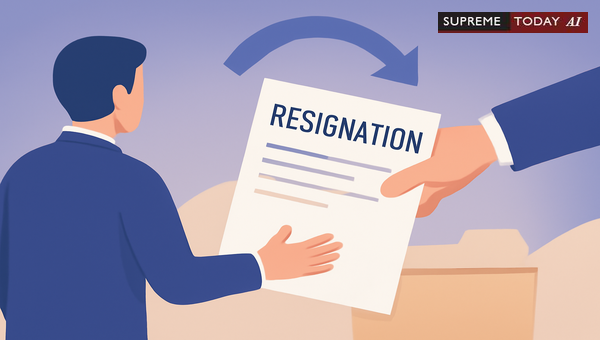
Can Be Withdrawn After Acceptance? A Comprehensive Legal Guide
In today's fast-paced job market, impulsive decisions about leaving a job are common. But what happens when you submit your and later regret it? A frequent question arises: once accepted, can it be cancelled subsequently? This is a critical employment law issue that affects both employees and employers across India.
Generally, once a is accepted by the , it becomes , terminating the employment relationship. However, nuances exist, particularly before acceptance or under specific rules. This blog post delves into the legal principles, supported by key judgments, exceptions, and practical advice. Note: This is general information, not legal advice. Consult a lawyer for your specific situation.
The Core Legal Principle: Irrevocability Upon Acceptance
The foundational rule in Indian employment law is that is a by the employee. Upon acceptance by the employer or , it severs the , making it final and binding. As stated in a key judgment, the act of resigning office is one which severs the link of the resignor with his office and terminates his tenure. 2002 2 Supreme 391
Another ruling reinforces: Once the is offered and the same is duly accepted by the , is complete & . 2024 3 Supreme 276 2002 2 Supreme 391. Similarly, once an acceptance of is communicated, the becomes .
This principle ensures stability in employment relations, preventing disruptions after formal acceptance.
Right to Withdraw Before Acceptance
Prior to acceptance, employees typically retain the absolute right to withdraw their . The has clarified: in the absence of a legal, contractual or constitutional bar, a prospective can be withdrawn at any time before it becomes effective. 2002 2 Supreme 391 2024 3 Supreme 276
This '' (opportunity to repent) allows employees to reconsider without consequences. For instance, in one case, a headmistress withdrew her before it became effective, and the court upheld her position since the withdrawal preceded the effective date. 2024 0 Supreme(Cal) 1253
Another example involved a teacher who withdrew before acceptance, entitling her to continue employment: A prospective can be withdrawn at any time before it comes into effect. 2003 0 Supreme(Mad) 1409
Key Timeline Considerations
- Submission: tendered.
- Withdrawal Window: Anytime before acceptance/communication.
- Acceptance: Makes it binding, unless exceptional rules apply.
Post-Acceptance: Why Withdrawal is Generally Not Permissible
Once accepted, the ends. Once the of an employee is accepted there remains no between employee and employer and employee cannot claim for withdrawal or reinstatement in the post. 2006 7 Supreme 771 1990 0 Supreme(SC) 391
In a school teacher's case under , the court affirmed: it is a settled proposition of law that once a letter of is accepted, it cannot be withdrawn and the withdrawal of is permissible only before its acceptance. 2017 0 Supreme(Del) 4399
Even acceptance of terminal benefits can indicate of challenge rights, as seen where an employee accepted benefits post-, barring later claims. 2024 0 Supreme(Bom) 716
Exceptions and Special Circumstances
While the general rule holds, exceptions arise under specific conditions:
Explicit Rules or Statutes: Some service rules permit post-acceptance withdrawal. For government servants, under , withdrawal may be allowed within a reasonable time, drawing from precedents like . 2023 0 Supreme(Mad) 2095
Conditional or Provisional Acceptance: If acceptance is conditional (e.g., repayment of dues or securing another post), and conditions fail, withdrawal may be valid. In one case, conditional acceptance on was not complete, allowing withdrawal. 2013 0 Supreme(Gau) 145 Another involved a conditional for promotion in the same judgeship, treated as withdrawable post-acceptance due to exam cancellation. 2009 0 Supreme(UK) 263
Coercion, Fraud, or Delay: Undue delay in acceptance or coercion can invalidate it. Oral acceptance is possible, not requiring writing: The word 'communicate' does not mean communication in writing.
T. RAVINDRAN VS PRESIDING OFFICER, AND THE MANAGEMENT OF POLLACHI CO-OPERATIVE HOUSE CONSTRUCTION SOCIETY, POLLACHI
Reasonable Time for Withdrawal: In sympathetic cases, like a police constable facing mental agony, courts direct consideration of withdrawal requests. 2023 0 Supreme(Mad) 2095
Practical Case Studies from Judgments
Music Teacher Dispute: accepted by school committee; withdrawal rejected as post-acceptance. Court emphasized child safety alongside irrevocability. 2017 0 Supreme(Del) 4399
Warehousing Corporation Employee: Conditional release order quashed; withdrawal upheld due to unfulfilled conditions. 2013 0 Supreme(Gau) 145
These illustrate how facts influence outcomes, always hinging on acceptance timing and rules.
Recommendations for Employers and Employees
For Employees:
- Withdraw promptly before acceptance.
- Document communications clearly.
- Check service rules for withdrawal provisions.
For Employers:
- Communicate acceptance swiftly and in writing.
- Specify rules on /withdrawal in policies.
- Act reasonably; arbitrary refusals may invite challenges.
Seek legal advice tailored to your contract, sector (private/government), and rules.
Conclusion and Key Takeaways
In summary, once accepted cannot generally be cancelled subsequently. The right to withdraw exists primarily before acceptance, with limited exceptions for rules, conditions, or equity. Supported by precedents like 2002 2 Supreme 391, 2006 7 Supreme 771, and others, this principle promotes certainty.
Key Takeaways:- Before Acceptance: Freely withdrawable. 2002 2 Supreme 391- After Acceptance: , barring exceptions. 2024 3 Supreme 276 2006 7 Supreme 771- Exceptions: Rules, conditions, or coercion. 2023 0 Supreme(Mad) 2095 2013 0 Supreme(Gau) 145- Always review specific employment terms.
This evolving area underscores the need for clear policies. Stay informed, act thoughtfully, and consult professionals for personalized guidance.
References include judgments such as 2002 2 Supreme 391, 2024 3 Supreme 276, 2006 7 Supreme 771, 1990 0 Supreme(SC) 391, 2024 0 Supreme(Bom) 716, 2024 0 Supreme(Cal) 1253, 2017 0 Supreme(Del) 4399, 2013 0 Supreme(Gau) 145, 2003 0 Supreme(Mad) 1409, 2023 0 Supreme(Mad) 2095, 2009 0 Supreme(UK) 263, T. RAVINDRAN VS PRESIDING OFFICER, AND THE MANAGEMENT OF POLLACHI CO-OPERATIVE HOUSE CONSTRUCTION SOCIETY, POLLACHI












