


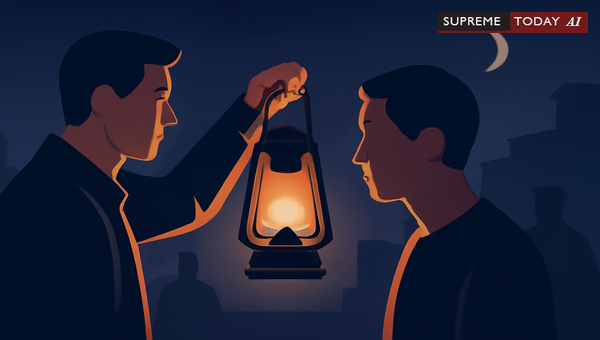
Witness Identification in Low Light: What Say
Nighttime crimes pose unique challenges for the justice system, particularly when it comes to . In dimly lit conditions, can a witness reliably identify an accused person? This question often hinges on the source and sufficiency of light, prior acquaintance with the accused, and the consistency of . Courts in India have issued several judgments—commonly referred to as 'light judgments'—addressing these issues, balancing the need for convictions with the principle of .
If you're searching for sources about light judgments, this post breaks down key rulings, conditions for reliable identification, and scenarios leading to . These precedents are crucial for lawyers, investigators, and anyone involved in criminal trials.
Main Legal Findings on Low-Light Identification
have consistently held that identification under dim or lantern light may be possible under specific circumstances. However, the absence of documented light sources, especially in the () or investigation records, can create fatal doubts, often resulting in acquittals. Three primary judgments illustrate this nuanced approach:
- Dim or lantern light can enable reliable identification if witnesses are accustomed to such conditions, the accused are previously known, and faces are uncovered.
- Faint light suffices when the accused were known beforehand. 2021 0 Supreme(Pat) 163
- No mention of light in , combined with delayed (), leads to and . 2025 Supreme(Online)(Pat) 737
These rulings emphasize that light evidence must be scrutinized for consistency. Discrepancies or omissions undermine the prosecution's case.
Sufficiency of Lantern or Faint Light: When Identification Holds
Courts have upheld identifications in low-light settings where contextual factors bolster reliability. For instance, in one case, 'Light shed by the lantern was enough to enable the witness to identify the culprits under the circumstances.'
This was supported by:
- Witnesses accustomed to lantern light due to lack of electrification.
- Accused with uncovered faces.
- Long-standing acquaintance due to family feuds.
Similarly, 'possibility of identification in faint light or where source of light was not disclosed is possible, as the accused persons were known to the witnesses from before.'2021 0 Supreme(Pat) 163
Additional sources reinforce this. In a murder case, eye-witness testimony under street light was considered, though one witness omitted the source initially. The court noted, 'We have already discussed about the source of light. Even with regard to the source of light, there is no worth believable material placed by the prosecution that in the said street light, P.Ws.2 and 3 witnessed the incident during that period...'2018 0 Supreme(Kar) 648 Despite doubts, holistic evidence sometimes sustains convictions.
In another ruling, prompt lodging and ample spot light supported identification, dismissing minor discrepancies: 'Merely because I.O. had not shown source of light in —Does not mean that there was no source of light there.'2015 0 Supreme(All) 50
Key factors for sufficiency:- Prior knowledge of accused.- Witness familiarity with lighting (e.g., rural lantern use).- Consistent statements from stage.
When Absent or Inconsistent Light Evidence Leads to
Conversely, gaps in light documentation often trigger the . A pivotal judgment states: 'there was no description of source of light mentioned in the ... nor seized any equipment for source of light and here it is doubtful that how the witnesses claim to identify the accused/appellant in the dark night without any source of light.'2025 Supreme(Online)(Pat) 737 Only select witnesses mentioned light at trial, not during investigation, alongside delayed , leading to: 'the prosecution has not established its case beyond ... the accused/appellant is hereby given the .'2025 Supreme(Online)(Pat) 737
Other cases echo this scrutiny:
- 'As already observed above, the question whether there was sufficient light to identify the culprits and if so, what was the source of light is the crucial aspect in this case. PW1 did not speak anything as to the source of light.'2023 Supreme(Online)(TEL) 2205 2023 Supreme(Online)(TEL) 2148
- In a kidnapping appeal, torches used in police operations were not seized or detailed: 'The statement regarding the source of light is as follows:- He denied the suggestions... The torches used in the operation were not seized.'2022 0 Supreme(All) 1057
- in testimony, like adding torch and lantern light not seized by IO, raised doubts. 2017 0 Supreme(All) 2651
- A small kerosene lamp with no oil was deemed implausible: 'Investigating Officer and other witnesses have admitted that no kerosene oil was available in that lamp.'2016 0 Supreme(Jhk) 482
Inconsistencies in site plans or omissions are red flags. For example, 'This source of light, therefore, cannot be a genuine source of light.' referring to a distant bulb.
Common pitfalls leading to :- No mention of light source.- Failure to seize light equipment.- Delayed or inconsistent witness statements.- Absence in or . 2023 Supreme(Online)(CAL) 10396
Interrelation with Broader Identification Principles
Light evidence doesn't stand alone—it's intertwined with prior acquaintance, timely , and procedural safeguards. Even known accused benefit from doubt without corroboration.
2025 Supreme(Online)(Pat) 737
Courts test claims holistically. Self-serving trial disclosures post-investigation are suspect, as in cases where PW-1 improved on light sources without seizure. 2017 0 Supreme(All) 2651 In murder appeals, unexplained delays in examination and planted witness possibilities compound light doubts. 2018 0 Supreme(Kar) 648
Exceptions, Limitations, and Practical Recommendations
No blanket rule exists:- Light sufficiency fails without familiarity or compliance (e.g., timely ). 2025 Supreme(Online)(Pat) 737- applies in dilemmas, even with some eyewitness support.
Recommendations for stakeholders:- Prosecution: Document light sources in , seize equipment, ensure consistent statements, conduct prompt .- Defense: Cross-examine on omissions, delays, gaps; invoke precedents for doubt.- Investigators: Record nature/source in , verify via mahazar. 2023 Supreme(Online)(CAL) 10396
Key Takeaways and References
- Low light may suffice with prior knowledge and consistency, but omissions create doubt.
- Always probe: Was light documented? Seized? Consistent?
References:1.
: Lantern light conditions and .2. 2021 0 Supreme(Pat) 163: Faint light with prior acquaintance.3. 2025 Supreme(Online)(Pat) 737: for absent light evidence.4. Additional: 2023 Supreme(Online)(TEL) 2205, 2018 0 Supreme(Kar) 648, 2015 0 Supreme(All) 50, 2017 0 Supreme(All) 2651, 2016 0 Supreme(Jhk) 482, 2023 Supreme(Online)(CAL) 10396, 2022 0 Supreme(All) 1057,
Disclaimer: This post provides general insights based on public judgments and is not legal advice. Consult a qualified attorney for case-specific guidance. Court interpretations may vary.
#WitnessIdentification #LowLightCases #CriminalLaw















