Searching Case Laws & Precedent on Legal Query.....!
Scanned Judgements…!



Searching Case Laws & Precedent on Legal Query.....!
Scanned Judgements…!
Working Women and Maintenance Responsibilities - Working women are also liable for the maintenance of their children, regardless of their employment status or earning capacity. The law emphasizes that the obligation to maintain children does not automatically transfer solely to the father if the mother is earning sufficiently. Section 125 Cr.P.C. is a social justice measure enacted to protect women and children from destitution, and both parents have a duty to contribute to the child's upbringing ["2024 0 Supreme(Kar) 46"] ["2024 0 Supreme(P&H) 1296"] ["2025 0 Supreme(Ker) 3250"] ["2024 0 Supreme(Jhk) 951"] ["2023 0 Supreme(Cal) 931"].
Shared Responsibility of Parents - The responsibility to maintain children is a shared obligation of both parents, including working mothers. Even if the woman is earning, the father/family cannot shirk their duty to provide support, especially if the father has sufficient means. The law and judicial rulings affirm that the burden of maintaining and educating children rests equally on both parents ["2024 0 Supreme(P&H) 1296"] ["2025 0 Supreme(Ker) 3250"] ["2024 0 Supreme(P&H) 1193"].
Legal Provisions and Social Justice - The constitutional provisions (Articles 15(3) and 39) and statutes like the Family Law Act and Section 125 Cr.P.C. aim to ensure social justice for women and children. They recognize the changing status of women—who are now often earning and self-sufficient—but still uphold the duty of the father to provide for children, especially when he has adequate financial means ["2024 0 Supreme(Kar) 46"] ["2025 0 Supreme(Ker) 3250"] ["R.Prabhu vs The Appellate Authority under Maintance and - Madras"].
Maintenance of Children in Cases of Earning Women - The law does not exempt working women from the duty of maintenance; rather, it emphasizes that both parents share this responsibility. Even if a woman is earning, the father must contribute to the child's expenses, including education, medical costs, and general upkeep ["2024 0 Supreme(P&H) 1296"] ["2024 0 Supreme(Jhk) 951"].
Conclusion - The legal framework and judicial precedents establish that working women are also responsible for maintaining their children, and the obligation of support is a shared duty that cannot be solely placed on the mother or father based on employment status. The law aims to protect the welfare of children and ensure that both parents contribute according to their capacity ["R.Prabhu vs The Appellate Authority under Maintance and - Madras"] ["2023 0 Supreme(HP) 331"].
References:["R.Prabhu vs The Appellate Authority under Maintance and - Madras"]["2023 0 Supreme(HP) 331"]["2024 0 Supreme(Kar) 46"]["2024 0 Supreme(P&H) 1296"]["2025 0 Supreme(Ker) 3250"]["2024 0 Supreme(Jhk) 951"]["2023 0 Supreme(Cal) 931"]
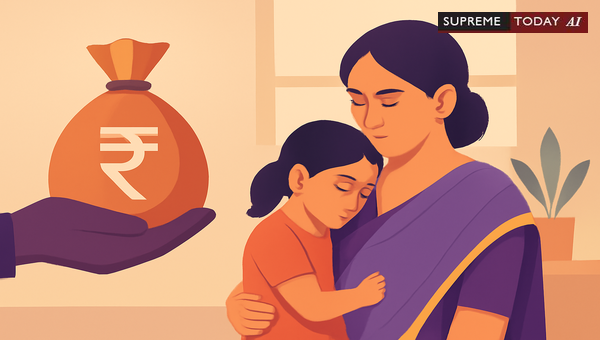
In modern India, where dual-income households are increasingly common, a pressing question arises: Is a working woman also partially liable for the maintenance of her children? This query often surfaces amid divorce proceedings, custody battles, or financial disputes between separated parents. Many assume the father's duty is absolute, but Indian courts have evolved to recognize joint parental responsibility, especially when both parents are earning. This blog delves into the legal framework, key statutes, and judicial precedents to clarify this obligation, helping families navigate child welfare amid separation.
Note: This article provides general information based on established laws and cases. It is not legal advice; consult a qualified lawyer for your specific situation.
Under Indian law, maintenance for minor children is a of both parents. A working mother cannot evade responsibility simply because the father earns more or holds traditional primary duties. Courts determine the quantum proportionately based on each parent's income and capacity. This applies across key laws like , (HAMA), and , 1955 (HMA). 2000 3 Supreme 520 2017 0 Supreme(Ker) 1162
explicitly states: A legitimate or illegitimate child may claim maintenance from his or her father or mother so long as the child is a minor. 2000 3 Supreme 520 This duty covers essentials like food, clothing, residence, education, and medical needs, independent of parental means but scaled to them. Evolving precedents affirm: maintenance to the children has now been a joint responsibility of both the parents if both are earning. 2017 0 Supreme(Ker) 1162
reinforces this as a measure of social justice to protect women and children from destitution. As noted, is a measure of social justice and is specially enacted to protect women and children. 2024 0 Supreme(Chh) 172 Children can claim from either parent, ensuring no one escapes liability due to the other's affluence.
The amount isn't fixed; it's proportionate to incomes. Education expenses are typically the father's domain but shared if the mother earns sufficiently: If the wife is working and earning sufficiently, the expenses may be shared proportionately between the parties. 2023 7 Supreme 322 2023 0 Supreme(Mad) 238 2023 0 Supreme(Mad) 231
Living expenses follow suit: The living expenses of the child would include expenses for food, clothing, residence, medical expenses, education of children... Albeit, it should be a reasonable amount. 2023 7 Supreme 322
A landmark case illustrates this. For employed parents, maintenance was set at Rs. 3,000 per child, split 2:1 (husband:wife) reflecting salary ratios: If we take approximate salary of husband is twice as much as that of the wife, they are bound to contribute... in the proportion of 2:1. 2000 2 Supreme 653 This prevents overburdening one parent and promotes equity.
While the father's responsibility is often primary—The responsibility of the father, being primary in nature, fathers are duty bound to maintain the minor child/children... 2023 0 Supreme(Mad) 238 2023 0 Supreme(Mad) 345 2023 0 Supreme(Mad) 231—it doesn't absolve a working mother. Courts reject the notion that how affluent mother may be it is the obligation only of the father to maintain the minor. 2000 2 Supreme 653 Even if the mother has custody, her earnings are factored in; she can't claim full maintenance without contributing. 2017 0 Supreme(Ker) 1162
This holds irrespective of custody or the mother's independence, aligning with constitutional goals under and 39 for social justice. 2023 0 Supreme(Mad) 238
applies universally, allowing claims from either parent. HMA Section 26 and HAMA extend to Hindus, with similar principles in other personal laws. For instance, under Islamic law, fathers have primary duties, but statutes like CrPC override for children. 1997 6 Supreme 523 2019 0 Supreme(All) 791
under HMA Section 24 or equivalents in the Indian Divorce Act (Section 37), Parsi Marriage Act (Section 39), or Special Marriage Act (Sections 36/38) also considers joint liability. Proceedings under CrPC and HMA operate independently: Both proceedings under Cr.P.C. and Act of 1955 operates in different sphere. 2019 0 Supreme(All) 791
In maintenance claims, proof of neglect and inability is key, but for children, parental capacity trumps.
To ensure fair outcomes:- Disclose Incomes: File affidavits in court for accurate proportionate fixation. 2023 7 Supreme 322- Seek Specific Orders: In matrimonial cases, apply under HMA Section 26 or CrPC Section 125, proactively disclosing earnings to avoid disputes.- Interim Relief: Courts prioritize child welfare, granting aid, but final awards balance both parents.- Negotiate Splits: For 2:1 income ratios, agree on contributions; enforce via contempt if needed.- Multiple Forums: Pursue CrPC and HMA claims simultaneously without bar. 2017 0 Supreme(Mad) 698
Delays harm children, so expedite via . 2017 0 Supreme(Mad) 698
Understanding these nuances empowers separated parents to prioritize children equitably. For tailored guidance, reach out to a family law expert. Stay informed on evolving precedents to protect your family's future.
#ChildMaintenance #FamilyLawIndia #WorkingMomsLaw


However, even if such an order is issued, it should be with a clear finding about each workman and the number of working days by referring to the period of 24 calendar months. ... The Assistant Engineer, Generation and Maintance, North II Division, Tamil Nadu Electricity Generation and Distribution Corporation, Dindigul. ... The Assistant Engineer, Generation and Maintance, Neruji Nagar Division, Tamil Nadu Electricity Generation and Distribution Corporation, Dindigul. ... The Assistant En....

Clause (3) of this Article provides as under: - "(3) Nothing in this article shall prevent the State from making any special provision for women and children." 11. ... The Tribunal has found that though the women employees were on muster roll and had been working for the Corporation for more than 10 years, they were not regularized. ... Clause (3) of this Article provides as under :- "(3) Nothing in this article shall prevent the State from making any special provision for women and children#H....

The brooding presence of the constitutional empathy for the weaker sections like women and children must inform interpretation if it has to have social relevance. ... This provision is a measure of social justice and specially enacted to protect women and children and falls within the constitutional sweep of Article 15(3) reinforced by Article 39. ... Article 15(3) of the Constitution of India provides that: "Nothing in this article shall prevent the State from making any special provision for women and....
The Tribunal has found that though the women employees were on muster roll and had been working for the Corporation for more than 10 years, they were not regularized. ... Clause (3) of this Article provides as under: - "(3) Nothing in this article shall prevent the State from making any special provision for women and children." 11. ... State and others reported in 2006 (II) S.L.J 699, held that the employees working on contractual basis are also entitled to maternity leave. The releva....

As settled by this Court, Section 125 Cr.P.C. is a measure of social justice and is specially enacted to protect women and children. 10. ... 6. “… Section 125 CrPC is a measure of social justice and is specially enacted to protect women and children and as noted by this Court in Capt. Ramesh Chander Kaushal v. ... The provisions in Section 125 provide a speedy remedy to those women, children and destitute parents who are in distress. The provisions in Section 125 are intended to achie....

Married Women and Children (Maintenance) Act 1950 . Section 3 of the said Act provides as follows: 3.

2 MAINTANCE AND WELFARE OF SENIOR CITIZEN TRIBUNAL REPRESENTED BY THE REVENUE DIVISIONAL OFFICER, THIRUVANANTHAPURAM-695 001. ... Sd/- DEVAN RAMACHANDRAN Dxy JUDGE APPENDIX PETITIONER'S/S EXHIBITS: EXHIBIT P1 A TRUE COPY OF THE PETITION DATED 15.10.2018 ON THE FILES MAINTANCE AND WELFARE OF SENIOR

It was stated that it had 1101 beneficiaries, 85 lactating mothers, 75 pregnant women, 88 children upto 6 months age, 654 children from 6 months-3 years age and 199 children from 3 years-6 years age. ... She had also admitted that the post was shifted to Agatti during 2009 to accommodate Smt. P. Attabi, who had retired from service. By Annexure R1(c) order dated 30.6.2021, the Director, Women and Child Development, Kavaratti, permitted her to continue at Kavaratti. ... The above materi....

In households wherein the women are working and are earning sufficiently to maintain themselves, it does not automatically mean that the husband/father is absolved of his responsibility to provide sustenance for his children. ... Section 125 Cr.P.C. is a tool for social justice enacted to ensure that women and children are protected from a life of potential vagrancy and destitution. ... A father has an equal duty to provide for his children and there cannot be a situation wherein it is....
1 THE APPELLATE AUTHORITY UNDER [ RESPONDENTS IN BOTH THE 1 THE APPELLATE AUTHORITY UNDER MAINTANCE

The survival, wellbeing and rights of children become social issues of interest to the whole community and not just to the mothers of the families concerned. “Socialised childcare” also contributes to the liberation of women: it lightens the burden of looking after children, provides a potential source of remunerated employment for women and gives them an opportunity to build women’s organizations. In light of these rich contributions of childcare to social progress, ICDS deserves far greater attention in public policy since ICDS acts as an institutional mechanism for reali....
“The rival submissions advanced by learned counsel for the parties lead us to formulate the following four questions for consideration:- i) Whether the classification of women employees, one having two children and another having more than two children is just and appropriate? Whether the Government can create such a distinction?

Though the position in Islamic Law is different, Islamic Law do have provision for the women and children. The children can seek such maintenance from their father under Section 26 of the Act. Section 37 of the Indian Divorce Act, 1869, Section 39 of the Parsi Marriage and Divorce Act, 1936, Sections 36 and 38 of the Special Marriage Act, 1954 also deals with grant of pendent lite maintenance.
The object of Section 24 of the Hindu Marriages Act in providing maintenance to a party in matrimonial proceedings is obviously to provide financial assistance to the spouse to maintain herself or himself during the pendency of the proceedings and also to have sufficient funds to carry on the litigation so that the spouse does not unduly suffer in the conduct of the case for want of funds. The children can seek such maintenance from their father under Section 26 of the Act. Section 37 of the Indian Divorce Act, 1869, Section 39 of the Parsi Marriage and Divorce Act, 1936, Sections 36 and 38 ....

The children can seek such maintenance from their father under Section 26 of the Act. Section 37 of the Indian Divorce Act, 1869, Section 39 of the Parsi Marriage and Divorce Act, 1936, Sections 36 and 38 of the Special Marriage Act, 1954 also deals with grant of pendent lite maintenance. Though the position in Islamic Law is different, Islamic Law do have provision for the women and children.


An indispensable Tool for Legal Professionals, Endorsed by Various High Court and Judicial Officers
Please visit our Training & Support
Center or Contact Us for assistance

Scan Me!
India’s Legal research and Law Firm App, Download now!


For Daily Legal Updates, Join us on :



 Back to top


