
AI Overview...
Supreme Court View on Section 17 of the Prevention of Corruption Act
-
Interpretation of Section 17: The Supreme Court has clarified the legal position regarding Section 17 of the Prevention of Corruption Act, emphasizing that the provisions must be construed liberally to effectively combat corruption among public servants. The Court has highlighted that the section's provisions are aimed at preventing misuse and ensuring accountability. P. Subbaraj VS The State of Tamil Nadu - Madras, Indrajit Bora, S/o Late Bhuban Chandra Bora VS State Of Assam, Represented By P. P. , Assam - Gauhati, Arvind Jain VS State of Madhya Pradesh - Madhya Pradesh
-
Legal Validity and Constitutionality: The Court has upheld the constitutional validity of various provisions of the Prevention of Corruption Act, including Section 5(1)(c) and related sections, asserting that they align with the constitutional mandate to prevent corruption. The Court has also addressed the intra vires (within the legal limits) of these provisions, reinforcing their legitimacy. P. Sabbaraj VS The State - Madras, Bindra Ban Brijlal VS State - Punjab and Haryana
-
Scope and Application of Section 17: The Court has discussed the scope of Section 17, particularly concerning the requirement of prior approval for prosecution under the Act. It has considered whether certain procedural requirements are mandatory or directory, and has examined the implications of non-compliance. Notably, in some cases, the Court has held that failure to obtain prior approval can be a procedural irregularity rather than a defect invalidating prosecution, depending on the facts. Indrajit Bora, S/o Late Bhuban Chandra Bora VS State Of Assam, Represented By P. P. , Assam - Gauhati, K. Subbiah VS State by Deputy Superintendent of Police, Chennai - Madras
-
Procedural and Judicial Safeguards: The Court has emphasized the importance of procedural safeguards, such as prior approval, to prevent frivolous or malicious prosecutions. It has also examined the jurisdiction of special courts and the role of high courts in granting bail and overseeing investigations. Vasant Arjunrao Bhandak VS State of Karnataka - Crimes, RAM DAYAL VS CENTRAL NARCOTIC BUREAU - Madhya Pradesh
-
Impact on Anti-Corruption Measures: The Supreme Court's rulings affirm that the provisions of the Prevention of Corruption Act, including Section 17, are designed to effectively deter corruption, with the Court advocating for a balanced approach that safeguards the rights of accused while ensuring stringent anti-corruption measures. Suresh Chandra Mishra VS State Of Odisha - Orissa, Bindra Ban Brijlal VS State - Punjab and Haryana
Analysis and Conclusion
The Supreme Court has consistently upheld the broad and purposive interpretation of Section 17 of the Prevention of Corruption Act, emphasizing its role in fostering transparency and accountability among public officials. The Court recognizes the importance of procedural compliance but also considers the substantive object of the law, often leaning towards a liberal construction to achieve its anti-corruption objectives. Overall, the Court's stance reinforces the strength and validity of the provisions, including Section 17, as vital tools in the fight against corruption.
References: - P. Subbaraj VS The State of Tamil Nadu - Madras - P. Sabbaraj VS The State - Madras - Suresh Chandra Mishra VS State Of Odisha - Orissa - Bharat Prasad Singh VS State of U. P. and others - Allahabad - RAM DAYAL VS CENTRAL NARCOTIC BUREAU - Madhya Pradesh - Vasant Arjunrao Bhandak VS State of Karnataka - Crimes - Indrajit Bora, S/o Late Bhuban Chandra Bora VS State Of Assam, Represented By P. P. , Assam - Gauhati - Bindra Ban Brijlal VS State - Punjab and Haryana - K. Subbiah VS State by Deputy Superintendent of Police, Chennai - Madras - Arvind Jain VS State of Madhya Pradesh - Madhya Pradesh


Search Results for "Supreme Court View in 17 a of Prevention of Corruption Act"

1994 0 Supreme(Mad) 764 • India - Madras
RENGASAMY
Prevention of Corruption Act, 1947 Sections 5(1) (d) r/w 161 of Indian ... ... So, in the view of the Supreme Court, the construction of the provisions of the Prevention of Corruption Act have to be liberally construed to achieve the object of putting an end to the corruption among the public servants. ... That view of the Gujarat High Court was upheld by the Supreme Court also when that case was taken up before t....

1994 0 Supreme(Mad) 763 • India - Madras
RENGASAMY
Ratio Decidendi: The court interpreted Section 5(1)(d) of the Prevention of Corruption Act to mean that a public servant who ... Finding of the Court: The court held that the petitioner's actions fell within the ambit of Section 161 of the Indian ... PREVENTION OF CORRUPTION ACT - SECTION 5(1)(D) - PUBLIC SERVANT ABUSING POSITION - INTERPRETATION - APPLICABILITY - FACTUAL MATRIX ... ... So, in the view of the Supreme Court, the construction of th....

2020 0 Supreme(Ori) 68 • India - Orissa
SANJU PANDA, S.K.SAHOO
Corruption - Dismissal from Government Service - Prevention of Corruption Act, 1988, Indian Penal Code - 13(2), 13(1)(c), 409, ... justice, considering the gravity of the corruption charge. ... The court highlighted the legal provisions and their interpretations, emphasizing the gravity of the corruption charge and the authority's ... The Hon'ble Supreme Court in the case of K.C. ... In the case of Balakrishna Dattatrya Kumbhar (supra), the Hon'ble Suprem....

2011 0 Supreme(All) 460 • India - Allahabad
SHRI NARAYAN SHUKLA
of a case arising from a First Information Report registered against him under the Anti Corruption Act. ... Ram Naresh Pandey AIR 1957 Supreme Court 389 - Mohd. Mumtaz Vs. ... Withdrawal of Prosecution - Disproportionate Assets - Code of Criminal Procedure - Section 321, Anti Corruption Act - Section ... out of Case Crime No. 581 of 1997 pending before the court of Special Judge (Prevention and Corruption Act), Luc....

1992 0 Supreme(MP) 555 • India - Madhya Pradesh
T.N.SINGH, S.K.DUBEY, R.C.LAHOTI
or the Special Court can grant bail. ... ... (ii) Neither, High Court nor the special Court has jurisdiction ... (i) Narcotic Drugs and Psychotropic Substances Act, 1985 - Sections 18 & ( 24 ) OUR Supreme Court has, we reiterate, categorically rejected the American "exclusionary rule" and indeed also the principle embodied in the Common Law maxim, Neno tenetur seipsum accusare in the case of Hira H. Advani v. ... Supreme Court was divided and Certio....

2002 8 Supreme 644 • India - Crimes
UMESH C.BANERJEE, B.N.AGARWAL
before said Judge—Appeal dismissed (Prevention of Corruption Act, 1988—Section 26 real with 30(2)—Special Judges appointed under ... Section 17(c) has not been seriously raised and we also accordingly need not detain ourselves on that score. ... regard to the provisions of law as enunciated hereinbefore, in particular Section 26 thereof, the question of there being a contra view ... The other issue though argued before the High Court as regards the status of the Investigation Officer....

2024 0 Supreme(Gau) 241 • India - Gauhati
ROBIN PHUKAN
verdict by the Supreme Court on the issue. ... The court also referred to a split verdict by the Supreme Court on the consequence of non-compliance with the approval requirement ... (ii) Whether the second proviso to section 17(A) of the Prevention of Corruption Act is mandatory or directory in view of the word ... No. 12289 OF 2023, Hon’ble Supreme Court has delivered split verdict. ... S.P. of Police Directorate ....

1956 0 Supreme(P&H) 88 • India - Punjab and Haryana
KHOSLA, D.FALSHAW
, which was to prevent corruption. ... Corruption Act, was not arbitrary and had a rational nexus to the object of the Act, which was to prevent corruption. 2. ... Finding of the Court: The Court held that Section 5 (1) (c) of the Prevention of Corruption Act was intra vires and ... It would seem that the matter must have received the consideration of the Government of India which, instead of challenging the correctness of our decision by an appeal to the Supreme #H....
2012 0 Supreme(Mad) 1855 • India - Madras
C.S.KARNAN
INDIAN PENAL CODE, 1860 - Section 120-B r/w 465, 468 r/w 471, 167 - Prevention of Corruption Act - Section 13(1)(d) r/w 13 (2) & ... The counter statement filed by the Deputy Superintendent of Police, Vigilance and Anti-Corruption Department, Chennai, denied all illegalities and averments except those that are specifically admitted herein. ... The learned counsel further submitted that there is no documentary proof or even circumstantial evidence and eye witnesses regarding any kind of corruption against the revision petitioner. ... 22. ....
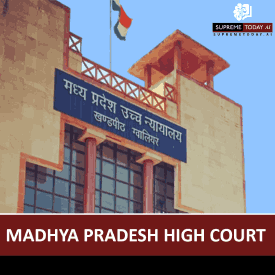
2017 0 Supreme(MP) 961 • India - Madhya Pradesh
HEMANT GUPTA, H.P.SINGH, V.K.SHUKLA
Section 17 of the Corruption Act. ... Corruption Act, 1988, in view of Section 3 of Madhya Pradesh Special Police Establishment Act, 1947 and Section 17 of the Corruption ... Pradesh Special Police Establishment Act, 1947 and Section 17 of the Corruption Act. ... The legal position in the matter is made luculent by the Supreme Court in A.C. Sharma v. ... The inv....

Filter by Legal Phrase







