Back
Back





2026 Supreme(SC) 626
SUPREME COURT OF INDIA
J.B. Pardiwala, K. V. Viswanathan, JJ.
Dineshchand Surana – Petitioner
Versus
UCO Bank – Respondent
Criminal Appeal No. of 2026 (Arising Out Of Special Leave Petition (Crl.) No. 12135 Of 2024) With Criminal Appeal No. of 2026 (Arising Out Of Special Leave Petition (Crl.) No. 12136 Of 2024)
Decided On : 27-05-2026
For the Petitioner(s): Mr. Shreeyash Uday Lalit, Adv. Mr. Himanshu Vats, Adv. Mr. Angad Pahel, Adv. Mr. Lavam Tyagi, Adv. Ms. Ishita Khurana, Adv. Mr. Aviral Kumar Mishra, Adv. Mr. Ishaan George, AOR Mr. Prateek Kushwaha, AOR
For the Respondent(s): Ms. Tanu Priya Gupta, AOR Mr. Brijesh Kumar Tamber, AOR Mr. Vinay Singh Bist, Adv.
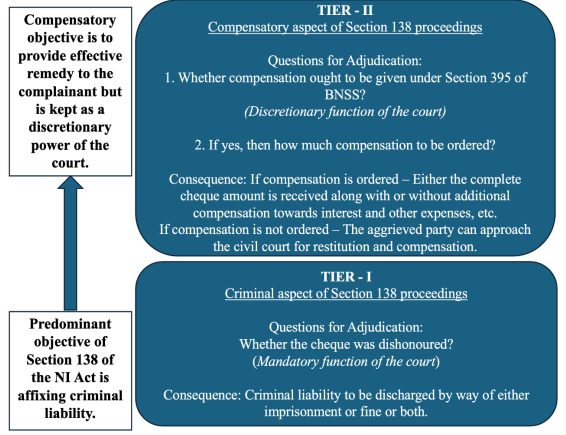
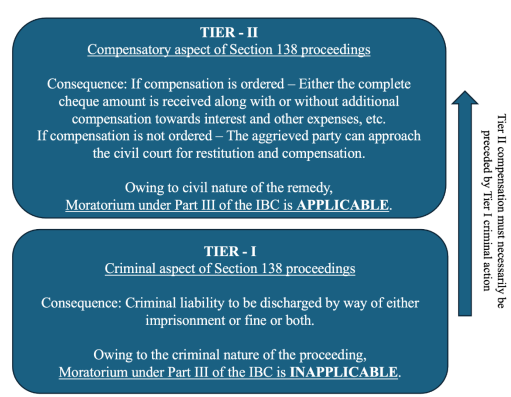
Proceedings under Section 138 of the Negotiable Instruments Act are quasi-criminal. The criminal component (punishment) is not a 'debt' and is not stayed by the insolvency moratorium, whereas the compensatory component (restitution) is civil in nature and is subject to the moratorium under the insolvency law.
Headnote:(A) Negotiable Instruments Act, 1881 - Sections 138, 141, 147 - Insolvency and Bankruptcy Code, 2016 - Sections 96, 101, 124, 128 - Bhartiya Nyaya Suraksha Sanhita, 2023 - Section 395 - Dishonour of cheque - Applicability of moratorium during personal insolvency - Proceedings under Section 138 are quasi-criminal - Criminal aspect (punishment) is not stayed by moratorium - Compensatory aspect (restitution) is civil in nature and subject to moratorium - Vicarious liability of directors under Section 141 is personal and survives corporate insolvency, but compensatory liability is subject to personal insolvency moratorium. (Paras 48, 79, 132, 154, 193)
(B) Interpretation of Statutes - Purposive interpretation - Legislative intent - Balancing criminal deterrence and debt restructuring - Moratorium provisions under Part III of the insolvency law are protective - "Any debt" includes liabilities where onus of repayment falls on individual due to statutory provisions. (Paras 131, 161, 182)
Facts of the case:
An individual, formerly in charge of a company, faced criminal complaints for dishonour of cheques. During the pendency of these proceedings, the individual initiated personal insolvency proceedings under the insolvency law. The individual sought a stay on the criminal proceedings, arguing that the interim moratorium under the insolvency law protected them from all legal actions in respect of any debt. The lower court dismissed the plea, leading to the present appeal.
Findings of Court:
The court held that proceedings under Section 138 are tiered. The criminal aspect (punishment) is not a "debt" and thus not stayed by the moratorium. However, the compensatory aspect (restitution) is civil in nature and is stayed by the moratorium. The court referred the matter to a larger bench to resolve the conflict regarding the applicability of the moratorium.
Issues: Whether proceedings under Section 138 are recovery proceedings; whether they are protected by the moratorium under Part III of the insolvency law; whether directors' vicarious liability benefits from the moratorium.
Ratio Decidendi: The court reasoned that Section 138 is quasi-criminal. The criminal component serves a deterrent purpose and is not a "debt" under the insolvency law. The compensatory component is a civil remedy for debt recovery and is therefore subject to the moratorium. The court emphasized the need to balance the deterrent objective of the criminal law with the protective objective of the insolvency law.
Result: Matter referred to a larger Bench.
| Table of Content |
|---|
| 1. factual background of the personal insolvency and ni act dispute. (Para 1 , 2 , 3 , 4 , 5 , 6 , 7 , 8 , 9 , 10 , 11 , 12 , 13 , 14) |
| 2. parties' conflicting contentions regarding moratorium applicability. (Para 15 , 16 , 17 , 18 , 19 , 20 , 21 , 22 , 23 , 24 , 25 , 26 , 27 , 28 , 29 , 30 , 31 , 32 , 33 , 34 , 35 , 36 , 37 , 38 , 39 , 40 , 41 , 42 , 43 , 44) |
| 3. nature of section 138 proceedings as predominantly criminal. (Para 45 , 46 , 47 , 48 , 49 , 50 , 51 , 52 , 53 , 54 , 55 , 56 , 57 , 58 , 59 , 60 , 61 , 62 , 63 , 64 , 65 , 66 , 67 , 68 , 69 , 70 , 71 , 72 , 73 , 74 , 75 , 76 , 77 , 78 , 79 , 80 , 81 , 82 , 83 , 84 , 85 , 86 , 87 , 88 , 89 , 90 , 91 , 92 , 93 , 94 , 95 , 96 , 97 , 98 , 99 , 100 , 101 , 102 , 103 , 104 , 105 , 106 , 107 , 108 , 109 , 110 , 111 , 112 , 113 , 114 , 115 , 116 , 117 , 118 , 119 , 120 , 121 , 122 , 123 , 124 , 125 , 126 , 127 , 128) |
| 4. bifurcation of civil and criminal aspects for ibc moratorium. (Para 129 , 130 , 131 , 132 , 133 , 134 , 135 , 136 , 137 , 138 , 139 , 140 , 141 , 142 , 143 , 144 , 145 , 146 , 147 , 148 , 149 , 150 , 151 , 152 , 153 , 154 , 155 , 156 , 157 , 158) |
| 5. applicability of personal insolvency moratorium to vicarious liability. (Para 159 , 160 , 161 , 162 , 163 , 164 , 165 , 166 , 167 , 168 , 169 , 170 , 171 , 172 , 173 , 174 , 175 , 176 , 177 , 178 , 179 , 180 , 181 , 182 , 183 , 184 , 185 , 186 , 187 , 188 , 189 , 190 , 191 , 192 , 193 , 194 , 195 , 196 , 197 , 198 , 199 , 200 , 201 , 202 , 203 , 204 , 205 , 206 , 207 , 208 , 209) |
| 6. referral of the conflicting questions to a larger bench. (Para 210 , 211 , 212) |
JUDGMENT :
J.B. PARDIWALA, J.
For the convenience of exposition, this judgment is divided into the following parts:
INDEX
| A. | FACTUAL MATRIX |
| B. | SUBMISSIONS BY THE PARTIES |
| C. | ISSUES FOR DETERMINATION |
| D. | ANALYSIS |
| I. | Criminal nature of Section 138 of the NI Act |
| (i) | Effect of “deeming fiction” in Section 138 of the NI Act |
| (ii) | Objective of the enactment of Section 138 of the NI Act and nature of the offence made out therein |
| Statement of Objects and Reasons of the Banking Amendment Act, 1988 | |
| Stage at which the offence stands committed is different from the stage at which it is prosecuted | |
| Difference in stages of commission and prosecution of offence acts as safeguard for bona fide persons | |
| Minor nature of the offence | |
| (iii) Analysis of P. Mohanraj (supra) as regards nature of Section 138 offence | |
| (iv) Quasi-criminal nature of offence under Section 138 | |
| (v) Distinction between fine and compensation | |
| Scheme of compensation under the NI Act prior to the introduction of Chapter XVII | |
| Compensation order in Section 138 proceedings to be in terms of Section 395 of the BNSS | |
| (vi) Permissibility of filing civil suit parallel to the complaint proceedings under Section 138 | |
| (vii) Whether Section 138 proceeding is a “civil sheep in a criminal wolf’s clothing”? | |
| (viii) Discussion on the compensatory aspect of Section 138 proceedings | |
| II. | Applicability of the Moratorium provisions under Part III of the IBC to the proceedings under Section 138 of the NI Act |
| (i) Inapplicability of moratorium provisions on the criminal aspect of Section 138 proceedings | |
| (ii) Applicability of moratorium provisions on the compensatory aspect of Section 138 proceedings | |
| III. | Applicability of Moratorium provisions under Part III of the IBC on Directors vicariously liable under Section 141 of the NI Act |
| (i) Object of the Moratorium provisions under Parts II and III of the IBC | |
| (ii) Pecuniary liability of compensation ordered under Section 138 of the NI Act on the Directors of the company | |
| (iii) Meaning of the expression “any debt” appearing in Sections 96 and 101 of the IBC respectively | |
| E. | DETERMINATION OF THE ISSUES IDENTIFIED |
| I. | |