
 Back
Back





IN THE HIGH COURT OF KARNATAKA AT BENGALURU
M. NAGAPRASANNA, J.
Miss. Jameela Nawaz Sharief, D/o Late Alhaj C. J. Khader Nawaz Sharief - Appellant
Versus
Smt. C.J.Mehboob Munavar Sulthana Alias Baby - Respondent
Civil Revision Petition No. 273 of 2025 (IO)
Decided on : 01-09-2025
Based on the provided legal document, here are the key points:
ORDER :
M. NAGAPRASANNA, J.
The petitioner is before this Court calling in question an order dated 22-02-2025 passed by the 74th Additional City Civil and Sessions Judge, Bengaluru on I.A. filed in O.S.No.25891 of 2016 rejecting the application filed by the petitioner/defendant No.4 under Order VII Rule 11 (a) and (d) of the Code of Civil Procedure seeking rejection of the plaint.
2. Heard Prof. Ravivarma Kumar, learned senior counsel appearing for the petitioner and Sri Arjun Dev B.Y., learned counsel appearing for respondent No.1.
3. The facts, in brief, germane are as follows: -
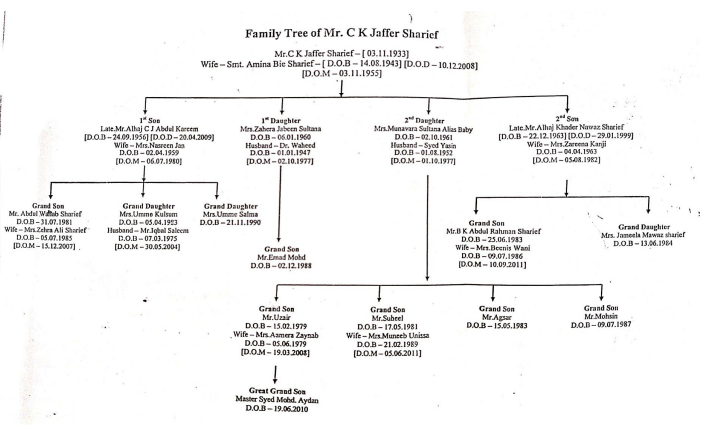
Before embarking upon consideration of the case on its merits, I deem it appropriate to notice the main protagonists in the lis. The petitioner is the granddaughter of late C.K. Jaffer Sharief, a Union Minister and Member of Parliament for many years. Late C.K. Jaffer Sharief married to one Smt. Amina Bie and they had four children from the wedlock. The present petitioner is the daughter of one Khader Nawaz Sharief who had pre-deceased his parents. A suit is filed by the 1st respondent/plaintiff seeking partition of the properties owned by her mother Smt. Amina Bie after her death on 10-12-2008. In the said suit, the petitioner/4th defendant filed an application under Order VII Rule 11(a) and (d) of the CPC on the ground that Mohammedan law recognizes implied renunciation of the claim if there is ceasing or desisting to the property from the hands of the claimant who would be barred from prosecuting the claim before any Court of law. In that pursuit, an application as observed hereinabove, comes to be filed under Order VII Rule 11(a) and (d) of the CPC which comes to be rejected by the concerned Court holding that it is a matter of trial as to whether the petitioner has given up the rights impliedly or directly. The other issue on which the Court holds is with regard to limitation, as limitation being pure question of law and fact.
4. The learned senior counsel Prof. Ravivarma Kumar would vehemently contend that the 1st respondent/plaintiff who has now instituted the suit for partition cannot do so under Mohammedan law. It is not a right that would be subsisting, as that right the plaintiff has lost by renunciation of her claim in the property. Unlike the Hindu Succession Act, the learned senior counsel would contend, that renunciation in Mohammedan law need not be direct, it can be implied also. He would further contend that the question of limitation in the case at hand is a threshold bar for entertainment of the suit itself, as the mother of the plaintiff dies on 10-12-2008. The properties are partitioned. After the partition of the properties the subject suit is instituted on 19-09-2016 seeking partition of the properties already partitioned. Therefore, there is a delay of 7 years and 9 months in filing the suit as against the limitation of three years from the cause of action being arisen i.e., on the date of death of the mother of the plaintiff on 10-12-2008. In all, he would contend that the application filed under Order VII Rule 11(a) & (d) ought not to have been rejected but allowed.
5. Per contra, the learned counsel appearing for the 1st respondent/plaintiff, the only contesting respondent, would vehemently refute the submissions contending that there is no warrant of interference with the order passed by the concerned Court, as the issue of limitation which is projected as a threshold bar by the petitioner, is a pure question of law and fact and renunciation under Mohammedan law would also require evidence as to whether it was tacit, direct or implied. He would thus seek dismissal of the petition and the trial be permitted to be proceeded further.
6. I have given my anxious consideration to the submissions made by the respective learned counsel and have perused the material on record.
7. The relationship between the main protagonists is as narrated hereinabove. The plaintiff/1st respondent is the daughter of Smt. Amina Bie who died on 10-12-2008.
Under Mohammedan Law, renunciation of inheritance rights can be implied, but such claims require factual evidence; limitation is a mixed question of law and fact needing trial.

A plaint must establish a clear cause of action; limitation issues involving mixed questions of fact and law cannot be decided without trial evidence.


The court ruled that issues of limitation and contractual validity arising from disputed facts cannot be decisively adjudicated at the stage of rejecting a plaint, necessitating a trial based on evid....


The main legal point established in the judgment is the need for a meaningful reading of the plaint, scrutiny of the cause of action, and prevention of illusory causes of action to avoid circumventin....

The rejection of a plaint under Order VII Rule 11 CPC on grounds of limitation requires a full trial when the issue involves mixed questions of law and fact.

The main legal point established in the judgment is that a suit for partition can be barred by law and limitation if there is already a decree and final decree in place, and the plaintiff fails to en....

The court upheld that the limitation period for challenging a sale deed starts upon knowledge of the transaction, confirming the lower courts' rejection of the plaint on limitation grounds.



An indispensable Tool for Legal Professionals, Endorsed by Various High Court and Judicial Officers
Please visit our Training & Support
Center or Contact Us for assistance

Scan Me!
India’s Legal research and Law Firm App, Download now!


For Daily Legal Updates, Join us on :



 Back to top


