
 Back
Back





IN THE HIGH COURT OF CHHATTISGARH AT BILASPUR
RAMESH SINHA, CJ, RAVINDRA KUMAR AGRAWAL, J.
Dashrath Chandrawanshi S/o Late Shri Konda Chandrawanshi – Appellant
Versus
State of Chhattisgarh – Respondent
CRA No. 1242 of 2024
Decided On : 22-01-2026
| Table of Content |
|---|
| 1. factual background establishing the case. (Para 1 , 2) |
| 2. arguments regarding evidence and doubt. (Para 6 , 7) |
| 3. summarization of circumstantial evidence principles. (Para 8 , 9 , 10) |
| 4. judicial standards for circumstantial evidence. (Para 11 , 12 , 13) |
| 5. evidence of motive and its significance. (Para 40 , 41 , 42) |
| 6. final decision on conviction. (Para 44 , 45) |
JUDGMENT :
RAMESH SINHA, J.
1. The present criminal appeal has been filed by the appellant under Section 374(2) of the Cr.P.C. against the impugned judgment of conviction and sentence dated 23-05-2024 passed by the learned Additional Judge to the Court of learned Additional Sessions Judge, Kabeerdham, District Kabeerdham (C.G.) in S.T. No.11/2022 whereby the appellant has been convicted and sentenced in the following manner with a direction to run all the jail sentences concurrently:-
| Conviction | Sentence |
| U/s 302 of the IPC | Life Imprisonment and fine of Rs. 1000/- in default of payment of fine additional R.I. for 03 months. |
| U/s 201 of the IPC | R.I. for 5 years and fine of Rs. 500/- in default of payment of fine additional R.I. for 01 month. |
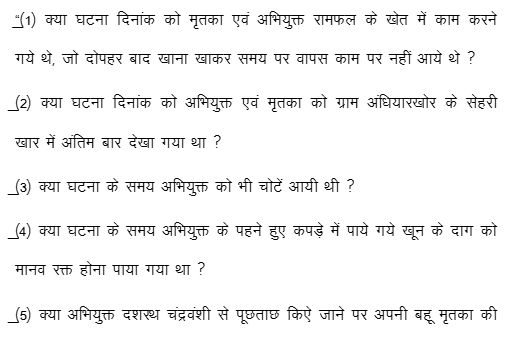
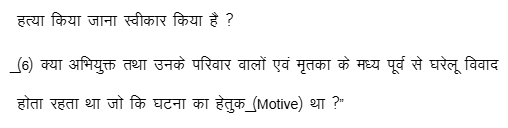
2. The brief facts of the case are that on 26-11-2021 the informant Khemas Chandrawanshi gave a merg intimation to P.S. Pandatarai, District Kabeerdham that at about 6:20 p.m. he was informed by Amar Chandrawanshi that he received an intimation that Maharani Chandrawanshi is missing since 1:00 p.m. who had gone to field for work. During her search her dead body was found in the field in hanging condition. The merg intimation Ex.-P/1 was recorded by the plice and the witnesses were called for inquest. The inquest Ex.-P/9 was prepared in presence of the witnesses and the dead body was sent for its postmortem to Govt. Hospital Pandariya where doctor Janaki Sharan Chandrawanshi PW-13 conducted the postmortem on the dead body and gave his postmortem report Ex.-P/28 and opined that death was due to cardio respiratory failure though final opinion for the mode of death will be given after viscera chemical analysis report basis duration of death within 24 hours prior to postmortem examination. The multiple abrasions, contusions were found on the body of the deceased during its postmortem. A query was raised from the doctor about nature and mode of death and the query report Ex.-P/29 was given by the doctor in which the nature of death is opined as cause of death was due to cardio respiratory failure and nature of death may be homicidal, but final report for nature of death may be given after viscera and other articles chemical analysis report basis and circumferential evidence. The entries was caused by hard and blunt object and nature is antemortem in nature. The FIR Ex.-P/40 has been registered against unknown person for the offence under Section 302 of the IPC. Spot map was prepared by by the police and Ex.-P/25 was prepared by the Patwari. One violate colour bracelet, one golden colour bracelet, 3 pieces of green colour broken bangles, one golden like colour ear tops, one golden colour pearl, one black hair clip, one violate colour plastic bracelet and bunch of hairs have been seized from the spot vide seizure memo Ex.-P/10. From the same place from where the aforesaid articles have been seized blood stained soil and plain soil have been seized vide seizure memo Ex.-P/11. From the adjacent field where the dead body was found, two green colour pieces of broken bangle have been seized vide seizure memo Ex.-P/12. Two pieces of cut papaya which was in a polythene was also seized from Andhiyarkhor Lalpur road from the distance of 214 feet away from the dead body. Another bunch of hair lying from the legs of the deceased and shoes of the deceased have also been seized from the spot vide seizure memo Ex.-P/14. The viscera of the deceased was seized vide seizure memo Ex.-P/30. The nail cutting of the deceased was also seized vide seizure memo Ex.-P/31. During the investigation the appellant was taken into custody and his memorandum stateme
AI
Circumstantial evidence must form a conclusive chain linked to the accused, establishing guilt beyond reasonable doubt, with no viable alternative explanations for innocence.

The rejection of accidental death claims via circumstantial evidence linking the appellant to the crime established the basis for conviction under Section 302 IPC.


The prosecution must establish a complete chain of evidence, including motive, in cases based on circumstantial evidence, and the evidence must be cogent, trustworthy, and exclude every possible hypo....


The judgment establishes the principles of circumstantial evidence, the last seen theory, and the burden of proof under Section 106 of the Indian Evidence Act in establishing guilt in criminal cases.

The principle that an accused cannot be convicted based on suspicion alone, and the prosecution must prove guilt beyond reasonable doubt, especially in cases relying on circumstantial evidence.


The court emphasized that circumstantial evidence must form a complete and unbroken chain to establish the guilt of the accused beyond reasonable doubt.

In a murder conviction based on circumstantial evidence, multiple corroborative factors, including the last seen theory and absence of alternative explanations, can establish guilt beyond reasonable ....



An indispensable Tool for Legal Professionals, Endorsed by Various High Court and Judicial Officers
Please visit our Training & Support
Center or Contact Us for assistance

Scan Me!
India’s Legal research and Law Firm App, Download now!


For Daily Legal Updates, Join us on :



 Back to top


