1. Writ petitions challenging non-selection for Class-IV post due to negative marks after normalisation, no minimum qualifying marks prescribed. (Para 3 , 4 , 5 )
 Back
Next 





2026 Supreme(Raj) 317
HIGH COURT OF JUDICATURE FOR RAJASTHAN, BENCH AT JAIPUR
ANAND SHARMA, J.
Vinod Kumar, S/o. Pyarelal - Petitioner
Versus
The State of Rajasthan, through its Principal Secretary, Department of Administrative Reforms, Govt. of Rajasthan – Respondent
S. B. Civil Writ Petition No. 3098 of 2026 Connected With S. B. Civil Writ Petition No. 4812 of 2026
Decided On : 22-05-2026
Important Points
Public recruitment must maintain minimum standards of suitability and efficiency under Article 335. Selection of candidates with virtually zero or negative marks is arbitrary and irrational, even if no minimum qualifying marks are expressly prescribed in the recruitment rules.
Subject
Service Law - Public Recruitment
Act Referred
Headnote
(A) Constitution of India - Articles 14, 16 and 335 - Public employment - Selection of candidates with negligible marks - Whether the State can appoint candidates who have secured virtually zero or negative marks in the absence of prescribed minimum qualifying marks - Such process is ex facie arbitrary, irrational and violates the constitutional mandate of maintaining efficiency in administration. (Paras 17, 34, 42)
(B) Reservation - Scope and limits - While reservation is a facet of equality, it cannot be used to legitimize the appointment of wholly unsuitable candidates who lack basic competence - Efficiency of administration under Article 335 must be considered alongside claims of reserved categories. (Paras 28, 29, 30)
(C) Normalisation - Purpose and limitation - Normalisation is intended to balance variations in difficulty levels between shifts and not to create artificial merit where none exists. (Para 37)
Facts of the case:
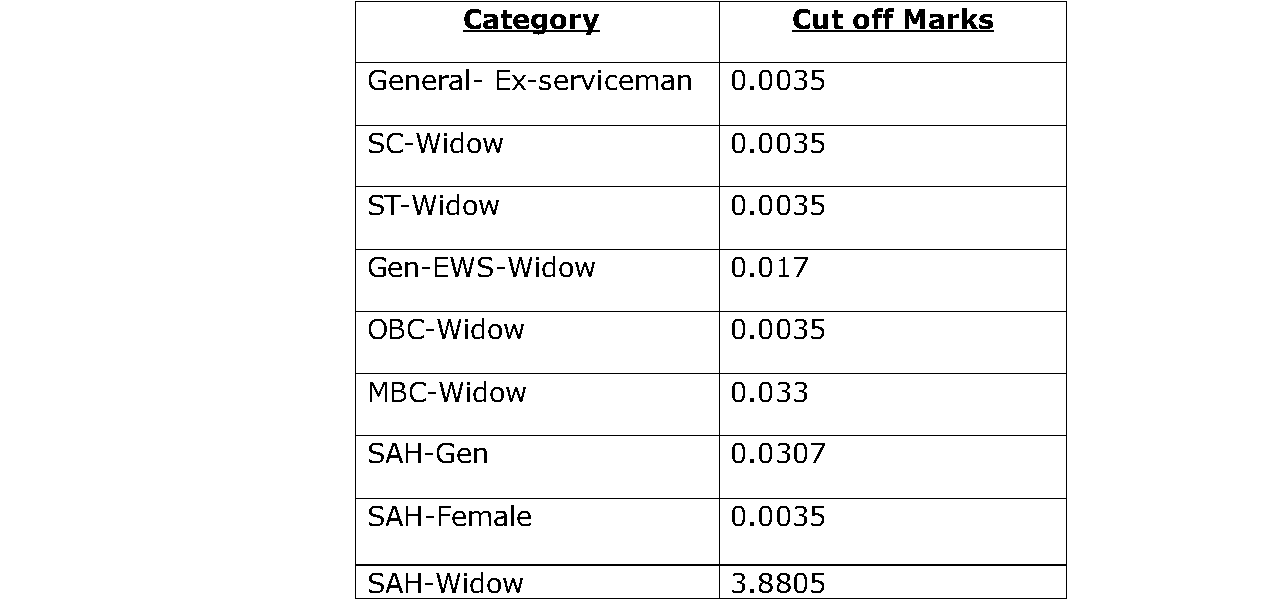
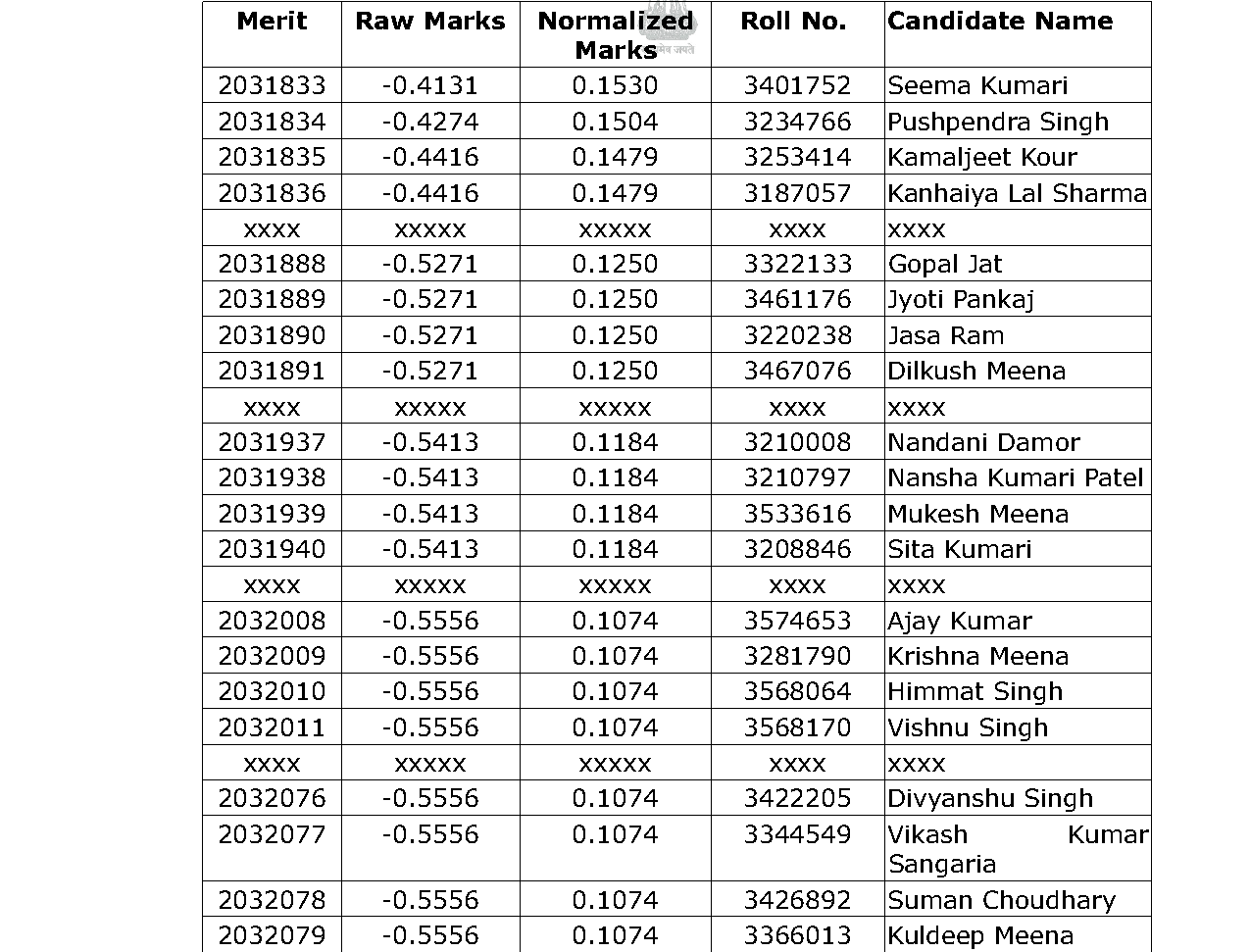
In a recruitment process for Class-IV posts, the recruiting agency adopted a normalisation process. It was discovered that over 1,200 candidates who had secured negative raw marks were selected after their marks were converted to positive values, some as low as 0.0035. Petitioners, who secured negative marks and were excluded, challenged the result, arguing that in the absence of prescribed minimum qualifying marks, they should be considered for appointment if vacancies existed in their respective categories.
Findings of Court:
The court observed that permitting candidates with marks virtually equivalent to zero to enter public service treats recruitment as a ritualistic exercise and erodes institutional integrity. The absence of express rules for minimum qualifying marks does not absolve the State from its obligation to ensure reasonableness and suitability under Article 14.
Issues: Whether the State can constitutionally permit public appointments of candidates who have secured virtually zero or negative marks without prescribing any minimum benchmark of suitability.
Ratio Decidendi: Selection of candidates securing raw marks in the negative range, shifted to negligibly low positive marks via normalisation, is inconsistent with the constitutional requirement of maintaining minimum standards in public employment and the mandate of efficiency in administration under Article 335. Such selection is arbitrary, irrational and cannot be justified by mere reference to reservation policy.
Result: Impugned select list quashed for specific categories; respondents directed to prepare a fresh merit list after prescribing reasonable minimum qualifying standards; State directed to frame a policy for prescription of minimum qualifying marks within three months.
Legal Category Hierarchy
- constitutional law
- administrative law
-
practice and procedure
-
writ petitions
- writ of certiorari (Para 2)
-
writ petitions
Advocates Appeared:
For the Petitioners:Mr. Tanveer Ahamad, Advocate, Mr. Harendar Neel Advocate with Mr. Amogh Gupta, Advocate.
For the Respondents:Mr. Kapil Prakash Mathur, Additional Advocate General assisted by Mr. Ashutosh Udawat, Advocate & Mr. Sumit Purohit, Advocate, Mr. Kartikeya Sharma.
For the Petitioners:Mr. Tanveer Ahamad, Advocate, Mr. Harendar Neel Advocate with Mr. Amogh Gupta, Advocate.
For the Respondents:Mr. Kapil Prakash Mathur, Additional Advocate General assisted by Mr. Ashutosh Udawat, Advocate & Mr. Sumit Purohit, Advocate, Mr. Kartikeya Sharma.
Table of Contents
2. Petitioners argue negative marks irrelevant absent minimum qualifying marks; Board defends normalisation and policy not to select zero/negative marks candidates. (Para 6 , 7 , 8 , 9 , 10 , 11 , 12 , 13 , 14 , 15 , 16 )
3. Selecting candidates with near-zero normalised marks is arbitrary, irrational, and violates Articles 14, 16; state must maintain minimum standards. (Para 17 , 18 , 19 , 20 , 21 , 22 , 23 , 24 , 25 , 26 , 27 , 28 , 29 , 30 , 31 , 32 , 33 , 34 , 35 , 36 , 37 , 38 , 39 , 40 , 41 , 42 , 43 )
4. State cannot permit public employment to candidates with near-zero marks without minimum benchmark; such selection is unconstitutional. (Para 17 , 34 , 42 , 44 )
5. Select list for certain categories quashed; directed to redo selection with reasonable minimum qualifying standards. (Para 44 , 45 , 46 )
6. Can the State appoint candidates who secure near-zero or negative marks in a recruitment examination without prescribing minimum qualifying marks?
No. The State must maintain minimum standards; such appointments are arbitrary, irrational, and violate Articles 14 and 16 of the Constitution. (Para 17 , 28 , 29 , 33 , 34 , 42 )
7. Does the absence of an express rule prescribing minimum qualifying marks allow the State to select candidates with negligible marks?
No. The State's constitutional duty to ensure reasonableness and efficiency in public employment overrides the absence of such a rule. (Para 33 , 34 )
8. Can reservation in public employment be used to justify the selection of candidates who have demonstrated no minimum merit or competence?
No. Reservation must operate in harmony with efficiency; it cannot legitimise appointments of wholly unsuitable candidates. (Para 28 , 29 , 39 , 43 )
9. Can a normalisation process be used to convert negative raw marks into positive marks to include otherwise unsuitable candidates?
No. Normalisation balances difficulty variations, not create artificial merit; elevating candidates with negligible marks is impermissible. (Para 36 , 37 , 38 , 44 )
JUDGMENT :
ANAND SHARMA, J.
1. Since both the above writ petitions involve similar facts, grievance, cause of action and identical questions of law, they were heard analogously and are being decided by this common judgment. With the consent of learned counsel appearing for the respective parties as also for the sake of convenience, the facts pleaded in S.B. Civil Writ Petition No. 3098/2026 are being taken into consideration for adjudication of the controversy involved in the present matters.
2. The petitioner in S.B. Civil Writ Petition No. 3098/2026 has prayed for following relief:
“In these circumstances, it is, therefore, prayed that this Hon’ble Court may be pleased to accept this writ petition and:-
i) the impugned result dated 16.01.2026 alongwith impugned merit-wise list of candidates and impugned amended result dated 06.02.2026 not selecting humble petitioner on the post of Class-IV Employee in pursuance to advertisement dated 12.12.2024 for securing negative marks may kindly be declared erroneous, illegal and arbitrary and therefore, same may kindly be quashed and set aside;
ii) The respondents may kindly be directed by issuing appropriate, writ, order or direction in the nature thereof:
a) To treat humble petitioner eligible for appointment on the post of Class-IV Employee in OBC-NCL (Ex-servicemen) category if falls within merit in his category and otherwise suitable for appointment; and
b) To select humble petitioner for appointment on the post of Class-IV Employee in OBC-NCL (Ex-servicemen) category if falls within merit in his category and otherwise suitable for appointment; and
c) To grant appointment to humble petitioner on the post of Class-IV Employee in OBC-NCL (Ex-servicemen) category with all consequential benefits if falls within merit in his category and otherwise suitable for appointment.
iii) Any other appropriate order or direction which this Hon’ble Court deems just and proper in the facts and circumstances of this case may kindly also be passed in favour of the Petitioner.”
3. Petitioner has come out with a case that the respondent- Rajasthan Staff Selection Board (hereinafter to be referred as ‘Board’) issued an advertisement dated 12.12.2024 for recruitment to 52,453 posts of Class-IV Employees under the Rajasthan Class IV Service (Recruitment and Other Service Conditions) Rules, 1999 (hereinafter to be referred as ‘the Rules of 1999’). As per the advertisement, the recruitment process comprised a written examination carrying 200 marks with negative marking to the extent of one-third marks for every incorrect answer. It was further stipulated that in case the examination was conducted in multiple shifts, the process of normalisation would be adopted. Subsequently, corrigendum advertisements dated 03.03.2025 and 12.01.2026 were issued increasing the number of posts and revising the category-wise bifurcation.
4. The petitioner, in S.B. Civil Writ Petition No. 3098/2026, claiming himself to be eligible and qualified, applied under the OBC- NCL (Ex-servicemen) category and appeared in the written examination conducted on 19.09.2025 in the morning shift. The examination was conducted in six shifts between 19.09.2025 and 21.09.2025. After publication of the model answer key dated 17.10.2025 and declaration of the result dated 16.01.2026 along with the final answer key dated 20.01.2026, the petitioner found that he had secured normalised marks of (-0.6508) and was not selected. Similar grievance has also been raised by the petitioner in S. B. Civil Writ Petition No. 4812/2026, who appeared in the aforesaid recruitment process under OBC-NCL (Widow) category.
5. According to the petitioners, despite vacancies remaining unfilled in their respective categories, they were not selected merely on account of securing negative marks, although neither the advertisement, nor the relevant rules prescribed any minimum qualifying marks for selection. It is contended that in the absence of any prescribed minimum benchmark, candida