
 Back
Back





IN THE HIGH COURT OF JUDICATURE AT MADRAS
G.R.Swaminathan, V.Lakshminarayanan, JJ.
P.R.Saravanan - Appellant
Versus
K.Dhanalakshmi (Died) - Respondent
A.S.Nos.617,618,619 and 621 of 2025 and C.M.P.Nos.11921, 11930, 11932, 11649, 12016 & 12017 of 2025
Decided On : 22-05-2025
| Table of Content |
|---|
| 1. introduction of the appeal and procedural background. (Para 1 , 2 , 3 , 4 , 5) |
| 2. historical perspective on appeals across various legal systems. (Para 6 , 7 , 8 , 9 , 10 , 11) |
| 3. evolution of appeal systems in ancient rome and egypt. (Para 12 , 13 , 14 , 15 , 16) |
| 4. appellate procedures in english law and their historical development. (Para 17 , 18 , 19 , 20 , 21) |
| 5. definition and significance of appeal in legal terminology. (Para 22 , 23 , 24) |
| 6. importance of appellate systems in ensuring judicial correctness. (Para 25 , 26 , 27) |
| 7. jurisprudential basis and functions of the appeal mechanism. (Para 28 , 29 , 30) |
| 8. history and evolution of the code of civil procedure in india. (Para 31 , 32 , 33 , 34) |
| 9. the importance of first appeals in the context of judicial proceedings. (Para 35 , 36 , 37 , 38 , 39) |
| 10. procedural significance of section 96 regarding first appeals. (Para 40 , 41 , 42 , 43) |
| 11. the concept of who qualifies as a person aggrieved for filing an appeal. (Para 44 , 45 , 46 , 47 , 48) |
| 12. 1999 amendments and the implications for appeal procedures. (Para 49 , 50 , 51 , 52 , 53) |
| 13. clarification on the powers and limitations of admission procedures. (Para 54 , 55 , 56 , 57 , 58) |
| 14. the methodology of processing appeals based on the code. (Para 59 , 60 , 61 , 62) |
| 15. the interplay of the body of the code versus its schedule in legal procedures. (Para 63 , 64 , 65 , 66) |
| 16. differentiating between first appeals and second appeals in the procedural framework. (Para 67 , 68 , 69 , 70 , 71) |
| 17. discussions surrounding the functions and powers of appellate courts. (Para 72 , 73 , 74) |
| 18. examining the implications of the 1999 amendments on case processing. (Para 75 , 76 , 77 , 78) |
| 19. evaluating the significance of a clear procedure in the effective administration of justice. (Para 79 , 80) |
| 20. the rationale for expediting appeals and ensuring timely justice. (Para 81 , 82) |
| 21. the role of the registry versus the court in the appellate process. (Para 83 , 84 , 85) |
| 22. conclusion regarding the validity and precedence of existing rules. (Para 86 , 87 , 88) |
| 23. summation of precedents and their applicability to the current legal discourse. (Para 89 , 90 , 91) |
| 24. determining the operation of conflicting legal statutes. (Para 92 , 93) |
| 25. final summary and directives following judicial review. (Para 94 , 95) |
ORDER :
V.LAKSHMINARAYANAN.J.
These appeals were originally listed before Hon'ble Mr.JUSTICE G.R.SWAMINATHAN for admission. Taking note of the fact that he was a part of the coram in V.S.Chandrasekaran -Vs- R.Uma (A.S.(MD)No. 5 of 2025 dated 25.04.2025), he referred the matter to this Division Bench.
Introduction
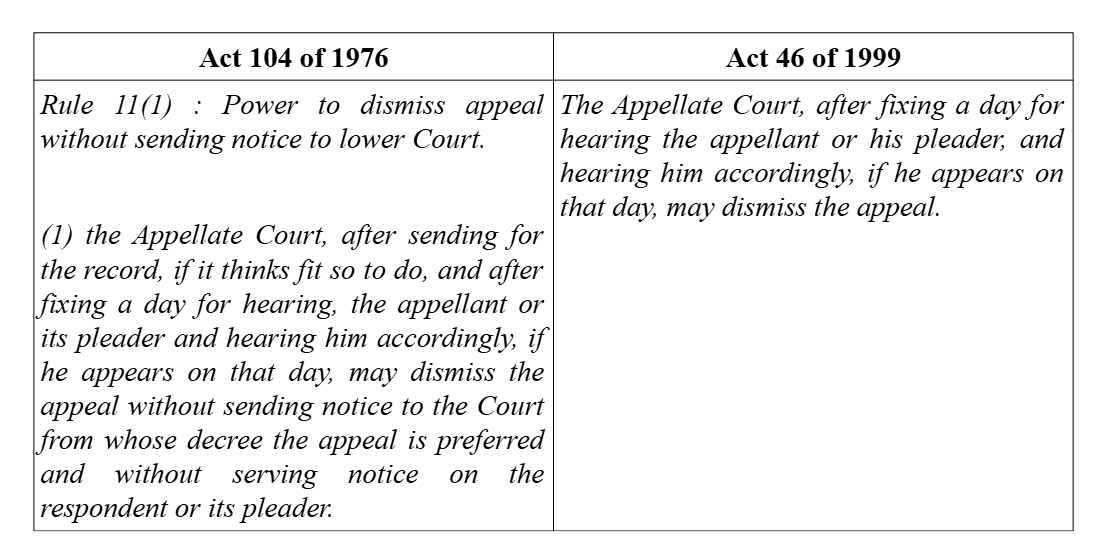
2. The practice of this Court has been that on the first appeal, being presented and numbered, notice is issued to the respondents. Thereafter, the appeals are listed for hearing before the appropriate Bench. The Hon'ble Mr.JUSTICE N.SATHISHKUMAR, took a view in Karupuchetty @ Vaiyapuri (Died) -Vs- Papathi (A.S.No.148 of 2025 dated 07.03.2025) that after the amendment to Order XLI Rule 11 of Code of Civil Procedure, the first appeals would have to be listed for a hearing on “admission” and only thereafter the other steps can be taken.
3.Taking cognizance of this view, certain first appeals were listed for admission before a Division Bench of this Court sitting at Permanent Bench at Madurai. The Division Bench, consisting of one of us (Hon'ble Mr.Justice G.R.Swaminathan) and Hon'ble Mr.Justice M.Jothiraman, took a view in V.S.Chandrasekaran -Vs- R.Uma (A.S.(MD)No. 5 of 2025 dated 25.04.2025) that the interpretation of Order XLI Rule 11 made in Karupuchetty's case is not in line with the Code and Appellate Side Rules. They further held that when the Appellate Side Rules of the Madras High Court are in variance with the first Schedule appended to the Civil Procedure Code, the Appellate Side Rules will take precedence. Consequently, they directed the procedure followed prior to Karupuchetty's case to be continued.
4.

AI
Court affirmed the Appellate Side Rules over amendments to the Code of Civil Procedure, maintaining that first appeals do not require an admission stage, thus protecting the litigants' right to appea....

The right to appeal in civil matters is fundamental and must be respected without imposing unnecessary preliminary admission criteria, thus mandates notice upon appeal registration without substantiv....
Judicial functions related to appeal admissions under Order 41 Rule 11 cannot be delegated to administrative staff but must be performed by the court, as established by substantive provisions of the ....
Judicial functions regarding the admission of appeals under the Code of Civil Procedure must be performed by the court, not delegated to registrars, preserving the integrity of judicial review.
The court established that all first appeals under Section 96 of CPC must be posted for admission before the concerned judge, overriding the previous automatic admission practice.

The appellate court must provide a reasoned judgment when dismissing a first appeal, ensuring all issues are adequately addressed to uphold the parties' rights.


For a decree on admissions under Order XII Rule 6 CPC, the admissions must be clear, unambiguous, and unconditional; evasive denials do not qualify.

Appeal from Original Decree – Explanation to Order XLI Rule 17 CPC also applies in cases where counsel for appellant, though physically present in Court when appeal is called on for hearing, refuses ....

Point of Law : Order XVII prescribes the procedure to be followed by the Court in trial of Suits. The procedure to be followed by appeal Court while hearing an appeal is prescribed in Order XLI CPC.



An indispensable Tool for Legal Professionals, Endorsed by Various High Court and Judicial Officers
Please visit our Training & Support
Center or Contact Us for assistance

Scan Me!
India’s Legal research and Law Firm App, Download now!


For Daily Legal Updates, Join us on :



 Back to top


