




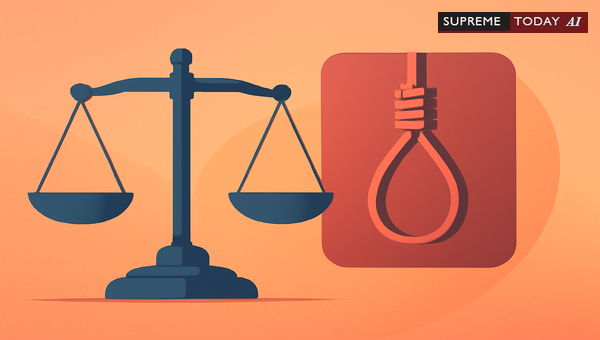
Mitigating vs Aggravating Factors in Sentencing
In the realm of criminal justice, determining the appropriate punishment is never straightforward. Courts must navigate a complex interplay of factors that either heighten the severity of a crime—known as —or plead for leniency, termed . The question of mitigating and aggravating lies at the heart of fair sentencing, ensuring punishments are proportionate and just. This balance is particularly crucial in , where the stakes couldn't be higher.
This post delves into the legal principles governing these factors, drawing from landmark judgments, primarily in Indian jurisprudence. While is often the rule, the remains an exception for the . Understanding this framework can shed light on how judges weigh human elements against the gravity of offenses. Note: This is general information and not specific legal advice. Consult a qualified attorney for personalized guidance.
The Legal Framework: Balancing Aggravating and Mitigating Circumstances
Sentencing, especially for capital offenses, requires courts to meticulously weigh aggravating and . The law mandates a liberal and expansive interpretation of to avoid bloodthirsty judgments. As one key ruling states, the scope and concept of in must receive a liberal and expansive construction by the courts in accord with the sentencing policy... and that judges should never be bloodthirsty 2023 2 Supreme 671.
Key principles include:- : Punishment must reflect the crime's gravity and the offender's culpability. Courts must record reasons after balancing factors 2023 2 Supreme 671 2015 4 Supreme 401.- Non-exhaustive lists: Aggravating factors might include brutality, , or societal harm, while mitigating ones encompass age, remorse, mental state, and reformation potential 2023 2 Supreme 671.- Life as the rule: is reserved for exceptional cases 2018 0 Supreme(SC) 1185.
This structured approach prevents arbitrary decisions and upholds constitutional values.
Application in Capital Sentencing: Real-World Examples
In practice, courts apply these principles by evaluating whether aggravating factors outweigh mitigation. For instance, in a notable case, the reduced a death sentence to , considering the accused's conduct, mental state, and reform potential 2015 4 Supreme 401. The judgment emphasized that mitigation can tip the scales, even in serious crimes.
Indian law, under , reinforces this. The is central: of gravity of offence and punishment becomes relevant. As listing all possible aggravating and mitigating circumstances is not possible, on a case-to-case basis depending on an analysis of facts and circumstances of each case is the best safeguard 2020 0 Supreme(Pat) 274 2020 0 Supreme(Pat) 380.
Aggravating Factors in Focus
often dominate in heinous crimes:- Brutality and .- Vulnerability of the victim (e.g., children) 2016 0 Supreme(MP) 1155.- Lack of remorse or societal impact.
In a rape and murder of a 5-year-old, the court found aggravating factors like the victim's age and crime's brutality outweighed mitigation, confirming death 2016 0 Supreme(MP) 1155. Upon the comparison of aggravating and the mitigating circumstances, we find that the outweigh the mitigating circumstances.
That Sway Outcomes
Mitigation receives broad consideration:- First-time offender status.- Cooperation with authorities.- Prospects of rehabilitation 2023 2 Supreme 671.
Even in drug trafficking under Malaysia's , courts weigh offender's age, cooperation, and drug quantity post-mandatory abolition, opting for life in some cases
. The aggravating factors usually involve a consideration of the gravity of the offence, the type of drugs involved and the weight of the drugs... factors in favor of passing a life sentence outweighs the aggravating factors.
and the 'Rarest of Rare' Doctrine
is pivotal, guided by precedents like . Courts assess motive, manner of crime, offender's mental condition, and victim personality 2020 0 Supreme(Pat) 380. is presumed unless exceptional aggravating features justify death 2018 0 Supreme(SC) 1185.
Inconsistencies arise, but guidelines caution against arbitrariness. For example, in murder cases lacking conclusive evidence, courts acquit or reduce sentences, prioritizing fair trials over presumptions 2020 0 Supreme(Pat) 274. Mitigation like poor investigation or doubt benefits the accused.
International parallels exist. adjust guideline ranges based on factors 2025 Supreme(US)(ca1) 1, while Sri Lankan law allows parties to argue circumstances under 2024 Supreme(SRI)(SC) 12696. Yet, Indian jurisprudence uniquely emphasizes expansive mitigation to humanize sentencing.
Factors in Non-: Drugs, Rape, and Murder
Beyond , balancing applies broadly:- Drug offenses: Deterrence is key, but first-offender status and cooperation mitigate
.- Sexual crimes and murder: In cases, courts scrutinize evidence; flawed probes lead to acquittals despite aggravating brutality claims 2020 0 Supreme(Pat) 249 2020 0 Supreme(Pat) 465.- : Must form an unbroken guilt chain; doubts favor mitigation 2020 0 Supreme(Pat) 274.
These cases highlight that no fixed formula exists—discretion ensures nuance.
Recommendations for Courts and Practitioners
To uphold justice:1. Document meticulously: Record weighing of factors in capital sentencing 2023 2 Supreme 671.2. Expansive mitigation: Prioritize mental health, conduct, and reform potential 2015 4 Supreme 401.3. always: Align punishment with crime and culpability 2018 0 Supreme(SC) 1185.4. Cautious : Reserve for gravest cases, with life as default.
Conclusion: Toward Fairer Sentencing
The delicate balance of mitigating and aggravating factors embodies sentencing's humanity. By expansively viewing mitigation and rigorously assessing aggravation, courts prevent irreversible errors. As jurisprudence evolves—from Bachan Singh to recent POCSO rulings—this framework promotes and reform over retribution.
Key takeaways:- Mitigation often outweighs in non-'rarest of rare' scenarios.- Judicial reasoning must be transparent.- Individual circumstances matter profoundly.
Stay informed on evolving laws, and remember: sentencing reflects society's values as much as justice's demands.
#MitigatingFactors, #DeathPenalty, #CriminalSentencing















