


Binding Precedents: & Explained
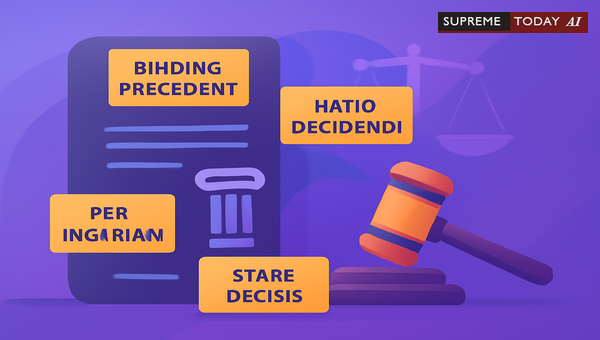
In the intricate world of law, precedents form the backbone of judicial decision-making. But not every judicial observation carries the weight of binding authority. Lawyers, students, and legal enthusiasts often seek clarity on this, with questions like Give me more cases on the principles governing precedents. This post dives deep into the doctrine of , focusing on what makes a decision binding, the role of , the pitfalls of rulings, and when courts may depart from earlier judgments.
Understanding these concepts is crucial for anyone navigating litigation or studying law, as they determine how courts apply past decisions to new facts. We'll draw from authoritative cases to illustrate these principles, emphasizing that this is general information and not specific legal advice—consult a qualified attorney for your situation.
What Makes a Precedent Binding?
At its core, only the —the legal principle or reasoning essential to the decision—binds lower courts and future benches. , or incidental observations, are persuasive but not mandatory. As clarified in key rulings, the only thing in a Judge’s decision binding a party is the principle upon which the case is decided, and the enunciation of the reason or principle on which a question before a court has been decided is alone binding as a precedent. 1994 0 Supreme(Cal) 318
Key Principles from Landmark Cases
vs. : Courts repeatedly stress that binding force lies solely in the ratio. For instance, judgments without clear reasoning or those ignoring statutes lack precedential value. 1994 0 Supreme(Cal) 318 2000 0 Supreme(Gau) 191
Decisions: A ruling rendered in ignorance of statutory provisions or without proper reasoning is and may be disregarded. Such decisions do not constitute binding law. 2023 0 Supreme(All) 1341 2023 0 Supreme(All) 1378
Overruling Prior Rulings: Later judgments can modify or overrule earlier ones, particularly if the prior decision was or overlooked key facts. A decision that is not accompanied by reasons and not proceeding on a conscious consideration of an issue cannot be a law declared within the meaning of . 2000 0 Supreme(Gau) 191
Facts Matter: Each case has its own facts, and precedents bind only for what they explicitly decide. Blind application without factual alignment leads to errors.
Hindustan Motors Ltd. VS Amardeep Singh Wirk - Consumer (2009)
1996 0 Supreme(Cal) 481and Long-Standing Decisions: Established rulings are followed for certainty unless proven wrong or explicitly overruled. However, judicial discipline allows correction of errors. 2000 0 Supreme(Gau) 191 2023 0 Supreme(All) 1378
Avoid Blind Reliance: Disposal of cases by blindly placing reliance on a decision is not proper, as circumstantial differences alter applicability. 2024 0 Supreme(Jhk) 47 2023 0 Supreme(All) 1378
These points underscore a balanced approach: respect for precedent promotes stability, but flexibility ensures justice.
The Doctrine of in Depth
, Latin for through lack of care, applies to decisions ignoring binding law or statutes. Courts justify ignoring such rulings to prevent perpetuating errors. For example, a judgment given in ignorance of relevant law or without proper reasoning loses binding authority. 2023 0 Supreme(All) 1341
In practice, this prevents a cascade of flawed decisions. Subsequent benches must analyze if an earlier ruling overlooked material provisions, allowing them to depart without formal overruling.
Overruling and Modifying Precedents
The hierarchy of courts empowers higher benches to overrule subordinates, and even coordinate benches may do so under certain conditions. is noted in some contexts, where new principles apply forward. 2000 0 Supreme(Gau) 191
Relatedly, U.S. case law echoes this: When cases are not alike, the common law method is to determine whether to extend or distinguish and limit pronouncements in prior cases, not to treat all the pronouncements like statutes.
This highlights distinguishing facts as a tool to limit precedent scope, aligning with Indian principles on factual uniqueness.
Hindustan Motors Ltd. VS Amardeep Singh Wirk - Consumer (2009)
Facts, Context, and Judicial Caution
No two cases are identical. A decision is a precedent for what it actually decides and no more, and subsequent interpretation is at least as significant, sometimes more so.
Hindustan Motors Ltd. VS Amardeep Singh Wirk - Consumer (2009)
Courts must dissect facts, context, and issues before invoking precedent.In administrative matters, similar scrutiny applies. For instance, in challenges to notifications for vacancies, courts confined selections to notified posts, emphasizing that expansions infringe later-qualified candidates' rights—treating prior policy as limited by its scope. 2012 0 Supreme(Mad) 1188
Exceptions and Limitations to Binding Precedents
While is foundational, exceptions exist:
- Decisions or ignorant of law can be disregarded. 2023 0 Supreme(All) 1341
- Overruling requires demonstrating error clearly. 2000 0 Supreme(Gau) 191
- Significant factual differences render precedents persuasive only. 2024 0 Supreme(Jhk) 47
- Long-standing rulings aren't immune if flawed. 2023 0 Supreme(All) 1378
These carve-outs maintain the law's dynamism.
Integrating Broader Judicial Insights
Other jurisdictions reinforce these tenets. In Sri Lankan appeals, courts recognized claimants' status based on prior proceedings, refusing technical objections to notice forms—prioritizing substance over form, akin to contextual precedent analysis.
In contempt contexts, apologies may purge offenses, but deliberate scandalization shakes public confidence, demanding adherence to precedents on judicial dignity. 2011 3 Supreme 684 This illustrates how precedents guide even non-precedential matters like ethics.
In service disputes, jurisdiction questions turned on notifications, with courts holding that absent specific extensions, writs remain viable—refusing blind adherence to administrative bars without statutory backing. 2012 0 Supreme(Ker) 28
Recommendations for Courts and Practitioners
To uphold precedent integrity:
- Analyze meticulously before application.
- Shun overruled or decisions.
- Treat differing facts as grounds for persuasion, not binding.
- Exercise discipline to correct oversights, preserving legal evolution.
Practitioners should brief courts on factual alignments and flag risks.
Key Cases Referenced
- 1994 0 Supreme(Cal) 318: Binding limited to ratio; ignorance voids authority.
- 2000 0 Supreme(Gau) 191: Reasons essential; correctable.
- 2023 0 Supreme(All) 1378: from statutory oversight.
Hindustan Motors Ltd. VS Amardeep Singh Wirk - Consumer (2009)
: Binding only for explicit decisions.- 2024 0 Supreme(Jhk) 47: No blind reliance amid factual variances.
- 2023 0 Supreme(All) 1341: Ignorance or poor reasoning nullifies precedent.
Conclusion: Navigating Precedents Wisely
Precedents ensure consistency, but their blind or misapplied use erodes justice. By focusing on , spotting flaws, and honoring factual contexts, courts advance the law. For litigants, grasping these nuances can sharpen arguments.
Key Takeaways:- binds; dicta persuades.- decisions aren't precedents.- Facts distinguish; analysis is key.- with flexibility.
This overview, drawn from diverse sources, highlights enduring principles. Always seek professional advice tailored to your case.
#BindingPrecedents #PerIncuriam #StareDecisis















