


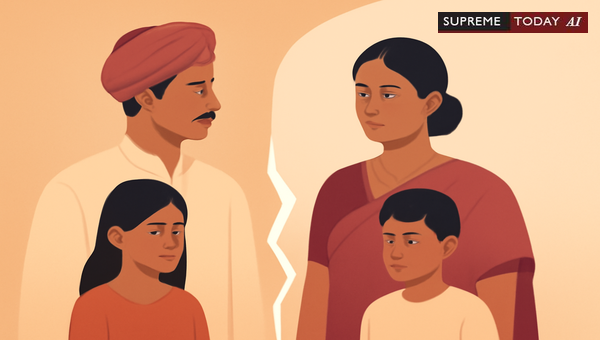
Can Kids from Bigamous Marriage Claim After Dad's Death?
In Hindu families governed by traditional , questions about inheritance and often arise, especially in complex scenarios involving second marriages. A common query is: During the lifetime of both paternal grandparents, can children of a bigamous marriage claim after the death of their father?
This issue touches on core principles of Hindu law, including the validity of marriages, legitimacy of children, and rights in . While are strictly prohibited, their implications for children's rights persist in legal disputes. This post breaks down the legal position, drawing from statutes like the , and judicial interpretations. Note: This is general information, not specific legal advice. Consult a qualified lawyer for your situation.
Legality of Under Hindu Law
—those solemnized while a prior marriage subsists—are under . As clarified in legal precedents, any marriage solemnized during the subsistence of a previous marriage is 2009 0 Supreme(SC) 1336.
Such unions lack legal recognition, forming the foundation for denying associated rights. Courts emphasize that prohibiting bigamy upholds monogamy and family stability, directly impacting children's status in joint families.
Status of Children Born from
Children born from void marriages like bigamy are not considered for coparcenary purposes. The law states that children born from a void or annulled marriage do not acquire rights in or to the property of any person other than their parents, and such children cannot be regarded as or joint family members 2023 6 Supreme 202 2008 0 Supreme(Kar) 103.
provides a , but it does not extend to children from void or 2023 6 Supreme 202 2008 0 Supreme(Kar) 103. Instead, their rights are confined to the property of their parents only.
Supporting this, case law notes: the plaintiff being the daughter of defendant No. 1, through the second wife, P.W.2, whose marriage is , could not claim any inheritance in the joint family property, that too while the father was alive 2023 0 Supreme(Telangana) 543. Similarly, He was not a child born out of the void or voidable marriage. Therefore, they were not members of the Hindu joint family and were not entitled to claim 2024 0 Supreme(Bom) 184.
Coparcenary Rights and Claims
Under , acquire rights by birth in joint family property. However, this presupposes a valid marriage. Children from bigamous unions do not qualify as or joint family members 2009 0 Supreme(SC) 1336 1969 0 Supreme(SC) 306 2000 0 Supreme(Kar) 321.
Thus, during the lifetime of paternal grandparents or other , such children cannot claim of . suits require coparcener status, which is absent here. Even after the father's death, claims extend only to his , not coparcenary shares.
Courts reinforce: children from void or voidable marriages do not have rights in the coparcenary or joint family property 2023 6 Supreme 202 2008 0 Supreme(Kar) 103. The general doctrine holds that only can demand .
Key Limitations During Grandparents' Lifetime
- No Joint Family Membership: Children from invalid marriages aren't automatic members. A joint Hindu family may consist of a single male member and widows, but children from invalid marriages do not automatically become members or 1969 0 Supreme(SC) 306.
- No Birth Rights: Coparcenary rights by birth fail without marital validity.
- Barred: Claims for in ancestral property are rejected while senior live.
Inheritance Rights: What Can They Claim?
While coparcenary is off-limits, children may inherit as from their father's estate post-death, limited to his personal property. Post- amendments grant daughters coparcenary rights generally, but invalid marriages exclude beneficiaries unless validated otherwise 2024 0 Supreme(Mad) 1854 2013 0 Supreme(Mad) 2114.
Additional insights: Children born out of a bigamous or void/voidable marriage generally do not acquire coparcenary rights or become in a Hindu joint family (synthesized from 2024 0 Supreme(Mad) 1854, 1987 0 Supreme(AP) 552, 1992 0 Supreme(AP) 104, 2024 0 Supreme(Mad) 2248, 2023 0 Supreme(Chh) 625).
They might claim maintenance or shares in parental assets, but not ancestral . One exception nuance: Some contexts recognize family membership for compassionate grounds, but not coparcenary—e.g., By no stretch of imagination, it can be stated that the children born through the second wife, even though the second marriage is void, are not members of such family 2013 0 Supreme(Mad) 157, though coparcener status remains distinct.
Judicial Interpretations and Case Law
Courts consistently deny coparcenary claims:
- Impact: Sons born through a bigamous marriage are not recognized as or joint family members under Hindu law (core finding from 2023 6 Supreme 202, 2009 0 Supreme(SC) 1336).
- Family Composition: Joint families include valid relatives only; invalid offspring excluded from property claims 2023 0 Supreme(Del) 1257, 2024 0 Supreme(Mad) 75.
- Recent Rulings: Courts have consistently ruled that children from bigamous or invalid marriages are not and do not have rights to joint family property during the lifetime of the father or other 2024 0 Supreme(Mad) 1854, 2023 0 Supreme(SC) 1046, 2020 0 Supreme(Kar) 128.
Domestic violence contexts highlight limits to valid relationships 2022 0 Supreme(MP) 268, 2019 0 Supreme(Kar) 1361, 2013 0 Supreme(Ker) 940, underscoring marital validity's role.
Exceptions, Recommendations, and Key Takeaways
Exceptions:- Rights to parental property only—not ancestral.- Potential legitimization via adoption or court declaration (rare).- Post-death inheritance as heirs, subject to will or .
Recommendations:- Seek legal validation of status through proceedings.- Courts must scrutinize marriage validity in claims.- Families: Document valid unions to avoid disputes.
Final Thoughts
Generally, children from cannot claim in joint family property during paternal grandparents' lifetime or as after the father's death. Their rights are typically limited to parental inheritance, upholding Hindu law's emphasis on valid marriages. This protects joint family integrity while providing narrow relief.
For personalized guidance, consult a Hindu law expert. Stay informed on evolving jurisprudence, as amendments like continue shaping rights.
References
- 2023 6 Supreme 202: Children from not .
- 2009 0 Supreme(SC) 1336: null under HMA Section 11.
- 2008 0 Supreme(Kar) 103: Rights limited to parents' property.
- 1969 0 Supreme(SC) 306: Joint family membership excludes invalid children.
- Additional: 2023 0 Supreme(Telangana) 543, 2024 0 Supreme(Bom) 184, 2024 0 Supreme(Mad) 1854, etc.












