


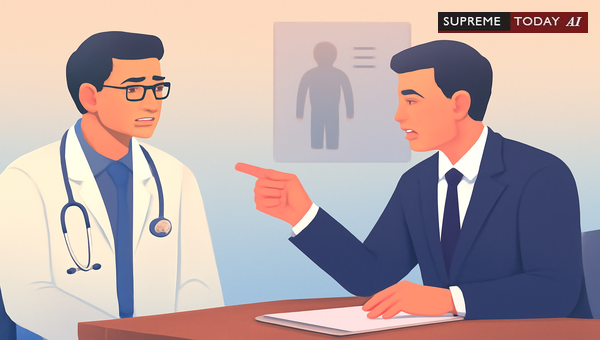
Key Cross-Examination Questions for Doctors in Murder Cases
In high-stakes murder trials, medical evidence often plays a pivotal role in determining the nature of injuries—whether they qualify as simple or grievous under the (IPC). What are the important cross-examination questions for a doctor in a murder case? This question is crucial for defense lawyers aiming to challenge the prosecution's narrative by scrutinizing the doctor's classification of injuries. Effective cross-examination can shift the perception of injury severity, potentially altering charges from murder to lesser offenses like or .
This post explores proven strategies, drawing from judicial precedents and medical-legal standards. Note that this is general information based on case analyses and not specific legal advice—consult a qualified lawyer for your case.
Understanding Simple vs. in Murder Cases
Under , includes fractures, dislocations, bone ruptures, permanent disfigurement, or injuries endangering life or causing prolonged disability (typically over 20 days). , by contrast, are less severe and do not meet these criteria. Courts emphasize objective medical findings over subjective opinions. For instance, injuries described as bone-deep or cutting bones may still be simple if no fracture or dislocation is confirmed. 1969 0 Supreme(SC) 338 2004 0 Supreme(SC) 1060
In one case, the court noted that injuries caused by cutting or splintering of bones, rupture, or fissure in bones amount to , but absent such evidence, they remain simple. 1969 0 Supreme(SC) 338 Similarly, another ruling clarified that without fractures or dislocations, even bone-involved injuries might not qualify as grievous unless they lead to permanent effects. 2004 0 Supreme(SC) 1060
Other judicial insights reinforce this: In a , injuries were classified as simple despite being described in detail, highlighting the need for precise .
In motor accident claims, courts distinguished one grievous and one simple injury, awarding compensation accordingly, underscoring classification's impact.
SRI VIPIN K vs SRI T MANJUNATH
2023 0 Supreme(Kar) 1086Strategies for Effective Cross-Examination of the Doctor
Cross-examining a doctor requires precision to expose inconsistencies between medical descriptions, opinions, and legal standards. Focus on objective evidence like X-rays, fractures, or disability assessments. Here's a structured approach:
1. Clarify the Nature and Extent of Injuries
Start by establishing the doctor's criteria for classification. Probe whether injuries were superficial, bone-deep, or involved actual bone damage.
- Key Questions:
- Doctor, you stated that injuries Nos. 3, 4, 5, and 6 involved bones being cut. Were these accompanied by fractures or dislocation? If not, on what basis did you classify them as grievous? 1969 0 Supreme(SC) 338 2004 0 Supreme(SC) 1060
- Were X-rays or imaging conducted to confirm fractures or dislocations?
This challenges assumptions, as courts have held that mere bone-deep cuts without fractures are often simple. 1969 0 Supreme(SC) 338
2. Probe the Basis of the Medical Opinion
Doctors' opinions must align with objective findings. Question subjective interpretations.
- Key Questions:
- Doctor, in your opinion, can injuries from cutting bones without fractures be considered grievous? Please explain the criteria used. 1969 0 Supreme(SC) 338
- Did your classification rely on visual inspection alone, or were there radiological confirmations?
Supporting cases show doctors opining on despite sharp cuts to bone level, like a sharp cut 6 x 1 x ½ on clavicle arm up to bone level. 2021 0 Supreme(Jhk) 647
3. Challenge the Absence of Objective Evidence
Highlight gaps in proof for .
- Key Questions:
- Doctor, you classified these as grievous, but did you observe fractures, dislocations, or ruptures? If not, what medical or legal basis supports this? 1969 0 Supreme(SC) 338 2004 0 Supreme(SC) 1060
- Were there signs of permanent disability, disfigurement, or life-endangering effects?
In a murder conviction upheld alongside , medical evidence corroborated eyewitnesses without inflating injury severity. 2024 Supreme(Online)(MP) 7819
4. Confirm Legal Standards Under
Tie medical findings to law.
- Key Questions:
- Doctor, are injuries without fractures or dislocation necessarily grievous? What are the essential criteria under Section 320 IPC?
- How does your opinion align with legal definitions of , such as emaciation or prolonged unconsciousness? 1969 0 Supreme(SC) 338 2004 0 Supreme(SC) 1060
Courts have reduced charges from murder to () when intent to kill wasn't evident from non-vital injuries. 1999 0 Supreme(Pat) 1225
5. Explore Long-Term Impact of Injuries
Assess consequences like disability or pain duration.
- Key Questions:
- Doctor, did the injuries cause permanent disability, disfigurement, or impairment? If not, can they still be grievous? 2004 0 Supreme(SC) 1060
- How long did the injured party suffer pain or incapacity—under or over 20 days?
Cases note simple contusions (e.g., contusion of 4 cm x 2 cm on left parietal bone) despite blunt force, as they lacked grievous markers. 2008 0 Supreme(UK) 107 2008 0 Supreme(All) 666
Insights from Indian Court Cases
Judicial precedents provide ammunition:
- Murder and Injury Classifications: In a boundary dispute turning fatal, to survivors (e.g., lacerations and swellings) were distinguished from lethal head blows, affirming convictions under . 2002 0 Supreme(Pat) 1049
- Counter-Cases and Consistency: Injuries examined post-24 hours were simple, contrasting prompt examinations in the main case, aiding credibility. 1999 0 Supreme(Pat) 1225
- No Intent to Kill: Where injuries avoided vital parts, courts downgraded from () to 326 (), stressing medical reports. 1999 0 Supreme(Pat) 1225
These examples illustrate how cross-examination can leverage medical reports to argue lack of grievous intent.
Key Takeaways for Lawyers and Litigants
- Always demand objective evidence like imaging for bone-related claims.
- Relate findings to clauses explicitly.
- Use precedents to show similar injuries ruled simple. 1969 0 Supreme(SC) 338 2004 0 Supreme(SC) 1060
Conclusion
Mastering cross-examination questions for doctors in murder cases can dismantle overstated injury claims, potentially swaying trial outcomes. By focusing on fractures, dislocations, and legal alignment, defense counsel can highlight simple vs. grievous distinctions effectively. Remember, outcomes depend on case specifics—seek professional legal counsel. Stay informed on evolving medical-legal standards to strengthen your advocacy.
References:- 1969 0 Supreme(SC) 338: Criteria for .- 2004 0 Supreme(SC) 1060: Classification without fractures.- Additional cases:
, 2021 0 Supreme(Jhk) 647, 2024 Supreme(Online)(MP) 7819, etc. #CrossExamination #MurderTrial #MedicalEvidence












