


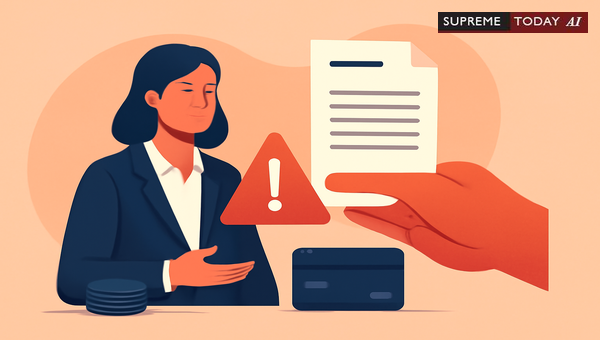
Is a Company Director Liable if the MD Doesn't Pay Dues?
In the world of business, companies often face financial obligations like unpaid dues, taxes, or . A common concern arises: can a company director be held if the Managing Director (MD) fails to pay these dues? This question frequently troubles directors, shareholders, and business owners navigating India's corporate landscape.
The short answer is generally no—a director's mere position does not trigger personal liability. However, specific statutory conditions must be examined, particularly under laws like the . This post breaks down the legal principles, judicial precedents, and exceptions, drawing from key court rulings. Note: This is general information, not legal advice. Consult a qualified lawyer for your specific situation.
Main Legal Finding on Director Liability
A company director is generally not for the company's dues unless statutory provisions or specific circumstances impose such responsibility—especially if the director was not in charge of or responsible for the company's business at the relevant time2014 7 Supreme 580.
The company is a , distinct from its directors and shareholders. Directors cannot be automatically roped in for the company's debts. As one ruling notes: not on behalf of the company, but on their own behalf, a director is therefore not liable to pay the debts incurred by the company... directors and shareholders of a company are not liable for the dues of the company except to the extent permitted by law or in the case where fraud has been committed2024 Supreme(BD)(SC) 8577.
Key Principles Under the NI Act
Much of the guidance comes from , which deal with —a common source of dues disputes.
- Liability depends on : The complaint must explicitly state that the director was in charge of and responsible for the conduct of the company's business at the relevant time2014 7 Supreme 580 2009 5 Supreme 300.
- Mere directorship is insufficient: Merely being described as a director in a company is not sufficient to satisfy the requirement of 2009 5 Supreme 300.
- Proof is required: Without evidence linking the director to the offense or dues at that time, proceedings can be quashed 2010 0 Supreme(SC) 521.
Courts emphasize: A director who was not in charge of and was not responsible for the conduct of the business of the company at the relevant time will not be liable2014 7 Supreme 580.
Distinguishing Managing Directors from Other Directors
The role matters significantly:
- Managing Directors (MDs) or Joint MDs: Their position implies they are in charge and responsible, making liability almost automatic2005 6 Supreme 442 2025 8 Supreme 112.
- Other Directors: They escape liability unless proven to have oversight over the relevant business conduct 2009 5 Supreme 300.
For instance: The position of Managing Director or Joint Managing Director might be different, as their office suggests, they are in charge of the company and responsible for its conduct2005 6 Supreme 442.
In non-NI Act contexts, similar logic applies. A director cannot be held liable for company dues without an 2016 0 Supreme(Del) 4368. A director cannot be held liable for the dues of a company, in the absence of any executed by him. It is well settled that a company is an independent juristic entity distinct from its directors and shareholders2016 0 Supreme(Del) 4368.
Judicial Precedents Reinforcing Protection
rulings consistently protect directors:
- are mandatory: It is necessary to specifically aver in a complaint under that at the time the offence was committed, the person accused was in charge of, and responsible for the conduct of the business of the company2014 7 Supreme 580.
- No automatic extension: A person who was not in charge of and responsible for the conduct of the company's business at the relevant time cannot be held liable2009 5 Supreme 300.
- Quashing unwarranted proceedings: In the absence of specifics, cases against directors are liable to be quashed 2010 0 Supreme(SC) 521.
Other courts echo this. For example, The only case pleaded against the defendant No.3 is of being a Director of the defendant No.1 Company. However a person owing to being a Director of a company does not become for dues of the company2013 0 Supreme(Del) 308.
Exceptions and Special Cases
While general protection holds, exceptions exist:
- : Directors may be liable for fraud, , or gross neglect 2024 Supreme(BD)(SC) 8577 2025 Supreme(Online)(Tel) 53964. Directors of a company are liable for of company's funds and other misfeasance, but not for an ordinary contractual liability of the company2025 Supreme(Online)(Tel) 53964.
- Tax Dues (, Section 179): Directors of private companies with outstanding tax dues may be liable unless they prove non-recovery wasn't due to gross neglect, misfeasance, or breach of duty 2012 0 Supreme(Guj) 865. The burden is on the director to rebut.
- Gratuity or Labor Dues: MDs are not under the ; liability is on the company as employer. unless the statute in question made the managing director of a company for the dues recoverable from the company, he could not be held personally responsible2009 0 Supreme(Guj) 214 2009 0 Supreme(Guj) 216. Courts have set aside personal liability orders, directing payment from company assets only.
- Resigned Directors: Those who resigned before dues arose, with proper notification, are typically safe 2025 8 Supreme 112 2009 5 Supreme 300.
In shareholder or employee disputes, mere shareholding or directorship doesn't suffice without proof of control 2025 Supreme(Online)(Guj) 12619.
Practical Recommendations for Directors
To safeguard against liability:
- Ensure complaints lack linking you to the conduct—challenge them early.
- Maintain records of resignation, roles, and lack of involvement.
- For MDs, fulfill statutory duties diligently.
- In tax or labor matters, proactively prove defenses like absence of neglect.
- Courts urge scrutiny: Courts and authorities should scrutinize the nature of the averments and the factual basis before holding a director 2014 7 Supreme 580.
Key Takeaways
- No automatic liability: Directors are shielded by the unless statutes like NI Act are specifically invoked with proof.
- MDs face higher risk due to their role, but even they aren't in many non-statutory dues (e.g., gratuity).
- Always demand specifics: Vague allegations fail in court.
- Company pays first: Personal assets are protected absent fraud or explicit law.
In conclusion, if the MD doesn't pay dues, other directors are typically not liable without evidence of their direct responsibility. Stay informed, document everything, and seek professional advice to navigate these complexities. For tailored guidance, contact a corporate lawyer.
References (select judgments):1. 2009 5 Supreme 300 – Core NI Act liability requirements.2. 2014 7 Supreme 580 – Need for .3. 2005 6 Supreme 442 – Director vs. MD distinction.4. 2010 0 Supreme(SC) 521 – Quashing proceedings.5. 2025 8 Supreme 112 – MD role and resignations.6. 2024 Supreme(BD)(SC) 8577, 2016 0 Supreme(Del) 4368, 2012 0 Supreme(Guj) 865 – Broader corporate separations.
#DirectorLiability, #CompanyLaw, #NILiability












