


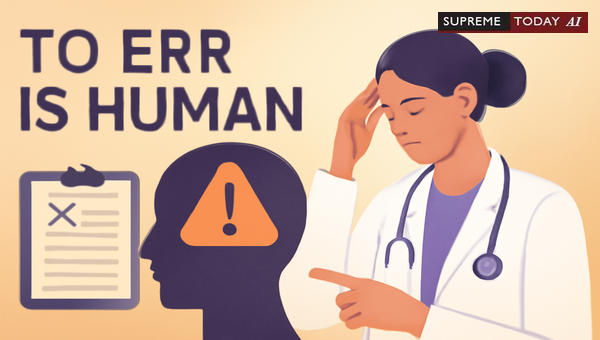
To Err is Human: How Indian Courts View Human Errors in Law
The age-old adage To Err is Human resonates deeply in everyday life, but what does it mean in the legal realm? In the Indian judiciary, courts frequently grapple with this principle when assessing mistakes made by judges, doctors, lawyers, administrators, and other professionals. The question arises: To Error is Human—but when does a simple human mistake cross into negligence or misconduct? This blog post delves into the legal principles governing human errors, drawing from landmark judgments and statutory interpretations to provide clarity.
Understanding this distinction is crucial for professionals facing allegations, individuals involved in disputes, and anyone navigating India's complex legal landscape. While courts acknowledge human fallibility, they draw firm lines based on context, intent, and consequences. Let's explore these nuances.
Recognition of Human Fallibility in the Indian Judiciary
Indian courts consistently recognize that judges, lawyers, and professionals are human and prone to errors. As noted in judicial precedents, judges and professionals are acknowledged as human beings capable of making errors, including mistakes of judgment or inadvertence2015 0 Supreme(Pat) 600.
This principle extends to the highest echelons. In one case, the superior courts emphasized: The superior Courts must always keep in mind that, like all other human beings, the judicial officers are also not infallible and any remarks passed against them may result in incalculable harm resulting in grave injustice. It must be remembered that error is human and no one is infallible. A judge who has not committed an error is yet to be born.2012 0 Supreme(All) 62.
Such recognition fosters leniency for , preventing undue punishment for inadvertent slips.
Distinction Between Human Error and Negligence
Not every error equates to negligence or misconduct. Courts meticulously distinguish between human errors caused by lack of knowledge, oversight, or inadvertence, especially when not motivated or deliberate, which are often excusable 1998 0 Supreme(Del) 168 2007 0 Supreme(MP) 518.
Key factors include:- Context: Was the error isolated or persistent?- Intent: Absent malice or recklessness?- Consequences: Did it cause serious harm?
For instance, a single act of omission or error may not constitute misconduct unless it results in serious or irreparable harm, or demonstrates or recklessness2017 0 Supreme(Pat) 489. In a Kerala Cooperative Society case, the court quipped, To err is human but to persist in error is of course diabolical, ruling that simple human errors do not justify proceedings under 2021 0 Supreme(Ker) 537. Here, accepting a cheque for rubber sales wasn't deemed a credit sale violation, as no loss occurred to society.
Human Errors in Medical and Professional Contexts
Medical negligence cases exemplify this balance. Courts differentiate (which may be excusable) and , which invariably leads to liability
. Errors of judgment within the standard of a reasonably competent professional are typically not negligent, echoing the English case referenced in Indian rulings
.
Professionals must exercise reasonable care and standard of skill, but human oversight doesn't automatically trigger liability. In pay revision disputes, courts noted: Sometimes, there may occur delay in auditing, finding out errors and initiating action for recovery. While doing so, there are chances for error because error is human.2012 0 Supreme(Ker) 665.
Errors in Administrative and Legal Proceedings
Administrative lapses, like documentation errors, are often forgiven if not intentional or motivated, especially sans significant harm PAXAL CHEMICAL INDUSTRY (P) LTD., Vs ASST. STATE TAX OFFICER(INTELLIGENCE), - Kerala (2020)2025 Supreme(Online)(CAT) 2849. Human errors in documentation or procedural steps, when not intentional or motivated, are generally viewed as excusable2025 Supreme(Online)(CAT) 2849.
In criminal proceedings, oversights like failing to attach witness statements can be rectified. One court held that the power under enables summoning evidence essential for justice, recognizing inadvertent errors in police reports 2009 0 Supreme(P&H) 2203. The adage to error is human is the recognition of the possibility of making mistakes to which humans are prone underscores this 2009 0 Supreme(P&H) 2203.
Employment disputes also invoke this. A relieving letter mislabeled due to clearly a human error didn't vitiate proceedings, as courts quashed improbable criminal allegations stemming from civil disputes 2017 0 Supreme(Bom) 2596.
Implications for Liability and Defenses
The degree of culpability and severity of consequences determine outcomes. Errors attributable to human fallibility should be distinguished from or ; the former often warrants leniency or correction rather than punitive actionPAXAL CHEMICAL INDUSTRY (P) LTD., Vs ASST. STATE TAX OFFICER(INTELLIGENCE), - Kerala (2020).
Key Defenses for Clients:
- Emphasize the nature, context, and consequences of the error.
- Prove lack of malicious intent or for leniency.
- For procedural errors, show they were inadvertent and not motivated by bad faith
.
In appointments like District Government Counsels, courts mandated fair processes, quashing orders bypassing consultations and stressing renewal considerations before fresh hires 2012 0 Supreme(All) 62.
While international cases like US (e.g., reversing only if prejudiced 2024 Supreme(US)(ca7) 285) influence, Indian jurisprudence prioritizes equity.
Conclusion and Key Takeaways
The Indian judiciary's stance affirms: to err is human, and good-faith errors without are often excusable. Context, severity, and intent are pivotal.
Key Takeaways:- Human fallibility is inherent; not all mistakes are misconduct 2015 0 Supreme(Pat) 600.- Distinguish bona fide errors from negligence based on standards of care
.- Courts favor rectification over punishment for inadvertent lapses 2009 0 Supreme(P&H) 2203.- Professionals: Document diligence to counter claims.
This post provides general insights based on judicial trends and is not legal advice. Consult a qualified lawyer for specific cases.
#ToErrIsHuman #IndianLaw #LegalErrors















