


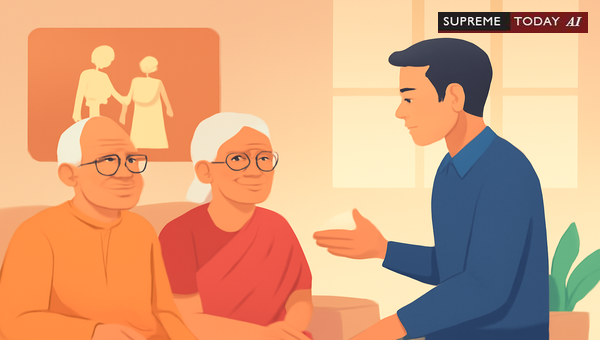
Guide: Recover Under Senior Citizens Act
In an aging population like India's, ensuring the welfare of senior citizens and parents is crucial. Many elderly individuals face neglect from children or relatives, leading to financial and emotional distress. If you're wondering how to recover under the Senior Citizens Act, this comprehensive guide breaks it down. The (the Act) offers a speedy legal framework to secure food, clothing, residence, medical care, and more. This post explores eligibility, procedures, judicial insights, and practical tips—generally speaking, as laws can vary by case.
Overview of the
Enacted to uphold constitutional rights under and 41, the Act mandates children and relatives to maintain parents and seniors unable to support themselves. is broadly defined under Section 2(b) as including provision for food, clothing, residence and medical attendance and treatment
.
Key provisions include:- Eligibility: Parents (regardless of age) and senior citizens (60+) can claim . For entitlement of under the Act, it is not necessary that parents must be senior citizens, meaning thereby parents need not have attained the threshold age of 60 years or more. Parents and senior citizens are two classes complete and exclusive in themselves 2025 0 Supreme(Mad) 2180 2016 0 Supreme(P&H) 2101.- : Local tribunals, often headed by Sub-Divisional Magistrates, handle claims for quick resolution 2015 0 Supreme(P&H) 1621.- Object: To enable dignified living, as the right to life under Article 21 includes living with human dignity 2022 0 Supreme(Ker) 194.
Step-by-Step Mechanism to Recover
Recovering is straightforward under the Act:
File an Application: Submit under Section 5 to the . Seniors or parents unable to maintain themselves can apply against children or relatives. Section 4 of the Act captioned ' of Parents and Senior Citizens' enables the senior citizens to submit application under S.5 for seeking 2025 Supreme(Online)(Bom) 6218. Applications can target one or more persons; Section 5(5) allows this flexibility 2022 0 Supreme(Raj) 287.
Tribunal Proceedings: Tribunals aim for speedy remedies. Provide evidence of inability to self-maintain and neglect by relatives 2020 0 Supreme(Ker) 1045.
: If relatives refuse or harass, tribunals can order eviction under Section 23 to protect the elderly's residence and safety 2023 0 Supreme(Del) 3042 2023 0 Supreme(MP) 826. However, this may conflict with other laws, like the (PWDV Act). Courts note: Right of a woman to secure residence order in respect of a cannot be defeated by simple expedient of securing order of eviction by adopting under Senior Citizens Act
.
Enforcement: District Magistrates oversee compliance (Section 22). They monitor applications and execute orders 2022 0 Supreme(Ker) 194.
Appeals: Aggrieved parties, including children, can appeal under Section 16. The right to appeal under the , extends to all affected parties, including children and relatives, not just senior citizens and parents 2025 0 Supreme(Bom) 664. Courts emphasize to avoid excluding affected parties 2025 0 Supreme(Bom) 664.
Judicial Interpretations and Landmark Cases
Courts liberally construe the Act for elderly protection:
Implied Obligations: Even without explicit deed terms, settlements imply care. In one case, a mother deeded property to her son expecting ; neglect led to reversal: The court held that an for exists even without explicit terms in the deed 2025 0 Supreme(Mad) 2180. Property transfers can be voided under Section 23 if seniors are deprived 2023 0 Supreme(MP) 826.
Multiple Respondents: Sons aren't solely liable; siblings share burdens. Tribunals must consider all relatives 2022 0 Supreme(Raj) 287.
Conflicts with DV Act: Eviction isn't automatic against daughters-in-law in shared households. Harmonization is key: Primary effort of Interpreter must be to harmonize, not excise
. In a case, a widow retained ground floor possession despite eviction order, as no damage was proven 2021 0 Supreme(All) 888.
Execution and Oversight: Tribunals' orders are enforced by Magistrates, not (Section 11 inapplicable) 2022 0 Supreme(Ker) 194.
Legal Representation: Initially barred (Section 17), but now allowed post challenges, aligning with the 2014 0 Supreme(P&H) 1103.
These rulings ensure fairness while prioritizing seniors' welfare 2023 0 Supreme(Del) 3042 2018 0 Supreme(P&H) 4543.
Limitations and Key Considerations
While powerful, the Act has nuances:- No Automatic Override: It doesn't always trump PWDV Act rights for women in shared homes
.- Evidence Required: Claims need proof of neglect and self- inability.- Appeals Timeline: File promptly to challenge orders 2014 0 Supreme(P&H) 1103.- Property Disputes: Tribunals can declare transfers void but assess intent 2025 0 Supreme(Mad) 2180.
Always consult local rules, like state-specific Senior Citizens Rules (e.g., Rule 19 for Magistrate duties) 2022 0 Supreme(Ker) 194.
Conclusion and Practical Recommendations
The Senior Citizens Act empowers parents and seniors to reclaim dignity through recovery, tribunals, and eviction safeguards. Key takeaways:- Parents don't need to be 60+ to claim 2016 0 Supreme(P&H) 2101.- Tribunals provide fast relief with appeal rights for all 2025 0 Supreme(Bom) 664.- Implied care obligations protect against neglect 2025 0 Supreme(Mad) 2180.
Recommendations:- Gather documents (income proofs, property deeds) before filing.- Seek legal help for representation and enforcement.- Follow up with Magistrates for compliance.- Consider to preserve family ties.
This is general information based on the Act and cases; outcomes depend on facts. Consult a qualified lawyer for personalized advice. For more, reference cited provisions 2023 0 Supreme(Pat) 297 2023 0 Supreme(Del) 3042 2020 0 Supreme(Ker) 1045 2023 0 Supreme(MP) 826.
Last updated: Current as of available case law. Laws evolve—stay informed.
#SeniorCitizensAct,#ElderlyMaintenance,#LegalGuideIndia















