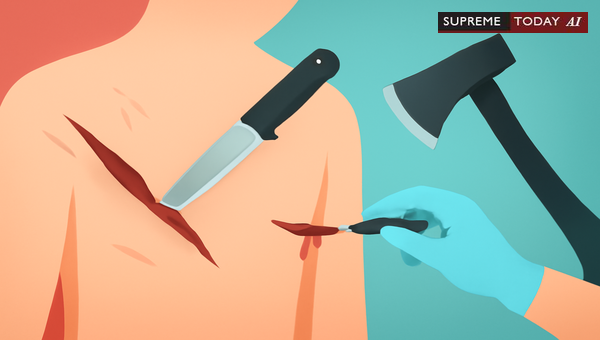
Can a Knife Cause Lacerated Injuries? Legal Insights
In high-stakes criminal cases, such as assaults or homicides, the type of injury sustained by the victim often becomes a pivotal piece of evidence. Eyewitness accounts may claim a sharp weapon like a knife was used, but medical reports reveal —irregular, torn injuries typically associated with blunt force. This raises a critical question: Can a lacerated injury be caused with a knife?
Determining the weapon from injury characteristics can make or break a prosecution or defense. Courts frequently grapple with discrepancies between (eyewitness testimony) and medical evidence. This post examines forensic distinctions, key court findings, and factors like weapon condition, drawing from legal precedents and expert opinions. Note: This is general information, not legal advice—consult a qualified attorney for specific cases.
Understanding Injury Types: Incised vs.
To address whether a knife can cause a lacerated injury, we must first define the terms:
- : Clean, sharp cuts from edged weapons like knives or axes' sharp sides. These have neat edges and align with slicing motions. 2022 0 Supreme(Bom) 284
- (or , CLWs): Irregular, bruised, and torn, often from blunt objects or impacts against hard surfaces. They feature crushed tissue and bridging skin strands. 2022 0 Supreme(Bom) 284
Medical officers typically opine that sharp-edged weapons produce , while blunt force yields lacerations. For instance, a Medical Officer (PW-12) confirmed that a fatal stab injury could not have been inflicted by an axe, and CLWs arise only from blunt objects. 2022 0 Supreme(Bom) 284
However, real-world cases complicate this. Knives and axes aren't always razor-sharp, and usage matters.
Medical Evidence: What Do Experts Say About Knives and Axes?
Forensic pathology plays a central role in weapon identification. Postmortem and injury reports often classify wounds to link them to alleged weapons.
Axe as a Proxy for Sharp Weapons
While the question focuses on knives, axes provide analogous insights since both are sharp-edged tools. Analysis shows:
- Sharp edge use: Produces incised or cut wounds. 2022 0 Supreme(Bom) 284
- Blunt side or dulled blade: Causes (CLWs). 2022 0 Supreme(Bom) 284
Medical testimony reinforces: Injuries described as could not have been caused by a sharp-edged weapon like an axe. Instead, they could result from blunt force. 2001 0 Supreme(UK) 71 2001 0 Supreme(UK) 72
Yet, experts note exceptions. It is true that in case blow of axe is given by sharp side it causes incise or cut injuries. But, in case sharp side of the axe is blunt then it would cause contusion like external injury Nos. 2018 0 Supreme(Bom) 259
For knives, similar logic applies. A dull knife blade—common after repeated use—may tear rather than slice cleanly, mimicking lacerations. One report describes incised injuries from a knife alongside lacerated ones on an injured party. 2023 0 Supreme(Chh) 247
Key Medical Findings
- on the scalp or limbs suggest blunt impact, but if against bone (e.g., head), even sharp weapons can produce them. 1985 0 Supreme(AP) 10 1985 0 Supreme(Mad) 48
- Only lacerated wound as found by me on the person of deceased may be caused due to assault by ‘lathi’. Incised or cut wounds... by sharp cutting weapon like ‘axe’(kural). 2014 0 Supreme(Cal) 552
- Contradictorily, the injury was a lacerated injury which suggests that the blunt side of the axe was used. 1991 0 Supreme(Cal) 359
Court Cases and Testimonies: Discrepancies in Evidence
Indian courts have debated this extensively, often pitting eyewitness claims against forensics.
Prosecution Challenges
In one case, medical evidence ruled out an axe for : The very injury and particularly injury no.1... cannot be caused by farsa (axe like weapon), because the injury caused would be incised wound and not lacerated wound. 2016 0 Supreme(All) 3157
alleging axe use was undermined: If medical evidence categorically rules out axe causation, eyewitness reliability falters. 2022 0 Supreme(Bom) 284
Defense Perspectives
Defenses argue weapon condition matters. Axe as a Weapon - Although an axe is a dangerous weapon... the nature of injuries (lacerated vs. incised) depends on the condition of the axe's blade. Continuous use can blunt the blade, leading to . References include 2023 0 Supreme(Chh) 511, 2025 Supreme(Online)(MP) 3192, 2024 Supreme(Online)(MP) 14339.
Another: Appellant sustained injuries too, with the deceased's single lacerated wound possibly from a non-sharp axe side. 2023 0 Supreme(Chh) 511
Knives appear alongside: The accused were armed with dangerous weapons like Axe and knife... injury nos. 3, 5 and 6 can be caused by Axe.
SANTOSH S/O JANARDHAN PAGRUT AND ANOTHER (IN JAIL) vs THE STATE OF MAHARASHTRA THR. POLICE STATION OFFICER, POLICE STATION AKOT FILE, AKOLA -
PW.1 sustained multiple lacerated injuries, with axes/daos deemed deadly. 2025 Supreme(Online)(Ori) 1212
Factors Influencing Injury Type
Several variables determine if a knife causes lacerated injuries:
- Blade Sharpness: Dull knives tear tissue. 2018 0 Supreme(Bom) 259
- Impact Angle/Surface: Striking bone or hard objects creates lacerations. 1985 0 Supreme(AP) 10
- Weapon Side: Knives lack a blunt side, but hilts or improper grips can blunt-impact. Axes explicitly have blunt backs. 1991 0 Supreme(Cal) 359
- Victim Movement: Resistance can dull cuts into tears.
Expert opinions clarify: Forensic experts... have clarified that injuries can be caused by both sharp and blunt sides of an axe, especially if the blade has become blunt over time. 2023 0 Supreme(Chh) 511 2024 Supreme(Online)(MP) 14339 2021 1 Supreme 22
Legal Implications for Criminal Cases
- Prosecution Burden: Must reconcile medical with . Discrepancies (no despite axe claims) weaken cases. 1975 0 Supreme(AP) 36 2018 0 Supreme(Bom) 1585
- Defense Strategy: Highlight dullness or blunt use. Emphasize the medical evidence... to challenge the reliability of eyewitness accounts. 2022 0 Supreme(Bom) 284
- Expert Testimony: Seek clarification on injury-weapon links. 2014 0 Supreme(All) 3790 2015 0 Supreme(All) 614
In one appeal: Single lacerated blow with axe lacked intent to kill, attributing to quarrel heat. 1991 0 Supreme(Cal) 359
Key Takeaways and Recommendations
- Typically, no: Sharp knives cause ; lacerations suggest blunt force. 2001 0 Supreme(UK) 71
- But possible: Dull blades, blunt sides (axes), or bony impacts enable lacerations. 2018 0 Supreme(Bom) 259 2023 0 Supreme(Chh) 511
- Medical evidence often trumps eyewitnesses if contradictory.
- Recommendations:
- Argue weapon inconsistency for defense.
- Call forensic experts.
- Challenge via postmortem discrepancies.
Conclusion: A knife may cause lacerated injuries under specific conditions like dullness, but courts generally expect from sharp edges. Balanced evidence review is essential. This analysis draws from precedents like 2022 0 Supreme(Bom) 284, 2023 0 Supreme(Chh) 247, 2016 0 Supreme(All) 3157, and others—always verify with professionals.
Word count: 1028. For case-specific guidance, contact a lawyer.
References:- 2022 0 Supreme(Bom) 284 2001 0 Supreme(UK) 71 2001 0 Supreme(UK) 72 1985 0 Supreme(AP) 10 1985 0 Supreme(Mad) 48 2014 0 Supreme(All) 3790 2015 0 Supreme(All) 614 1975 0 Supreme(AP) 36 2018 0 Supreme(Bom) 1585 2023 0 Supreme(Chh) 511 2023 0 Supreme(Chh) 247 2025 Supreme(Online)(Ori) 1212 2024 Supreme(Online)(JHK) 6460
SANTOSH S/O JANARDHAN PAGRUT AND ANOTHER (IN JAIL) vs THE STATE OF MAHARASHTRA THR. POLICE STATION OFFICER, POLICE STATION AKOT FILE, AKOLA -
2018 0 Supreme(Bom) 259 2016 0 Supreme(All) 3157 2014 0 Supreme(Cal) 552 1991 0 Supreme(Cal) 359 #ForensicLaw, #CriminalDefense, #InjuryTypes