Searching Case Laws & Precedent on Legal Query.....!
Analysing the retrieved Case Laws
Scanned Judgements…!



Searching Case Laws & Precedent on Legal Query.....!
Analysing the retrieved Case Laws
Scanned Judgements…!
The right is not absolute but is subject to reasonable legislation by the State, which must ensure free and compulsory education for children within the specified age group ["2025 0 Supreme(All) 3110"] ["2023 0 Supreme(Raj) 620"].
Legal Interpretations & Judicial Decisions Main points:
Several judgments have clarified that private educational institutions receiving aid or functioning under government regulation are also subject to constitutional obligations concerning the right to education ["2023 0 Supreme(Mad) 2058"] ["2024 0 Supreme(All) 1402"].
Implementation and Challenges Main points:
Judicial rulings have emphasized that denial of admission or inadequate facilities violate the constitutional right and the provisions of the RTE Act ["2024 0 Supreme(J&K) 1"] ["2023 0 Supreme(Mad) 3237"].
Rights of Private and Minority Institutions Main points:
Courts have upheld that imparting education is a public duty, and private institutions must comply with laws enacted to realize the constitutional right to education ["2023 0 Supreme(Raj) 620"].
Case Law and Specific Judgments Main points:
Analysis and Conclusion:The corpus of case law establishes that Article 21-A enshrines the fundamental right to free and compulsory education for children aged 6-14, directly linking it to the right to life under Article 21. The 2009 RTE Act operationalizes this right, imposing obligations on the State and private institutions to ensure quality, accessible education. Courts have consistently emphasized that this right is not absolute but must be protected against violations, including denial of admission or inadequate facilities. While private and minority institutions have rights under Article 30(1), these are subject to reasonable regulations aimed at fulfilling the constitutional mandate. Overall, the jurisprudence underscores the State's positive obligation to make education accessible, equitable, and of good quality, with judicial oversight ensuring compliance and protecting children's rights.
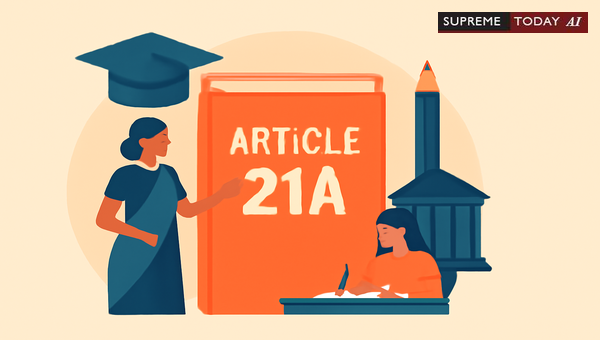
In the realm of fundamental rights, few issues resonate as deeply as access to education. A common query among students, parents, and legal enthusiasts is: cases with regard to education. This question delves into how of the Indian Constitution—the right to life and personal liberty—has been expansively interpreted by the judiciary to encompass education as an essential facet of dignified living. Through pivotal and judgments, education has evolved from a to a , imposing obligations on the State to ensure quality, compulsory education, particularly for children aged 6-14 years. This blog post unpacks key cases, statutory frameworks like the , and ongoing debates, providing a roadmap for understanding these constitutional guarantees. Note: This is general information and not specific legal advice; consult a qualified lawyer for personalized guidance.
The has repeatedly affirmed that the right to education flows implicitly from , viewing it as indispensable for individual development and societal progress. In landmark rulings, the Court has held that the right to education is implicitly included within the right to life under 2022 0 Supreme(SC) 1135. Education is not merely formal schooling but extends to moral, cultural, and social development, forming the very foundation of good citizenship—echoing global precedents like 2022 0 Supreme(SC) 1135.
This interpretation underscores the State's constitutional duty to provide and regulate education, especially primary education, to promote social justice and equality. The Court has emphasized that denying education deprives a child of dignity and even freedom of speech under , as noted in cases linking education access to broader rights 2022 0 Supreme(SC) 1043.
A pivotal development came with the in , inserting , which explicitly mandates: The State shall provide free and compulsory education to all children of the age of six to fourteen years in such manner as the State may, by law, determine. 2022 0 Supreme(SC) 1135 2012 3 Supreme 305. This provision transformed education into a fundamental right, operationalized through the RTE Act, .
The RTE Act enforces this by requiring free and compulsory elementary education, setting norms for quality, and imposing duties on schools. Courts have upheld its validity, stressing that the mandate to the State to provide free and compulsory education under -A is almost absolute 2024 0 Supreme(Bom) 465. For instance, in challenges to state rules exempting private schools from 25% reservations for disadvantaged children based on proximity, courts quashed such amendments as the RTE Act and violative of 2024 0 Supreme(Bom) 465.
Judicial scrutiny has focused on implementation challenges:
Teacher Qualifications: In rulings on notifications allowing B.Ed. holders for primary teaching, courts declared them illegal, prioritizing D.El.Ed. for aligned with 's quality emphasis. The inclusion of B.Ed. as qualification undermines educational standards for primary education 2024 0 Supreme(Chh) 299. TET (Teacher Eligibility Test) is now mandatory for recruitment and promotions, even in minority institutions, balancing quality with minority rights under 2025 0 Supreme(SC) 1293.
Age for Admission: Disputes over cut-off dates for RTE admissions have led to beneficent interpretations. Courts have ruled that a child completing five years by —counting total days rather than exact dates—is eligible, ensuring no technical barriers deny education. A child admitted to the school... is invigoration of read with 2016 0 Supreme(Guj) 1704.
Inclusivity Mandates: requires 25% seats for disadvantaged groups in private unaided schools, upheld as consistent with constitutional goals, though subject to minority exemptions 2025 0 Supreme(SC) 1293.
These cases illustrate the judiciary's role in making the right justiciable, with the State obligated to ensure access without arbitrary hurdles.
A contentious area is the medium of instruction. While parents' rights to choose (linked to Articles 19(1)(a), 29, 30) are recognized, they are not absolute. The has clarified: the right to education does not necessarily include the right to be educated in a specific medium... especially when the State has policies in place for linguistic and cultural integration 2022 0 Supreme(SC) 1135 2022 0 Supreme(Raj) 283.
State policies promoting regional languages at primary levels for national integration and social cohesion are upheld under 's reasonable restrictions. However, regulations must not infringe core rights, balancing individual choice with public interest 2022 0 Supreme(SC) 1135.
Minority institutions enjoy protections under , exempt from certain RTE provisions like reservations, provided regulations do not destroy their character. Yet, courts question blanket exemptions, arguing for coexistence: minority institutions can maintain the ethos of their identity... but must adhere to basic educational standards 2025 0 Supreme(SC) 1293 2012 3 Supreme 305.
Recent controversies, such as hijab bans in schools, have invoked alongside 19(1)(a) and 25. Denying entry for wearing hijab was deemed an invasion on privacy... denial of secular education if it bars access, positioning attire choice as a ticket to education for some girls 2022 0 Supreme(SC) 1043. Employment disputes in private schools, however, fall outside if purely contractual, lacking public law elements 2024 0 Supreme(Cal) 655.
Courts construe in light of Directive Principles like , upholding RTE's regulatory framework. The State can impose standards on fees, admissions, and infrastructure in unaided institutions to curb , without creating a fundamental right to professional education beyond 2011 0 Supreme(AP) 909. Linguistic minorities' interests under are safeguarded, but not as mandates for specific syllabi 2020 0 Supreme(MP) 942.
Stakeholders should advocate for balanced policies, reasonable regulations, and dialogue on linguistic diversity. As the notes, education ranks at the apex of the function of a State—a commitment India continues to judicially refine 2022 0 Supreme(SC) 1135.
References: All citations refer to specific case document IDs for accuracy.
#Article21 #RightToEducation #RTEAct


This is because Article 21-A vests the power in the State to decide the manner in which it will provide free and compulsory education to the specified category of children. As stated, the 2009 Act has been enacted pursuant to Article 21-A. 46. ... In this case, we are concerned with the interplay of Article 21, Article 21-A, on the one hand, and the right to establish and administer educational institution under Article#H....

Right to live in Article 21 covers access to education. .. .. .. .. .. .. .. .. . The word "education" was read into Article 21 by the judgments of this Court. However, Article 21 merely declared "education" to fall within the contours of right to live. ... Article 21 of the Constitution of India. ... Since the State is not depriving the respondents'-students of their right to education#....

The amendment revolved around the ‘Right to Education’ with a special emphasis on educating the younger generations. In order to achieve this the Parliament has added Article 21A to the already existing Article 21. ... She would further submit that the issue with regard to legality and validity of the notification dated 28.6.2018 issued by the NCTE has been considered by the Hon’ble Supreme Court in Devesh Sharma (supra) and it has been declared illegal and violative of Article #HL_STA....

The above conspectus of cases reveals that the State bears a positive obligation under Article 21 to protect the right to health, more particularly, the menstrual health of girl children. ... Finally, by way of the Constitution (86th Amendment) Act, 2002, Article 21-A, was inserted as a fundamental right in Part III of the Constitution, and made effective from 1-4-2010. Article 21-A of the Constitution reads as under: “21-A. Right to educat....

Controversy in all these cases is not with regard to the validity of Article 21-A, but mainly centres around its interpretation and the validity of Sections 3, 12(1)(b) and 12(1)(c) and some other related provisions of the Act, which cast obligation on all elementary educational institutions to admit ... Article 21-A of the Constitution reads as follows:21-A.Right to education.—The State shall provide free and compulsory education t....

To provide for right to access education, Article 21-A was enacted to give effect to Article 45 of the Constitution. Under Article 21-A, right is given to the State to provide by law “free and compulsory education”. Article 21-A contemplates making of a law by the State. ... to education within Article 21-A does not have to meet the requirement of Article 14 or ....

petitioner as also the petitioner and in the process by denying the admission violated the Right to Education of the petitioner enshrined under Article 21 of the Constitution of India as also the provisions of Right to Education Act as the TBMS is a school receiving grant-in-aid from the Government ... (b) Quashing the denial of the admission in the class 11th for the session 2022-2023 as inhuman, illegal act of harassing, humiliation, exploitation besides being against the mandate of the Article #HL_S....

Insertion of new article 21-A.- After Article 21 of the Constitution, the following article shall be inserted, namely:- Right to education.- "21-A. ... Mandate to the State to provide free and compulsory education under Article 21-A is almost absolute. ... Further, the content of Article 21-A Hows from Article 45 (as it then stood). The 2009 Act has been enacted....

Under Article 21A of the Constitution and as per section 3 of the Right of Children to Free and Compulsory Education Act, 2009, the State is bound to provide free and compulsory education for every child upto the age of 14 years. ... M.K.Gupta AIR 1994 SC 787, while dealing with regard to the contention that such compensation cannot be ordered even in cases of negligence (either constructive or otherwise) by the State or Public Authorities, which may be usefully extracted below: /p ... It is contended t....

The petitioner made representations Annexure P-5 at page 21 to 35 to the writ petition. ... No doubt, the aims and objective of the appellant No.1 herein is to impart education, which is a public function. However, the issue herein is with regard to the termination of service of the respondent No.1, which is basically a service contract. ... One of the issues before the Supreme Court was whether a service dispute in the private realm involving a private educational institution and its employees can be adjudicated in a writ petition filed ....
The right to education is thus a part of Article 21. The right of education is available to every student. The argument is that a child who is denied right to access education is not only deprived of his right to live with dignity, he is also deprived of his right to freedom of speech and expression enshrined in Article 19(1)(a) of the Constitution. The State has not put any restriction to avail such right of education.
Act, 2002 pursuant to which Article 21-A making education a fundamental right came to be inserted in the Constitution. The State shall provide free and compulsory education to all children of the age of six to forteen years in such manner as the State may, by law, determine.” Article 21-A is setforth as under:- “21-A . Right to education-

Article 21-A provides free and compulsory education to children in the age group of six to fourteen years as a fundamental right in such a manner as the State may, by law, determine. The Right of Children to Free and Compulsory education Act, 2009, represents consequential legislation envisaged under Article 21-A, wherein the provisions made are directive principles and relating Act has been enacted to safeguard the aforesaid. Article 21-A of the Constitution of India speaks of Right to Education.

8. A child admitted to the school and introduced to education is invigoration of Article 21 read with Article 21A of the Constitution. From the societal standpoint, introducing a child to elementary, primary and education at all levels is to lay a reinforcing stone in the foundations of civilized society, to contribute to make the democracy vibrant and worthy with educated citizenry. No stone should be left unturned to ensure that one and all gets education.

For the purposes of these cases, it is enough to state that there is no fundamental right to education for a professional degree that flows from Article 21.


An indispensable Tool for Legal Professionals, Endorsed by Various High Court and Judicial Officers
Please visit our Training & Support
Center or Contact Us for assistance

Scan Me!
India’s Legal research and Law Firm App, Download now!


For Daily Legal Updates, Join us on :



 Back to top


