


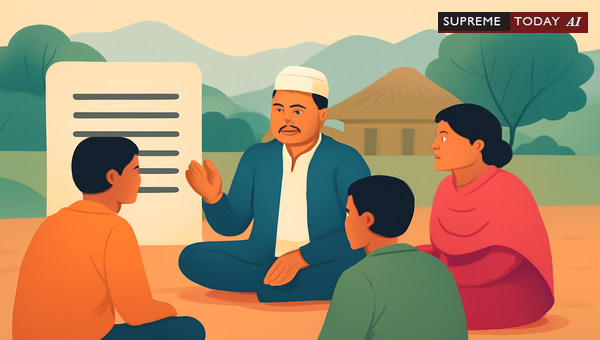
Can Gaon Burah Conduct for Son-in-Law in Arunachal?
In the tribal heartlands of Arunachal Pradesh, customary practices like —traditional village —play a vital role in resolving disputes, especially familial or land-related ones. But what happens when the arbiter is personally involved? A common question arises: Whether a Gaon Burah can conduct for his son-in-law case as per Arunachal Pradesh Civil Court Act? This issue touches on the balance between time-honored customs and modern legal oversight, raising concerns about impartiality and .
This post delves into the legal nuances, drawing from key regulations and court observations. While empowers village leaders, potential warrant caution. Let's break it down.
What Are Proceedings and the Role of Gaon Burah?
refers to traditional or decision-making by village authorities, often handling family, land, or community disputes. Under the (AFR, 1945), these are recognized as guided by customary norms rather than strict civil procedures. 2023 0 Supreme(Gau) 1123
Gaon Burahs, as head village leaders, frequently lead these proceedings. They are empowered to act as local adjudicators, with decisions sometimes recorded based on authority directions. The regulations emphasize the spirit of the law and , allowing flexibility but scrutinizing procedural irregularities. 2023 0 Supreme(Gau) 1123
For instance, village councils, including Gaon Burahs, resolve issues like land possession or family matters without mandatory record-keeping in all cases. However, courts have noted lapses, such as incomplete documentation, without automatically invalidating outcomes if merits hold. 2023 0 Supreme(Gau) 1123
Legal Framework Under Arunachal Pradesh Act
The Arunachal Pradesh Act, 2021 primarily governs civil court jurisdiction, especially over land and property disputes, requiring documentary evidence for appeals. 2024 0 Supreme(Gau) 92 It does not explicitly address Gaon Burahs' authority in or familial disqualifications.
Instead, customary bodies operate alongside formal courts. discusses appeals from , where the applies with a focus on over technicalities. Courts have affirmed that delays in appealing decisions may be condoned if grounds like unawareness exist, prioritizing fairness. 2023 0 Supreme(Gau) 1547
Amendments via the , substituted provisions linking to AFR, 1945, reinforcing customary roles while allowing civil oversight. 2025 Supreme(Online)(Gau) 6029
Can a Gaon Burah Conduct Involving His Son-in-Law?
No explicit provision in the reviewed documents permits or prohibits a Gaon Burah from conducting in cases involving his son-in-law. 2023 0 Supreme(Gau) 1123 2024 0 Supreme(Gau) 92 The absence of restriction suggests permissibility under customary frameworks, provided impartiality is upheld.
Key points include:- Customary Empowerment: Gaon Burahs lead as village authorities, even in family disputes, without statutory familial disqualifiers. 2023 0 Supreme(Gau) 1123- Procedural Flexibility: Proceedings follow but aren't bound by Civil Procedure Code; irregularities don't inherently void decisions. 2023 0 Supreme(Gau) 1123- No Direct Precedent: Documents lack specific rulings on son-in-law scenarios, focusing instead on general authority and land jurisdiction. 2024 0 Supreme(Gau) 92
In one case, a Head Gaon Burah was directed in land settlement matters, showing their routine involvement without noted familial bars. 2018 0 Supreme(Gau) 1388 Another dismissed a Head Gaon Burah under , but for unrelated conduct, underscoring accountability mechanisms.
Insights from Related Case Law
Courts have examined validity in various contexts, offering indirect guidance:
- Execution and Compliance: Failure to execute decisions prompts intervention, affirming enforceability if procedurally sound. 2025 Supreme(Online)(Gau) 6029
- Limits: A ex-communicating parties for was set aside for violating , as statutory laws don't support such penalties. A Head Gaon Burah participated without disqualification noted. 2020 0 Supreme(Gau) 356
- Jurisdictional Scrutiny: Civil judges handle injunctions alongside , but village decisions stand unless fundamentally flawed.
- Bias and Fairness: While not familial, cases highlight challenges like non-party status in appeals, suggesting transparency aids legitimacy. 2020 0 Supreme(Gau) 356
In criminal contexts, Gaon Burahs are informed of incidents like suicides, but their adjudicatory role remains civil/customary. 2022 0 Supreme(Gau) 121 2022 0 Supreme(Gau) 709
These illustrate that familial ties alone don't disqualify, but bias evidence could invite court challenges.
Potential Risks and Limitations
Despite permissibility, pitfalls exist:- Conflict of Interest: Familial involvement risks perceived bias, grounds for appeal under ' land jurisdiction. 2024 0 Supreme(Gau) 92- Procedural Lapses: Unrecorded proceedings or irregularities may undermine enforceability. 2023 0 Supreme(Gau) 1123- Civil Override: Land disputes escalate to courts requiring documents; may be scrutinized or overridden. 2024 0 Supreme(Gau) 92- Fundamental Rights: Extreme outcomes like fail constitutional tests. 2020 0 Supreme(Gau) 356
Courts exercise discretion judiciously, favoring . 2023 0 Supreme(Gau) 1547
Recommendations for Fair
To bolster legitimacy:- Ensure Transparency: Involve impartial witnesses and maintain records. 2023 0 Supreme(Gau) 1123- Document Proceedings: Follow to withstand review.- Seek Alternatives: For high-stakes familial disputes, consider neutral arbitrators.- Appeal Options: Dissatisfied parties can approach , claiming exclusions if delays stem from bona fide efforts. 2018 0 Supreme(Gau) 1388 2023 0 Supreme(Gau) 1547
Authorities should adhere to AFR guidelines to avoid dismissals.
Conclusion and Key Takeaways
Generally, a Gaon Burah may conduct for his son-in-law absent explicit prohibition, rooted in customary empowerment under AFR, 1945, and unaddressed by the Arunachal Pradesh Act. However, maintaining is crucial to prevent challenges.
Key Takeaways:- prevails without . 2023 0 Supreme(Gau) 1123- Bias risks necessitate transparency.- oversee appeals, emphasizing justice. 2024 0 Supreme(Gau) 92 2023 0 Supreme(Gau) 1547- Consult local experts for case-specific guidance.
Disclaimer: This is general information based on available documents, not legal advice. Laws evolve; seek professional counsel for your situation. References include 2023 0 Supreme(Gau) 1123, 2024 0 Supreme(Gau) 92, 2023 0 Supreme(Gau) 1547, 2018 0 Supreme(Gau) 1388, 2020 0 Supreme(Gau) 356, 2025 Supreme(Online)(Gau) 6029, , .












