




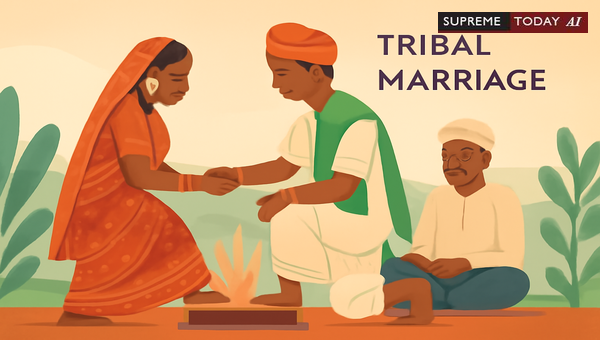
Are Gond/Adivasi Marriages Valid Without or ?
In India's diverse legal landscape, marriage laws often intersect with cultural traditions, especially for tribal communities like the Gonds. A common question arises: Gond/Adivasi marriages are governed by tribal custom. Absence of or fire ritual does not invalidate such marriage. But how does the law view this? This blog post delves into the recognition of tribal customs, key court findings, and contrasts with mainstream Hindu rites to provide clarity.
Whether you're a legal professional, tribal community member, or simply curious about in India, understanding this distinction is crucial. We'll explore judicial precedents, essential customs, and limitations, drawing from reliable sources.
The Essence of Gond/Adivasi Marriage Customs
Gond Adivasi marriages are deeply rooted in longstanding tribal traditions, distinct from . These unions typically involve community-endorsed rituals like relinquishment by the previous husband (if applicable) and acceptance by the new one, often symbolized by putting bangles on the bride. Social feasts and gatherings reinforce communal acceptance, serving as social acknowledgment rather than rigid legal prerequisites. 1999 0 Supreme(MP) 350
have consistently held that tribal customs, including Gond marriage practices, are recognized as valid and are often accepted as law within their communities. This respect stems from the principle that indigenous practices form part of personal law, provided they align with . 1999 0 Supreme(MP) 350
Legal Recognition: Tribal Customs Trump Hindu Rituals
Under Indian law, for Scheduled Tribes like Gonds are governed by customs rather than the , unless explicitly opted into. The main legal finding is clear: Gond Adivasi marriages are governed primarily by their tribal customs, and the absence of specific rituals such as or does not necessarily invalidate such marriages. 1999 0 Supreme(MP) 350
Key points include:- uphold tribal customs when they are longstanding, consistent, and accepted by the community. 1999 0 Supreme(MP) 350- Hindu rituals like (seven steps around the fire) or (homa) are not absolute requirements if the marriage follows community customs. 1999 0 Supreme(MP) 350- Judges emphasize: the will not come in between when tribes adhere to their way of life. 1999 0 Supreme(MP) 350
This deference ensures cultural autonomy, recognizing that Gonds have their own customs, which may differ from classical Hindu rites. 1999 0 Supreme(MP) 350
Why and Aren't Mandatory for Tribals
and invocation before the sacred fire () are pivotal in many Hindu marriages. However, for Gonds, validity hinges on tribal-specific ceremonies. The court reasoning highlights that social acceptance, community endorsement, and customary acts like relinquishment and bangle ceremonies suffice. 1999 0 Supreme(MP) 350
In detailed analysis:- Customary core components validate the union, not Hindu imports.- Absence of doesn't trigger invalidity, as these are not part of Gond traditions. 1999 0 Supreme(MP) 350
This position is reinforced: the performance of Hindu rituals such as or is not an absolute requirement for the validity of tribal marriages. 1999 0 Supreme(MP) 350
Judicial Approach: Respect with Caution
Indian adopt a cautious and deferential stance toward tribal customs. Unless customs violate or —such as selling wives or traffic in human beings—they stand valid. 1999 0 Supreme(MP) 350
The judiciary clarifies: a custom cannot be accepted by law if immoral, but mere deviation from Hindu rites like doesn't qualify. examine if customs are:- Long-standing.- Generally accepted.- Not of recent origin. 1999 0 Supreme(MP) 350
Additionally, tribal status as Scheduled Tribes is conclusive, with lacking authority to alter lists, further protecting identities and customs. 1999 0 Supreme(MP) 352
Contrasting with Hindu Marriages: Lessons from Case Law
To appreciate the tribal exception, consider mainstream Hindu cases where is often essential. In disputes under IPC , scrutinize rituals strictly.
For instance, in a Tamil Nadu case, the upheld a second marriage's validity under (state amendment for Suyamariyathai/Seerthiruththa marriages), where garlanding or tying a thali sufficed without — was held to be an essential ceremony for a valid Hindu Marriage only in cases where it was admitted by parties that as per form of marriage applicable to them that was an essential. 2001 6 Supreme 772 2001 6 Supreme 772
However, in traditional Hindu forms, and are and without there being these two ceremonies, there would not be a valid marriage. 2001 6 Supreme 772
Other rulings echo this: Without homam and , and no pleaded custom excusing them, a second marriage fails validity, avoiding charges. No custom pleaded that the ceremonies are not necessary.1973 0 Supreme(Mad) 173 1973 0 Supreme(AP) 41
Even registration doesn't cure absent rites: When the essential rites are admittedly not performed, it cannot be said to be a Hindu Marriage.1997 0 Supreme(Guj) 171
These contrast sharply with tribal leniency, underscoring customs' primacy. For Hindus, allows , but binds if included. Tribal Gonds bypass this via uncodified customs. 2002 0 Supreme(Kar) 293
Exceptions and Limitations
Tribal marriages aren't immune:- Illegal practices like wife-selling are void. 1999 0 Supreme(MP) 350- Customs must be proven as long-standing and accepted; recent ones may fail.- intervene if against public or . 1999 0 Supreme(MP) 350
Practical Recommendations
- Examine customs thoroughly: Ensure they meet longevity and acceptance tests.
- Avoid imposing Hindu rites: Legal recognition shouldn't hinge on unless tribal-specific.
- Respect indigenous laws: Authorities should defer to communities. 1999 0 Supreme(MP) 350
Key Takeaways and Conclusion
Gond/Adivasi marriages thrive on tribal customs, rendering or non-essential. prioritize cultural integrity, intervening only for moral breaches. While Hindu law demands specific rites (absent custom/amendment), tribals enjoy broader recognition. 1999 0 Supreme(MP) 350 1999 0 Supreme(MP) 352
This framework preserves diversity but demands proof of customs. For personalized advice, consult a legal expert, as outcomes vary by facts.
This post provides general insights based on precedents and is not legal advice.
References:- 1999 0 Supreme(MP) 350: Core on Gond customs and ritual absence.- 1999 0 Supreme(MP) 352: Tribal status recognition.- Others as cited for Hindu contrasts.
#TribalMarriage #GondCustoms #Saptapadi















