


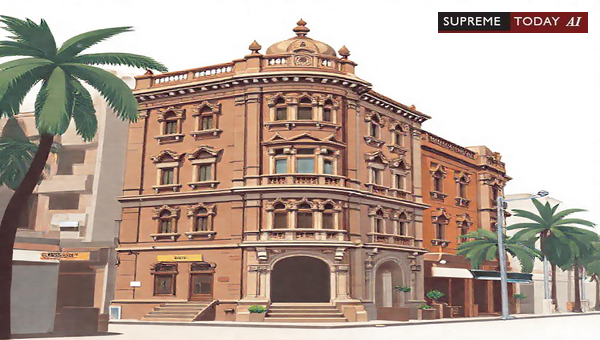
Demolishing a for Development: What Mumbai's Actually Permits
Property owners and developers in Mumbai frequently ask whether a can be demolished to make way for a new development. The short answer is that demolition of a Grade II listed building is not automatically prohibited, but it is far from a matter of right. Any demolition, alteration, or redevelopment of a listed heritage building requires prior written permission from the Municipal Commissioner, typically acting in consultation with the 2017 0 Supreme(Bom) 588. This article examines the regulatory framework, the exceptions carved out under , and how courts have interpreted the scope for demolition and redevelopment.
The Regulatory Starting Point: and the Grading System
Development Control Regulation 67 of the Greater Mumbai DCR 1991 lays down the general rule: no development, redevelopment, engineering operations, additions, alterations, repairs, or demolition of listed heritage buildings or precincts shall be allowed except with the , who must act on the advice of, or in consultation with, the 2017 0 Supreme(Bom) 588.
Heritage buildings and precincts in Mumbai are graded into three categories, and the level of regulatory control varies significantly across these grades 2021 0 Supreme(SC) 10:
- Grade I: The strictest protections apply. No interventions are permitted on the exterior or interior unless necessary for strengthening and prolonging the life of the building. All changes require development permission granted only on the advice of the .
- Grade II: These buildings are available for construction and require . There is comparatively greater flexibility than Grade I, but the structures remain subject to the core requirement of Commissioner-level approval with HCC involvement.
- Grade III: These deserve protection of unique features and attributes, but there is generally more permissible scope for external and internal changes and .
Why the Grade II Demolition Question Does Not Benefit from the Key Exception
The most significant relaxation in Mumbai's heritage framework is found in the amended (2)(iii)(b), inserted by an amendment effective 2025 0 Supreme(Bom) 1139. This provision permits redevelopment under of heritage buildings and precincts, allowing from the Municipal Commissioner where the height of the building exceeds 24 metres (excluding stilt height) 2017 0 Supreme(Bom) 588.
However, this exception is limited in its application. The courts have made it clear that the exclusion from mandatory consultation was a conscious policy decision by the Government applicable only in respect of Grade III buildings and buildings in , and that such exclusion is not applicable to Grade-I and II heritage structures 2014 0 Supreme(Bom) 590. In other words, if a structure is graded as Grade I or Grade II, the standard (2)(i) requirement of HCC consultation continues to apply, and the carve-out in Regulation 67(2)(iii)(b) has no application 2023 Supreme(Online)(Bom) 2190.
The , in the litigation concerning the Gamdevi Heritage Precinct, upheld this framework and clarified the legislative intent behind the 1999 amendment: heritage restrictions were relaxed only to ensure that old and dilapidated infested with tenants, which cannot be repaired, could be redeveloped so as to save human lives. The amendment excluded cessed Grade-III heritage buildings and in precincts from the mandatory requirement of HCC advice or consultation 2025 0 Supreme(Bom) 1139. Grade II structures were not part of that relaxation.
Judicial Recognition That Grade II Structures Deserve Protection Against Complete Demolition
Courts have repeatedly signalled that Grade II heritage structures warrant protection against outright demolition. In one matter before the concerning a development agreement, the court observed that the structure was admittedly a grade-II Heritage structure and may deserve to be protected as per law in that behalf against complete demolition, and that any sanction for development rights involving demolition would have to consider the demolition of the heritage structure strictly in accordance with law 2013 0 Supreme(Bom) 2053.
This does not mean that a Grade II building can never be touched. The grading system contemplates that Grade II buildings are available for construction and that may permit additions, alterations, or even reconstruction in appropriate cases 2021 0 Supreme(SC) 10. But the decision rests with the Municipal Commissioner acting on the advice of the , and the Commissioner's power to overrule an adverse HCC recommendation is exercisable only in exceptional cases, for reasons recorded in writing, and cannot be delegated to any other officer 2017 0 Supreme(Bom) 588.
What Happens When Heritage Protection Is Ignored
The consequences of bypassing heritage safeguards can be severe. In a case from Kolkata involving construction over a Grade I heritage structure, the court found that the Heritage Commission's approval had been granted without jurisdiction, in the absence of a proper quorum, and on the basis of misrepresentation. The court directed the owner and the developer to deposit substantial amounts towards afforestation and green coverage, ordered an investigation into the money trail behind the plan approval, and restrained transfer of the newly constructed flats 2022 0 Supreme(Cal) 705. The court emphasised that permitting demolition of parts of a heritage structure merely to monetise the property was starkly contrary to the purpose of conservation.
Similarly, in the Chennai context, courts have held that all structures of historic, archaeological, or artistic value must be preserved, and that heritage buildings shall not be altered, renovated, or demolished without the prior permission of the 2010 0 Supreme(Mad) 1990. In Hyderabad, the demolition of a listed building requires written permission from the development authority, and the advice of the heritage committee is binding 2019 0 Supreme(Telangana) 195.
Practical Pathways for Owners of Grade II Structures
While wholesale demolition of a Grade II building is difficult, owners may consider the following:
- Seek a review of the grade through the 's listing process if the classification is genuinely erroneous 2006 0 Supreme(Bom) 798.
- Apply for repair, restoration, or addition-alteration with the Commissioner's permission, keeping in mind that Grade II allows more flexibility than Grade I 2021 0 Supreme(SC) 10.
- Demonstrate through expert reports, as courts have recognised that the Commissioner may direct demolition by overriding the HCC's opinion when a building is 2015 0 Supreme(Bom) 1125.
- Explore redevelopment schemes under the applicable cluster or cessed-building regulations, while understanding that the HCC consultation exemption applies to Grade III and precinct buildings, not Grade II 2014 0 Supreme(Bom) 590.
Under the newer framework, and govern heritage conservation, and redevelopment in may be permitted up to 32 metres by the Commissioner, with required beyond that threshold 2023 0 Supreme(Bom) 1217.
Key Takeaways
A in Mumbai generally cannot be demolished for development as of right. The statutory scheme under requires prior written permission from the Municipal Commissioner in consultation with the , and the judicially recognised exemption applies only to Grade III buildings and 2017 0 Supreme(Bom) 588 and 2014 0 Supreme(Bom) 590. That said, Grade II grading does permit , additions, and, in appropriate cases where the structure is beyond repair, redevelopment with proper approval. Rules vary across cities and are periodically amended, so anyone contemplating demolition or redevelopment of a graded heritage property should verify the current regulations applicable to their specific building and seek qualified professional advice before proceeding.
#HeritageConservation #DCR67 #MumbaiRedevelopment #GradeIIHeritage #UrbanPlanning









