


Haryana Municipal Election Disputes: Which Court Has Jurisdiction?
Municipal elections are crucial for local governance in Haryana, but disputes often arise over , candidate qualifications, or election conduct. A common question arises: Which Court has Power to Hear Election Dispute under Haryana Municipal Act? This blog post breaks down the legal framework, key provisions, and judicial insights to help you understand the proper forum for such challenges.
Understanding jurisdiction is vital to avoid wasted efforts in the wrong court. Generally, election disputes under the , are handled by a specialized body rather than regular , especially once the election process begins. Let's explore the details.
Jurisdiction Under the
The , establishes a clear mechanism for resolving election disputes. Section 170 explicitly bars from entertaining questions on , seat allotment, electoral rolls, or election conduct: No civil Court shall have jurisdiction to entertain or adjudicate upon any question relating to the delimitation of wards, the allotment of seats to such wards, preparation of electoral rolls or conduct of election. This provision ensures disputes are channeled through designated channels. 1998 0 Supreme(P&H) 748
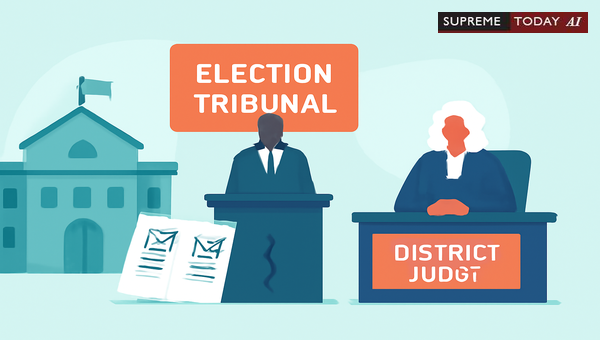
Section 176 designates the —typically a Subordinate Judge or District Judge with territorial jurisdiction over the municipal area—as the authority to hear . Petitions must be filed within of result declaration: ...the petition shall be presented within fifteen days from the date of declaration of the results.... This creates a specialized judicial forum for post-election challenges. 2020 0 Supreme(P&H) 408
In practice, this means the District Judge or designated civil court in the election's territorial jurisdiction acts as the , not general . 2019 0 Supreme(Raj) 1723
Constitutional Bars on Court Interference
The reinforces these statutory limits. Articles 243-O and 243-ZG prohibit judicial interference in electoral matters once the process starts:
- Article 243-O: ...no election to any Panchayat shall be called in question except by an election petition presented to such authority and in such manner as is provided for by or under any law made by the Legislature of a State.
- Article 243-ZG mirrors this for municipalities, barring challenges to delimitation laws or election conduct except via designated petitions. 1998 0 Supreme(P&H) 748
These provisions emphasize that courts should refrain from intervening during elections, which commence with notification issuance under Section 13A(2) of the Act. An 'election', under the Municipal Act, commences with the issuance of a notification, by the , under . 2023 0 Supreme(P&H) 3313
Judicial Precedents Reinforcing Tribunal Jurisdiction
Courts have consistently upheld these bars. In , a Full Bench ruled that once notified, courts under Article 226 should exercise restraint: ...a Court shall not entertain a petition 'calling in question' an 'election' once the 'election' has been notified. 2020 0 Supreme(P&H) 408
The in affirmed that civil court jurisdiction is barred during elections, directing challenges to Election Tribunals. 2019 0 Supreme(Raj) 1723
Related cases echo this. In a challenge to a candidate's qualification for illegal land possession, the court held an election petition is the proper remedy: A bare perusal of ... clearly indicates that disqualification on account of illegal possession... is not one of the grounds specified... The writ was dismissed, reinforcing tribunals over writs. 2023 0 Supreme(P&H) 1604
Similarly, in disputes over or disqualifications, decline mid-process intervention: The Court emphasized judicial restraint in electoral matters, referencing provisions that bar interference during electoral processes... 2023 0 Supreme(P&H) 3313
Related Aspects: Disqualifications and
Election disputes often intersect with disqualifications. The , empowers the to remove elected officials for disqualifications, upheld as constitutionally valid. This aligns with tribunal oversight post-election. 2024 0 Supreme(P&H) 1278
For against Presidents or Vice-Presidents, Section 21 and Rule 72-A require a 2/3rd majority of total members. Courts verify procedural compliance but defer substantive disputes to statutory remedies. The central legal point... is the requirement for 2/3rd majority support... 2020 0 Supreme(P&H) 796
In another case, no quorum was needed for President/Vice-President elections under Rule 70, and writs were dismissed favoring . 2007 0 Supreme(P&H) 798
These examples show tribunals handle core disputes, while courts limit to exceptional pre- or post-process reviews.
Exceptions to the General Rule
Courts may intervene under Article 226 in rare cases:- Challenges not directly questioning the election, like outside the process.- or fraud warranting immediate action.
However, incorrect acceptance of nomination papers cannot warrant judicial intervention under Article 226 during ongoing election processes... 2023 0 Supreme(P&H) 3313
Election Tribunals lack interim stay powers unless statutorily granted, as they risk halting declared results. 2012 3 Supreme 273
Key Recommendations for Challengers
- File promptly: Within of results before the (District/Subordinate Judge).
- Avoid writs during process: Respect statutory and constitutional bars.
- Seek advice: Consult local counsel for territorial specifics.
Conclusion and Key Takeaways
Under the , the —typically the District Judge or Subordinate Judge with territorial jurisdiction—holds power to hear election disputes. are barred during the process per Sections 170 and 176, bolstered by Articles 243-O and 243-ZG. Judicial precedents prioritize tribunals for fair, expeditious resolution. 2020 0 Supreme(P&H) 408 1998 0 Supreme(P&H) 748
Key Takeaways:- Election process starts with notification; no court interference then.- Post-results: Petition within .- Exceptions rare; election petition is primary remedy.
This post provides general information based on statutes and judgments. It is not legal advice. Consult a qualified lawyer for your specific situation.
References:- (Sections 170, 176)- (Articles 243-O, 243-ZG)- Key Judgments: 1998 0 Supreme(P&H) 748, 2020 0 Supreme(P&H) 408, 2019 0 Supreme(Raj) 1723, 2023 0 Supreme(P&H) 3313, 2023 0 Supreme(P&H) 1604, 2024 0 Supreme(P&H) 1278, 2020 0 Supreme(P&H) 796, 2007 0 Supreme(P&H) 798
#HaryanaMunicipalElections, #ElectionDisputesIndia, #LegalJurisdiction












