


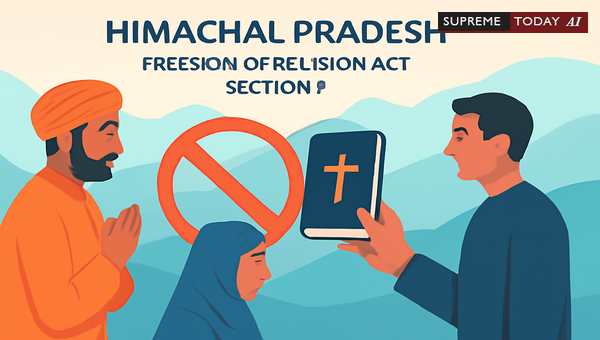
Understanding
In India, the right to is a cornerstone of the Constitution, yet it is often balanced against preventing coercive practices. A common query among legal enthusiasts and practitioners is: Section 4 of Hp Act. This section, part of the , plays a pivotal role in regulating religious conversions to ensure they are voluntary and free from . This blog post delves into its provisions, constitutional underpinnings, and broader implications, drawing from and similar laws.
Overview of the Act and Section 4
The aims to safeguard genuine religious freedom while curbing . Section 4 typically outlines the legal framework for conversions, emphasizing procedural safeguards. It requires individuals intending to convert to provide a declaration of their voluntary intent, helping authorities verify that no , , or is involved. This provision aligns with the Act's goal of maintaining and .2024 0 Supreme(All) 2401'>'2024 0 Supreme(All) 2401'
Penalties for violations are stringent. Those engaging in forced conversions or failing to comply may face imprisonment or fines, underscoring the Act's deterrent effect.2024 0 Supreme(Ker) 180'>'2024 0 Supreme(Ker) 180'
Key Provisions of Section 4
- Declaration Requirement: Converts must submit a prior declaration, allowing scrutiny to confirm voluntariness.
- Prohibition on : Conversions through force, inducement, or are void and punishable.
- Role of Authorities: District officials often oversee the process, ensuring compliance.
These measures prevent misuse while respecting personal choice. For instance, definitions like , , conversion, and force—mirroring those in similar laws—clarify prohibited acts.2024 0 Supreme(All) 2401'>'2024 0 Supreme(All) 2401'
Constitutional Context: Articles 25 and 26
Section 4 operates within the framework of , which guarantees the right to and the right to freely profess, practice, and propagate religion, subject to , , and .2024 0 Supreme(Ker) 180'>'2024 0 Supreme(Ker) 180' It permits reasonable restrictions, particularly on conversions that disrupt harmony.
empowers religious denominations to manage their affairs, including institutions, but does not extend to converting others coercively.2024 0 Supreme(Ker) 180'>'2024 0 Supreme(Ker) 180' Courts have clarified: Art. 25 guarantees to every person the and the free profession, practice and of religion; and likewise, Art. 26 guarantees to every religious denomination... a right to manage its own affairs in matters of religion.2016 0 Supreme(All) 932'>'2016 0 Supreme(All) 932'
Notably, there is no to convert others. As affirmed in challenges to the : There could be no such thing as a to convert any person to one s own religion.2003 6 Supreme 209'>'2003 6 Supreme 209' This principle upholds Section 4's validity.
Judicial Scrutiny and Related Cases
Courts rigorously test such laws against fundamental rights. In a Goa case, an order banning religious activities under was quashed for violating Articles 19(1), 25, and 26, as it lacked jurisdiction and principles. The court emphasized: The impugned order was passed without jurisdiction and in violation of the principles of , and it infringed upon the Petitioner's fundamental rights under , Articles 25 and 26.2023 0 Supreme(Bom) 747'>'2023 0 Supreme(Bom) 747'
Similarly, under , bail was denied where was evident: in religious conversion violates individual rights and , justifying the rejection of bail. The informant’s statements corroborated blackmail and forced rituals.2024 0 Supreme(All) 2401'>'2024 0 Supreme(All) 2401'
Orissa cases reinforce this: Challenges to failed, with courts holding the under (). Right to convert another person to one's own religion not covered by (1).2003 0 Supreme(Ori) 224'>'2003 0 Supreme(Ori) 224'2002 8 Supreme 359'>'2002 8 Supreme 359'
These precedents illustrate that while is protected, coercive conversion is not. Section 4's regulations are typically viewed as reasonable, preventing abuse without infringing core freedoms.
Balancing Rights: Legal Implications
Section 4 balances with societal peace:- Voluntary vs. Coerced: Ensures conversions reflect genuine belief, not pressure.- State Intervention: Allows oversight without blanket bans.- Challenges: Laws face scrutiny if overly broad, as in cases quashing restrictive orders.2023 0 Supreme(Bom) 747'>'2023 0 Supreme(Bom) 747'
In educational contexts, religious freedom intersects with administration rights under , 26, and 30, but conversions remain regulated separately.2002 8 Supreme 359'>'2002 8 Supreme 359'
Practitioners must note: The basic object... was to guarantee religious freedom to all persons which reflects the and spirit of India.2024 0 Supreme(All) 2401'>'2024 0 Supreme(All) 2401'
Practical Recommendations
- Compliance: Obtain declarations and notify authorities for lawful conversions.
- Avoid Prohibitions: Steer clear of inducements or force to evade penalties.
- Stay Updated: Monitor amendments or rulings, as seen in Orissa's rule validations.2003 0 Supreme(Ori) 223'>'2003 0 Supreme(Ori) 223'
- Seek Counsel: Consult professionals for specific scenarios.
Conclusion and Key Takeaways
is a vital tool for regulating conversions, harmonizing constitutional rights under Articles 25 and 26 with . It prevents while upholding voluntariness, as echoed in diverse state laws and judgments.2024 0 Supreme(Ker) 180'>'2024 0 Supreme(Ker) 180'
Key Takeaways:- Conversions require declarations to prove voluntariness.- No right exists to forcibly convert others.2003 6 Supreme 209'>'2003 6 Supreme 209'- Judicial oversight ensures reasonableness.
This post provides general insights based on available sources and is not legal advice. Consult a qualified attorney for personalized guidance. Always verify latest statutory updates.
References:- - (Articles 25, 26)- Cited cases via document IDs
#HPFreedomReligionAct, #ReligiousConversion, #Article25












