


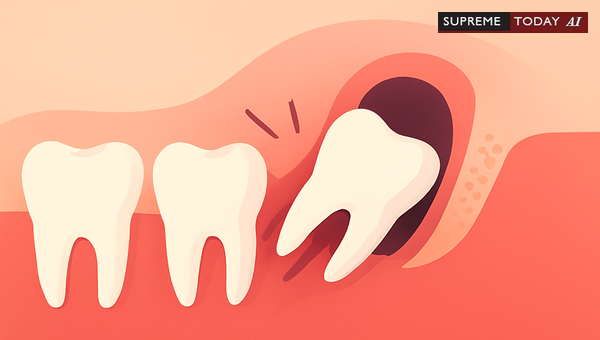
Does Tooth Dislocation Include a Shaken Tooth? Legal Insights
In personal injury cases, especially those involving assaults or accidents, dental injuries can play a pivotal role in determining the severity of harm—and thus the legal consequences. A common question arises: whether includes a shaken tooth? This distinction matters significantly under Indian law, particularly when classifying injuries as under . While a layperson might view a loose or shaken tooth as dislocated, legal and medical interpretations often draw a clear line.
This blog post delves into the nuances, drawing from judicial precedents and medical descriptions. Note that this is general information based on available case documents and should not be taken as specific legal advice. Consult a qualified lawyer for your situation.
Understanding Tooth Dislocation in Legal Terms
typically refers to a physical displacement from its normal position in the socket. In legal contexts, this is not a vague term but one tied to observable, verifiable injury.
For instance, in one case, medical examination explicitly noted that tooth No. 31 was found dislocated from the socket by PW6 Dr. Kuldeep Sharma. 2010 0 Supreme(HP) 1161 Here, dislocation clearly means the tooth has been moved out of its socket, often requiring no further proof like X-rays if it's an absolute dislocation leading to removal of the tooth from the socket.
Under , clause (seventhly) defines as . 2019 0 Supreme(Del) 2476 2019 0 Supreme(Jhk) 885 2019 0 Supreme(UK) 183 2017 0 Supreme(Gau) 715 2016 0 Supreme(Del) 2223 This provision consistently emphasizes structural damage, such as displacement, rather than mere instability.
What Constitutes a Shaken Tooth?
A shaken tooth, on the other hand, generally implies looseness or mobility without full displacement. It's a tooth that wobbles in its socket but remains in place. Legal documents rarely equate this with dislocation.
The provided materials distinguish between terms like loosened, dislocated, and implied shakiness. For example, injuries are described as dislocated or loosened, but the focus remains on displacement: fracture of left upper second incisor tooth and dislocated from the socket. 2005 1 Supreme 215 Mere looseness without the tooth being out of position does not meet the threshold.
In common medical parlance and inferred from cases, a shaken tooth might cause pain or require stabilization but lacks the defining feature of dislocation—actual movement from the socket.
Legal Framework: under IPC Section 320
outlines eight categories of , with clause (seventhly) directly relevant: . This is echoed across multiple judgments:
- (Seventhly) —. 2019 0 Supreme(Del) 2476
- Sevently-. 2019 0 Supreme(Jhk) 885
- (Seventhly) — . 2019 0 Supreme(UK) 183
Courts interpret this strictly. A case notes that a case of dislocation of tooth would be covered under clause 'seventhly' of , but only where there's clear displacement, as in Central left upper incisor tooth was missing.
No X-ray is needed for obvious removal, underscoring that partial looseness doesn't qualify.
Adjacent clauses provide context:- Clause (sixthly): of the head or face.- Clause (eighthly): or causing 20 days of severe pain or inability to pursue ordinary pursuits. 2017 0 Supreme(Gau) 715 2016 0 Supreme(Del) 2223
A shaken tooth might fall under () unless it leads to prolonged effects under clause (eighthly), but not dislocation per se. 2017 0 Supreme(Gau) 715
Key Case Analyses
Case 2010 0 Supreme(HP) 1161: Clear Displacement
This document highlights dislocation as the tooth being dislocated from the socket. The medical testimony leaves no ambiguity—it's a positional change, not just mobility. This sets a precedent that dislocation requires verifiable displacement.
Case 2005 1 Supreme 215: Fracture and Dislocation
The court examined fracture of left upper second incisor tooth and dislocated from the socket, focusing on whether it constitutes grievous injury. The emphasis on socket displacement reinforces that shakiness alone wouldn't suffice. 2005 1 Supreme 215
Broader Precedents from Other Sources
In
, variations in testimony about dislocation of one of the tooth and broken down another tooth which had fallen down highlight courts' scrutiny of exact injury descriptions, including bleeding and falling teeth, but not mere shaking.
Several cases modify convictions based on injury nature. For example, a conviction under (voluntarily causing ) was altered to when injuries didn't fully meet grievous criteria, relying on Section 320 definitions. 2019 0 Supreme(Del) 2476 2019 0 Supreme(UK) 183
In robbery and assault contexts, via tooth dislocation is upheld only with evidence of fracture or socket removal. 2016 0 Supreme(Del) 2223
Distinction: Why It Matters Legally
- Dislocation: Tooth displaced from socket— under IPC 320 (seventhly). No need for X-ray if obvious.
- Shaken Tooth: Loose but in socket—typically , unless causing 20-day incapacity. 2017 0 Supreme(Gau) 715
This differentiation affects charges (e.g., Section 325 vs. 323 IPC), bail, sentencing, and compensation. Courts consistently require proof of displacement, not just looseness. Exceptions are rare and unaddressed in the documents for shaken teeth.
In personal altercations, precise documentation is key. One revision reduced sentence considering injury nature under Section 320. 2019 0 Supreme(UK) 183
Practical Implications and Recommendations
For victims, lawyers, or medical professionals:- Document Precisely: Use terms like dislocated from socket vs. loosened/shaken. Include photos, X-rays if needed.- Assess : Check against IPC 320 clauses; shaken teeth may not qualify without further effects.- Legal Strategy: In assaults, argue displacement for stronger charges; defense may challenge looseness claims.
In cases like POCSO or robbery with dental injuries, consistent testimony and medical corroboration are crucial. 2019 0 Supreme(Del) 2476
Conclusion and Key Takeaways
Based on the analyzed documents, does not generally include a mere shaken tooth. Dislocation demands displacement from the socket, as seen in 2010 0 Supreme(HP) 1161 and 2005 1 Supreme 215, while shakiness implies mobility without that shift. This aligns with IPC Section 320's strict interpretation across precedents.
2019 0 Supreme(Jhk) 885
Key Takeaways:- Dislocation = via socket displacement.- Shaken = Likely ; specify for legal accuracy.- Always cite medical evidence and precise terminology.- Sentences may modify based on true injury nature. 2017 0 Supreme(Gau) 715
Understanding these subtleties can significantly impact case outcomes. For tailored advice, reach out to a legal expert familiar with IPC injury provisions.
#ToothInjuryLaw, #IPC320, #GrievousHurt















