Searching Case Laws & Precedent on Legal Query!
Scanned Judgements…!



Searching Case Laws & Precedent on Legal Query!
Scanned Judgements…!
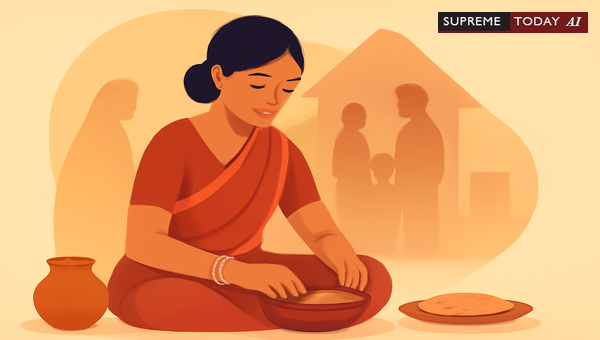
In the rich tapestry of Hindu religious and legal traditions, the role of the daughter-in-law—known as snusha or putra vadhu—holds significant importance. Many wonder: any smrithi in hindu religion which says about daughter in law snusha or puthra vadhu except manusmrithi? This question arises frequently among those studying ancient texts or navigating modern family dynamics influenced by historical Hindu law. While Manusmriti is well-known, several other Smritis and compilations provide detailed insights into her duties, emphasizing obedience, household management, and spiritual responsibilities. This post explores these references, drawing from authoritative sources to offer a comprehensive overview. Note that this is general information based on historical texts and should not be taken as specific legal advice—consult a qualified expert for personal matters. 1890 0 Supreme(All) 21
Hindu law texts beyond Manusmriti portray the daughter-in-law as integral to the joint family structure. Her duties, often termed (wifely duties), include service to the husband, in-laws, and household, framed as both moral and legally enforceable obligations. These texts stress dependence: in childhood on the father, in youth on the husband, and in widowhood on sons, prohibiting independence. Key themes are household sanctity, ritual performance, and family harmony, with non-compliance potentially leading to spiritual or social penalties. 1890 0 Supreme(All) 21
This subservient yet essential position ensures prosperity and ancestral merit, as echoed in judicial interpretations of Hindu law. For instance, courts have recognized these duties as creating reciprocal rights, allowing remedies like . 1890 0 Supreme(All) 21
Several non-Manusmriti sources explicitly or implicitly address snusha obligations through wifely roles post-marriage.
Harita emphasizes the wife (and daughter-in-law) as the home itself: a man should not consider his home a habitation, ungraced by a wife; therefore is she another home. This obligates her to reside permanently in the husband's home, performing domestic duties without autonomy. Her presence sanctifies the household, binding her to serve in-laws and maintain family rituals. 1890 0 Supreme(All) 21
These texts outline daily routines: For every succeeding day let the wife clean the vessels used at meals; let her sweep the dwelling house and gate, and when clean, preserve it so; let her provide curds, rice, durva grass, new leaves and blossoms for oblations; let her reverently salute her husband’s parents, and afterwards perform the necessary business of the household; let her eat nothing before the Gods and guests are satisfied, nor before her husband has eaten except drugs swallowed medicinally.
Key duties include:- Cleaning vessels, sweeping premises.- Preparing ritual items like curds and durva grass.- Reverentially saluting husband's parents—a direct snusha obligation.- Prioritizing gods, guests, and husband over self.
These are binding for spiritual merit and family welfare. 1890 0 Supreme(All) 21
This compilation (Vol. II, Book IV) aggregates authorities on conjugal duties:- Frugal household management, furniture care, cheerful demeanor.- Obsequious honor to husband, ritual sacrifices.- Food preparation, purification, child-rearing for ancestral bliss.
It frames cohabitation as enforceable, with courts intervening for separation or abandonment. 1890 0 Supreme(All) 21
Katyayana allows paternal gifts of immovable property to daughters, implying the daughter-in-law's integration into the joint family post-marriage. This supports her ongoing obligations within the supported family framework. 2019 7 Supreme 458
Other sources highlight evolving contexts. For example, traditional Hindu law deems adoption of a daughter invalid: It is now settled that the adoption of a daughter is invalid under the Hindu law. This underscores natural family roles, including the snusha's position without adoptive disruptions. 2006 7 Supreme 289 2006 0 Supreme(Ori) 624
Historically, these duties were :- : Residence with in-laws for domestic functions, actionable in court. 1890 0 Supreme(All) 21- Spiritual obligations: Service secures heavenly rewards, with heirs bound to dependents. 1954 0 Supreme(Ori) 10 1980 0 Supreme(AP) 294
(e.g., , , ) enforced maintenance liabilities, reflecting enduring family ties. For widowed daughters-in-law, duties shift to sons, but pre-widowhood roles persist. 1917 0 Supreme(Mad) 185
Modern statutes like the , reflect social changes, removing some distinctions in succession. Section 15 devolves a female Hindu's property first to sons/daughters, then heirs of the husband, influencing snusha inheritance rights. Yet, pious obligations from Smritis inform interpretations. 2015 0 Supreme(Mad) 2599 2000 0 Supreme(Mad) 94
Succession opens not on a male's death but the holder's, affecting daughters-in-law's claims. Section 15(1)(a) prioritizes sons/daughters, with (2)(b) handling inherited property. These evolve from Smriti principles, balancing tradition and equity. 2000 0 Supreme(Mad) 94
Courts consider changing social outlooks, applying progressive views where texts lack inhibition. This tempers strict Smriti duties in contemporary settings. 2015 0 Supreme(Mad) 2599
Excluding Manusmriti, Harita, Sancha, Lichita, Colebrooke’s Digest, Katyayana, and others depict the daughter-in-law as homemaker, ritualist, and family servant—cleaning, saluting in-laws, prioritizing others. These foster harmony and are historically enforceable. While modern laws like the Hindu Succession Act introduce reforms, Smriti insights remain relevant for cultural understanding.
Key Takeaways:- Duties emphasize dependence, service, rituals.- Legally binding in traditional jurisprudence.- Integrated with succession and family property rules.
This historical lens informs but does not dictate modern practice—family dynamics evolve. For tailored advice, seek professional counsel. 1890 0 Supreme(All) 21 2019 7 Supreme 458 1980 0 Supreme(AP) 294 1954 0 Supreme(Ori) 10 1917 0 Supreme(Mad) 185
#HinduLaw #SnushaDuties #SmritiTexts


They are subject to the control of the husband because the spirit of the Hindu Law is against a married woman receiving gifts from strangers except at the time of marriage or from making acquisitions during coverture as she is expected to give her time and attention solely to the welfare of her husband ... The commentaries indicate an attempt to reconcile the text law with the actual usage of the people. The development of Hindu Law is attributable to this progressive instinct. ... In ....

Even Strange who accepts the view that Hindu law recognises polygamy, says that a second marriage is illegal except in the special cases where it is justifiable or admissible. ... ... Thus says Mr. Venkatasubramania Iyer that the thyaga referred to in the case of the superseded wife is a judicial separation using a rough adaptation of the-phrase from English law, which leaves the right to maintenance intact as shown by the Smrithi Chandrika. ... ... Smrith....
See Golap Chandra Sirkar Sastris Hindu Law, pp. 58 and 59, Again in Chap. ... , it has not countenanced the marriage of the mothers sisters daughter. ... The only question for consideration in this case is whether the mothers sisters son or the maternal uncles son is the preferential heir to the estate of a deceased Hindu. The matter is involved in considerable obscurity and no clear pronouncement can be gathered from the texts of the Hindu Law. ... The Smrithi Chandr....
But it being well established that whatever may be the law intended to be laid down by the Smrithi writers, that law must be sought for in the writings of the commentators, we have to look to what those commentators, who are authorities in this part of India have said on the subject. ... But the District Judge on the strength of an observation contained in Section 616 of Mnynes Hindu Law, held that the property, though acquired by Ellammal, became on her death the second defendants in his sole right and....

The question of law raised in this second appeal is whether a deed of gift executed by the plaintiffs father in favour of the 1st defendant, the daughter of the donors deceased undivided brother, is valid and binding as against the plaintiff, the donors son, according to the Hindu Law. ... See page 344, Part I, Hindu Law Books on Inheritance, Messrs. V. Kalyanarama Iyer & Co.s Edition, Devala says--"To maidens should be given a nuptial portion of the fathers estate"--....
The only point for decision in appeal is whether the stepson of a stepsister is an heir under the Hindu Law (according to Mitakshara) as administered in the Madras Presidency. ... 2. Mr. ... Pullayya (1894) I.L.R. 18 Mad. 168) is not an heir under the Mitakshara Law; except in Bombay (Lalubhai Bapubhai v. Mankuvar Bhai and Ors. (1876) I.L.R. 2 Bom. 388 Rachava v. Kalingappa (1892) I.L.R. 16 Bom. 716, Kashibai v. ... Rajah Suraneni Venkata Purushothama Jagannatha Gopala Rao (1908) I.L.R. 31 M. 321 at 324); Brothers #HL_ST....
See Golap Chandra Sirkar SastriS Hindu Law, pp. 58 and 59. Again in Ch. ... it has not countenanced the marriage of the mothers sisters daughter. ... The only question for consideration in this case is whether the mothers sisters son or the maternal uncles son is the preferential heir to the estate of a deceased Hindu. The matter is involved in considerable obscurity and no clear pronouncement can be gathered from the texts of the Hindu Law. ... A description of these is given as follo....
The question of law raised in this second appeal is whether a deed of gift executed by the plaintiffs father in favour of the 1st defendant, the daughter of the donors deceased undivided brother, is valid and binding as against the plaintiff, the donors son, according to the Hindu Law. ... See page 344, Part I, Hindu Law Books on Inheritance: Messrs. V. Kalyanarama Iyer & Co.s Edition. Devala says :-"To maidens should be given a nuptial portion of the fathers estate"-....
This is all what is meant by Section 482 of Maynes Hindu Law. ... At page 53 of the Hindu Law by Ghose, Vol. II, he refers to the text of Narada, "What is left of the fathers property after discharging the fathers debts (shall be divided by the brothers)." Then he says, "By payment of debts, the duty of marrying a daughter is also intended." ... Gopal Rai (1884) I.L.R. 6 A. 632 West and Buhler, 754; Maynes Hindu Law, Sections 81, 408.) ... It is doub....
Court of Wards (1875) 2 I.A., 163 at p. 165 which says that these texts are no longer regarded as binding authorities except in the case of adopted sons, it would be fruitless to discuss the matter further. I entirely agree with what Mr. ... Illegitimate children have no place in Hindu taw when there are legitimate heirs at least under the Mitakahara system, except in the special case already referred to. ... 14. ... The learned vakil for the appellant drew our attention to a text from Narada Smrithi in....

In Manusmrithi, there is a verse about mother and the English translation of the same is almost like this: There may be a difference of opinion about several verses of Manusmrithi. But the description of mother in it is excellent for which there may not be any controversy.
The change in the social outlook in respect of succession is reflected in the recent legislations, particularly the Hindu Succession Act, 1956, which has done away with the distinction between legitimacy and illegitimacy within certain limits in the matter of succession either to property of a male or a female, dying intestate. On the question which we are called upon to answer, where there is no inhibition expressly or impliedly to be found in the original text, Courts cannot lose sight of the progressively changing views of social outlook and insist upon only applying the old notions. #HL_....

However, it appears that the learned Judge missed the last sentence of the said passage i.e. "It is now settled that the adoption of a daughter is invalid under the Hindu law."

“It is now settled that the adoption of a daughter is invalid under the Hindu law.” However,it appears that the learned Judge missed the last sentence of the said passage i.e.,
In that case, Their Lordships have considered whether the wife of the predeceased son was the legal heir to the properties of the mother-in-law and therefore, they have relied upon Sec.15(1)(b) of the Hindu Succession Act, 1956. Even if the property was succeeded by a female Hindu from her husband, it devolves on other legal heirs of the husband in the absence of any son or daughter. Sec.15(1)(a) clearly says that the property of a Hindu female devolves first upon sons or daughters. Sec.15(2)(b) of the Hindu Succession Act says that any property succeeded by a female Hindu from her....


An indispensable Tool for Legal Professionals, Endorsed by Various High Court and Judicial Officers
Please visit our Training & Support
Center or Contact Us for assistance

Scan Me!
India’s Legal research and Law Firm App, Download now!


For Daily Legal Updates, Join us on :



 Back to top


