


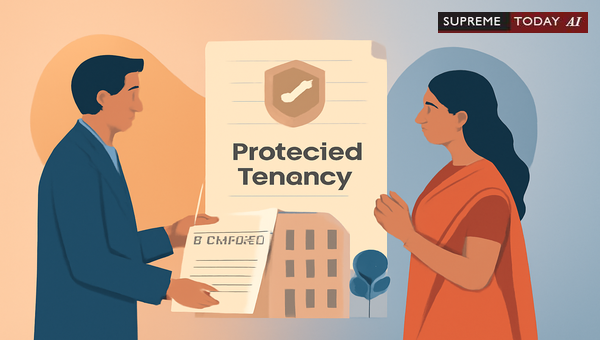
Land Surrender Invalid with Protected Tenants?
In the complex world of land tenancy laws, a common question arises: Once Granted Land to One Person again it Cannot be Granted to other Person. This query touches on the heart of , where land under a protected tenant's possession cannot be easily surrendered, transferred, or re-granted without strict legal compliance. Landlords often face challenges when attempting to surrender excess land due to , only to find protected tenants' rights standing in the way.
This blog post breaks down the legal principles governing land surrender by landlords, the safeguards for protected tenants, and the role of tribunals. Drawing from statutory provisions and case insights, we'll explore why such surrenders are heavily regulated. Note: This is general information and not specific legal advice. Consult a qualified lawyer for your situation.
Legal Principles of Protected Tenancy and Land Surrender
are designed to shield tenants from or transfer, ensuring their possession and ownership claims are preserved. Under relevant tenancy acts, typically those like the or similar state laws in India:
Due to Protected Rights: The by a landlord cannot be accepted when exist. However, the has discretion under to refuse or accept such surrender based on circumstances. 2001 0 Supreme(AP) 129
Undefeatable Tenant Rights: The rights of a protected tenant cannot be defeated without their participation and adherence to legal provisions. Termination of tenancy can occur through surrender under or through purchase by the tenant. Any sale or surrender that does not comply with these provisions is invalid. 2005 0 Supreme(AP) 541
Requirement for Registered Documents: For a surrender to be valid, it must be executed through a . Without this, it is illegal and does not divest the tenant of rights. 1996 2 Supreme 651
These principles ensure that land 'once granted' to a protected tenant remains protected, preventing re-granting to others without due process.
Validity and Proof of Surrender
Courts emphasize that surrenders must be proven with concrete evidence, not mere claims:
Oral surrenders are generally invalid, especially pre- claims, unless supported by documentation. There is an embargo on the surrender of tenancy rights by protected tenant and even if the tenancy is terminated, the land holder is personally liable to restore possession to the tenant, if he fails to cultivate the land within one year of termination of tenancy. 2024 0 Supreme(Telangana) 344
Absence of proof means tenancy persists: There is no proof before the to accept that the said protected tenancy was surrendered or seized to be in existence... absolutely there is no record to conclude that the said protected tenants have surrendered the PT rights. 2024 Supreme(Online)(Tel) 43155 2024 Supreme(Online)(Telangana) 46584 2024 Supreme(Online)(Telangana) 47965
In disputes, tribunals scrutinize whether protected rights were properly surrendered: It was also necessary to find out whether the had been surrendered or not and the land was capable of being used for agricultural purposes. 2025 0 Supreme(Telangana) 123
Thus, attempting to surrender land encumbered by protected rights without valid proof risks invalidation, preserving the original tenant's hold.
's Discretion and Government Interest
Tribunals play a pivotal role:
Acceptance or Rejection: The may refuse surrender if land is encumbered by tenant rights or becomes inaccessible. The provision comes into operation when a land holder refuses to accept the surrender of any land. 2007 0 Supreme(SC) 1794
Government Vesting: Upon valid surrender of excess ceiling land, the landholder's interest vests in the government, but tenants retain possession rights unless properly divested. 1987 0 Supreme(AP) 546
Ceiling Provisions: Surrenders of excess land must not infringe tenant rights; tribunals can reject if encumbered. 1986 0 Supreme(AP) 527 1978 0 Supreme(AP) 66
Even if land vests free from encumbrances under sections like S.11, protected leases complicate this: If lease does not constitute an , there could be no objection to such land being accepted by way of surrender. 2013 0 Supreme(AP) 131
Insights from Key Cases and Sources
Judicial precedents reinforce these rules:
Unproven Surrenders Fail: Protected tenants' rights remain if surrender lacks evidence, invalidating subsequent transfers. In one case, alleged surrenders were contested without informing buyers, leading to disputes. 2025 0 Supreme(Telangana) 199
Recording Rights: Protected status must be recorded in the , binding parties. shall be deemed to be a protected tenant for the purposes of this Act and his rights as such protected tenant shall be recorded in the . 2024 0 Supreme(Guj) 2024
Landlord Occupation Disputes: Even if ownership is conferred, landlord occupation doesn't extinguish tenant rights without process. 2025 0 Supreme(Telangana) 732
Surplus Land Nuances: If surrender includes transferred land, it may be deemed null, entitling transferees to compensation. If however surrender of surplus land by tenure holder is not possible or feasible without including the transferred land then the Prescribed Authority will accept such surrender and in such an event the transfer of such land shall be . 2021 0 Supreme(All) 1134
These cases highlight that land cannot be re-granted casually once under protected tenancy.
Key Findings and Tenant Protections
Authority: Cannot ignore protected rights but has discretion to assess surrenders. 2001 0 Supreme(AP) 129
Compliance Essential: Statutory requirements, especially registered documents, are mandatory. 1996 2 Supreme 651
Preservation of Rights: Arbitrary actions are barred; tenant consent and process are key. 2005 0 Supreme(AP) 541
Protected tenants' rights are robust, often overriding landlord surrender attempts unless proven valid.
Practical Recommendations for Landlords and Tenants
To navigate this:
Review Compliance: Check tenancy records and protected status before surrendering.
Engage Tenants: Involve protected tenants to secure valid surrender under .
Document Properly: Use registered deeds; avoid oral claims.
Seek Guidance: Approach tribunals early for discretionary rulings on encumbered land.
Failure here can lead to invalid surrenders, liability for restoration, or failed re-grants.
Conclusion: Navigating Protected Tenancy Safeguards
In summary, land once under protected tenancy cannot be surrendered or re-granted to another without rigorous legal steps—valid documentation, tenant participation, and approval. While tribunals offer some flexibility, tenant rights typically prevail absent proof. 2001 0 Supreme(AP) 129 2005 0 Supreme(AP) 541 1996 2 Supreme 651 1987 0 Supreme(AP) 546 1986 0 Supreme(AP) 527 1978 0 Supreme(AP) 66
Key Takeaways:- Surrenders require registered proof; oral claims fail.- Protected rights create encumbrances blocking easy transfers.- Tribunals balance interests but prioritize tenants.
For personalized guidance, consult a legal expert familiar with your state's tenancy laws. Stay informed to protect your land interests.
#ProtectedTenancy #LandSurrender #TenancyRights












