


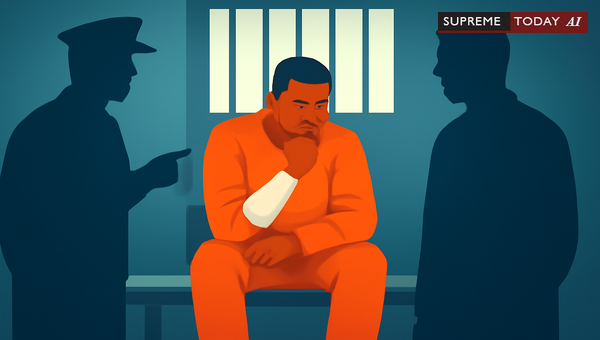
Life Convict Self-Harms to Threaten Jail Authorities: What is the Offence?
In the complex world of prison management, incidents where inmates, particularly life convicts, resort to extreme measures like self-inflicted injuries to intimidate or manipulate jail staff raise critical legal questions. What is the offence if a life convict threatened the jail authorities by causing self-inflicted injuries? This query touches on the delicate balance between prisoners' and the need for prison discipline and security. While such acts are typically viewed as misconduct, Indian courts emphasize humane treatment and procedural fairness.
This blog post delves into judicial rulings, constitutional principles, and relevant precedents to provide clarity. Note: This is general information based on case law and not specific legal advice. Consult a qualified lawyer for personalized guidance.
Legal Framework: Prisoners' Rights and State Duties
Under the , prisoners do not forfeit their upon incarceration. guarantees the , including living with . The has repeatedly affirmed that prisoners are entitled to humane treatment, medical care, and protection from harm, even self-harm. 2023 0 Supreme(Del) 2458
The State's duty extends to maintaining safe, healthful prison conditions. Prison authorities must provide medical treatment and address psychological distress without resorting to arbitrary punishments. As noted, prisoners retain , including the right to live with dignity, as enshrined in . 2023 0 Supreme(Del) 2458
Key principles include:- in discipline: Any response to misconduct must follow .- Mental health consideration: Self-harm may stem from distress, warranting intervention over punishment.- No vindictiveness: Actions beyond the sentence violate . 2023 0 Supreme(Del) 2458
Judicial Precedents on Prisoner Conduct
Landmark cases shape how courts view threats and self-harm by inmates:
The ruled that prisoners' rights are protected under , and any infliction beyond the court’s sentence or acts of vindictiveness violate constitutional protections. Punishments must be humane, and manipulative acts like threats require legal bounds. 2023 0 Supreme(Del) 2458
This case underscored the State's obligation for medical treatment and compensation for incarceration-related injuries, extending to self-harm scenarios. 2023 0 Supreme(Del) 2458
These rulings establish that while prisoners have rights, undermining discipline through coercion is misconduct.
Specific Offences: Threats and Self-Inflicted Injuries
Threatening Jail Authorities
Threats by life convicts or others against staff are seen as attempts to manipulate or intimidate, eroding prison security. Courts permit disciplinary measures like warnings or segregation, but only if evidence-based and proportionate. Threatening may be viewed as misconduct or an attempt to manipulate prison authorities. 2023 0 Supreme(Del) 2458
No specific section is directly invoked for intra-prison threats; instead, prison rules govern as . However, escalation could invoke if it meets criteria outside prison walls.
Self-Inflicted Injuries as Intimidation
Self-harm to pressure authorities is trickier. Courts recognize it may indicate distress but condemn its use as coercion. Authorities must investigate, treat medically, and assess mental health. Self-inflicted injuries by prisoners to manipulate authorities or gain certain privileges are a complex issue. 2023 0 Supreme(Del) 2458
In one case, an accused claimed self-inflicted injuries post-offence, stating he attempted to commit suicide and the injuries are self inflicted one. 2020 0 Supreme(Mad) 889 Courts scrutinized such claims, requiring evidence. Similarly, in accident claims, injuries deemed self inflicted barred compensation, highlighting judicial wariness of manipulation. 2017 0 Supreme(Kar) 1641
For life convicts, such acts don't typically trigger new criminal charges under like unless harm extends to others. Instead, they fall under prison disciplinary codes, potentially leading to loss of privileges or extended segregation.
Integrating Broader Contexts from Case Law
Related judgments provide nuance:- Claims: Sources discuss exceeding in fights, but irrelevant directly; however, they analogize —self-harm responses must match the threat level. 2022 0 Supreme(MP) 1275 The injury which is inflicted... should be commensurate with the injury with which he is threatened. 2022 0 Supreme(MP) 1275- Mental Health Defences: Claims of insanity via self-harm (e.g., ) need concrete proof at offence time. 2020 0 Supreme(Mad) 889- Parole for Life Convicts: Even life convicts can seek leave under rules like , but misconduct like threats may bar it. 2018 0 Supreme(Mad) 1651
These illustrate courts' holistic view: self-harm isn't excused as offence but triggers protective duties.
Balancing Rights, Discipline, and Security
Judiciary advocates equilibrium:- Protect rights: Dignity, care, fairness.- Enforce discipline: Proportionate actions for misconduct.- Prevent abuse: Policies for mental health, staff training.
Acts of manipulation or intimidation should be addressed through legal and administrative procedures, not through arbitrary or harsh measures. 2023 0 Supreme(Del) 2458
Prison manuals (e.g., ) outline procedures: inquiry, medical exam, hearings.
Key Takeaways and Recommendations
- No standalone 'offence' under typically: Viewed as prison misconduct, not new crime unless extreme.
- Rights paramount: Self-harm demands treatment, investigation. 2023 0 Supreme(Del) 2458
- Disciplinary response: Fair, evidence-led; no cruelty.
- For authorities: Train on rights, mental health; implement oversight.
- Rehabilitation focus: Address root causes like distress.
In conclusion, a life convict's self-inflicted injuries to threaten jail staff constitute misconduct demanding balanced, rights-respecting handling. jurisprudence prioritizes humanity in prisons, ensuring security without sacrificing dignity. Stay informed on evolving case law, and for specific cases, seek expert advice.
References:- cases on prisoner rights. 2023 0 Supreme(Del) 2458- Self-harm claims. 2020 0 Supreme(Mad) 889 2017 0 Supreme(Kar) 1641- principles. 2022 0 Supreme(MP) 1275
Word count approx. 1050. This post aims to educate on judicial trends.
#PrisonerRights, #PrisonLawIndia, #SelfHarmOffence












