


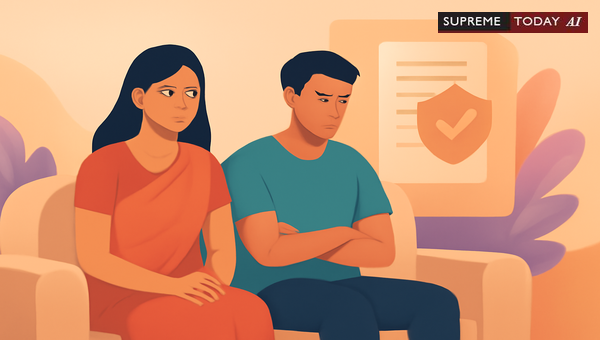
Can a Married Woman Enter a Live-in Relationship in India?
In today's evolving society, live-in relationships have become more common, raising questions about their legal validity, especially for married individuals. A frequent query is: Can a Married Woman Make a Live in Relationship Document? While personal choices are increasingly accepted, Indian law imposes significant restrictions, particularly under the (DV Act). This post delves into the legal nuances, court interpretations, and practical implications to help you navigate this complex area.
Note: This article provides general information based on legal precedents and is not a substitute for professional legal advice. Consult a qualified lawyer for personalized guidance.
Legal Context of Live-in Relationships in India
Live-in relationships, where two adults cohabit without formal marriage, are not explicitly prohibited in India but lack the full legal recognition of marriage. The DV Act plays a pivotal role by defining a '' under , which includes relationships in the . This recognition offers protections against domestic violence, maintenance, and residence rights, but only if certain criteria are met. 2013 8 Supreme 122
Key characteristics for a relationship to qualify include:- Cohabitation in a .- Pooling resources and finances.- Holding themselves out as spouses publicly.- Significant duration, often years. 2010 7 Supreme 321 2022 5 Supreme 542
However, marital status complicates matters significantly.
Can a Married Woman Enter a Live-in Relationship?
Yes, a married woman may enter a live-in relationship, but it typically does not receive the same legal protections as a marriage or even a qualifying live-in arrangement between unmarried parties. Courts have consistently ruled that such relationships fall short of being in the due to the existing marital bond. 2016 7 Supreme 232
For instance:- If a married woman lives with an unmarried man, the arrangement may not qualify under the DV Act because it lacks exclusivity and resembles polygamy or . 2016 7 Supreme 232 2010 7 Supreme 321- A live-in-relationship between a married man and a woman or a married woman with a man is not akin to marriage, as it amounts to and , which is unlawful. Therefore, such woman are not entitled to any protection under the DV Act. 2024 0 Supreme(P&H) 1367
This stance aligns with principles under the , and (), emphasizing that marriage requires legal solemnization and monogamy.
Court Rulings on Married Individuals in Live-in Setups
Indian courts have dismissed protection petitions for live-in couples where one party is married. In one case, petitioners sought safeguards against threats, but the court held: Live-in relationships involving a married person do not have legal recognition as marriages and do not qualify for protection under domestic violence laws. The petition was dismissed, noting no equivalence to marriage. 2024 0 Supreme(P&H) 1367
Similarly:- Such a relationship does not fall within the phrase 'live-in-relationship' or 'relationship' in the . The court dismissed the petition, citing the Hindu Marriage Act and prior precedents, as one petitioner was married. 2023 0 Supreme(P&H) 579- In another ruling: A live-in-relationship between a married and unmarried person is not permissible. Relying on D. Velusamy vs. D. Patchaiammal () 10 SCC 469, the court outlined prerequisites like both parties being unmarried and of legal age. 2021 0 Supreme(Raj) 718 2021 0 Supreme(Raj) 1199
These decisions underscore that awareness of the partner's marital status negates claims to marital-like protections.
Legal Protections and Limitations
Even if a document is drafted for a live-in relationship (like a outlining rights and duties), it holds limited enforceability for married women:- No DV Act Coverage: Relationships failing the '' test exclude remedies like protection orders or maintenance. A married woman might be viewed as a '' without . 2016 7 Supreme 232- Property and Maintenance: Claims are weaker; courts prioritize the legal spouse. Live-in partners cannot claim better rights than a wedded wife. 2021 0 Supreme(Ker) 470- Children from Such Relationships: Status is tricky. While biological parentage is acknowledged, for adoption or juvenile justice, courts may treat the woman as 'married,' requiring both parents' consent. The woman in a live-in-relationship, acknowledging the biological father of the child, out of such a relationship, will have to be treated as a married woman for the purpose of Juvenile Justice. 2021 0 Supreme(Ker) 426
In contrast, long-term live-in relationships between unmarried adults might presume marriage in some states like Rajasthan, but only if proven otherwise absent. 2020 0 Supreme(Raj) 61
Potential Risks
- Claims: Under (struck down in , but societal/legal echoes remain), or charges.
- Family Disputes: Impacts divorce, alimony, or child custody in the existing marriage.
- Social and Police Intervention: Courts have directed police action on threats but denied relationship protection. 2024 0 Supreme(P&H) 1367
Drafting a Live-in Relationship Document: Practical Advice
While possible, such a document should be approached cautiously:- Specify financial contributions, property division, and exit terms.- Acknowledge limited legal enforceability.- Get it notarized or registered, though not a marriage substitute.
Recommendations:- Consult a family lawyer to assess personal circumstances, including religion-specific laws (Hindu, Muslim, etc.).- Consider mediation for existing marital issues.- Prioritize child welfare if applicable, as courts focus on best interests. 2021 0 Supreme(Ker) 426
Key Takeaways
- Live-in relationships for married women are legally possible but lack robust protections under the DV Act. 2013 8 Supreme 122
- Courts require exclusivity, public representation as spouses, and no subsisting marriage for recognition. 2010 7 Supreme 321 2022 5 Supreme 542
- / connotations bar most claims. 2024 0 Supreme(P&H) 1367 2023 0 Supreme(P&H) 579
- Always seek professional advice to mitigate risks like property disputes or violence claims.
In summary, while personal freedoms are expanding, Indian law safeguards marriage's sanctity. A live-in document for a married woman offers minimal shield—better to resolve marital status first. Stay informed, and prioritize legal counsel for your unique situation.
References:- 2013 8 Supreme 122 2016 7 Supreme 232 2010 7 Supreme 321 2022 5 Supreme 542- 2024 0 Supreme(P&H) 1367 2023 0 Supreme(P&H) 579 2021 0 Supreme(Ker) 470 2021 0 Supreme(Raj) 718 2021 0 Supreme(Raj) 1199 2021 0 Supreme(Ker) 426 2020 0 Supreme(Raj) 61
#LiveInRelationship, #IndianFamilyLaw, #DVActIndia












