


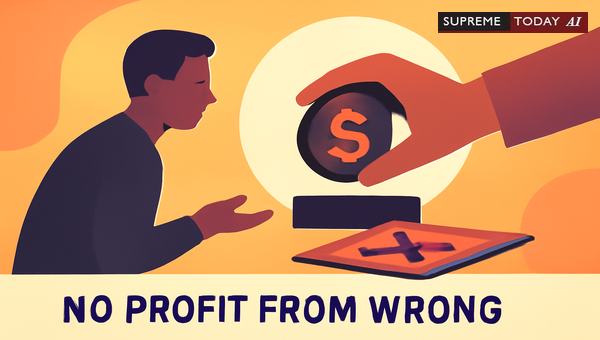
Wrongdoer Can't Profit from Own Wrong: Legal Guide
In the realm of justice, a fundamental principle stands firm: fairness demands that no one should gain from their misconduct. But what does the law say when someone tries to do just that? The age-old question, —Explain, captures a cornerstone of legal equity. This principle, rooted in both common law and Indian jurisprudence, ensures accountability and prevents unjust enrichment.
This blog post delves into the maxim —translated as . We'll explore its meaning, landmark cases, practical applications, and why it remains vital today. Note: This is general information, not legal advice. Consult a qualified attorney for specific cases.
The Legal Maxim: No Advantage from One's Own Wrong
The maxim is a bedrock of law and equity. It prohibits wrongdoers from deriving benefits, profits, or defenses from their illegal or wrongful acts. Courts invoke this to uphold justice, ensuring that misconduct does not yield rewards.
As articulated in various judgments, . 2020 0 Supreme(All) 1190 2017 0 Supreme(Jhk) 438 2017 0 Supreme(Jhk) 1242 2017 0 Supreme(Del) 1361 This echoes the sound principle that . 2020 0 Supreme(All) 1190 2017 0 Supreme(Jhk) 1242
In essence, if your actions cause harm or breach, you cannot later claim advantages stemming from that breach. This applies across contracts, torts, negligence, and public law, promoting accountability over exploitation.
Landmark and High Court Precedents
Indian courts have consistently upheld this maxim through pivotal rulings. Here are key cases:
Union of India & Ors vs Major General Madan Lal Yadav: The ruled that a by avoiding trial and then claim benefits from that avoidance. The maxim prevents using wrongdoing as a shield against proceedings. 2022 0 Supreme(Ker) 400
Devendra Kumar vs State Of Uttaranchal & Ors: Reinforcing the principle, the court held that wrongdoers cannot invoke legal protections arising from their acts, blocking escapes from accountability. 2022 0 Supreme(Ker) 400
T.O. Anthony v. Karvarnan and others: In cases, all wrongdoers bear . No wrongdoer can escape by alleging the injured party's contribution. 2022 0 Supreme(Ker) 316
Ramesh Chennithala vs. State of : Public servants' malfeasance does not trigger automatic prosecution under anti-corruption laws without a clear benefit nexus, but the maxim underscores no profit from wrongs. 2021 0 Supreme(Ker) 510
These precedents illustrate the maxim's breadth, from military discipline to negligence claims.
Applications in Equity, Transactions, and Liability
Equity and Legal Transactions
The principle shines in equity, voiding claims from wrongful transactions. Courts deny relief if granting it would reward misconduct. For instance, a wrongdoer seeking benefits from a tainted deal finds no favor. 2022 0 Supreme(Ker) 792
and Ongoing Liability
Distinguish completed from : the latter impose perpetual accountability. Wrongdoers remain liable for ongoing effects, unable to profit from delays they caused. 2021 0 Supreme(SC) 721
Multiple Wrongdoers and
When several parties err, the injured need not sue all. Each wrongdoer is for full damages. Impelling the claimant to join the wrong doer at the instance of other wrong doer would entail the choice of claimant to initiate claim proceeding against any one of the wrong doer, as worthless, insignificant and nugatory. 2024 0 Supreme(Guj) 2140
The paying wrongdoer can seek contribution later, but cannot force joinder to dilute liability. This aligns with SCC 2008 (3) SCC 748 and High Court rulings, ensuring victims recover fully without fault apportionment battles. 2022 0 Supreme(Guj) 1513 2025 Supreme(Online)(Guj) 5890 2022 Supreme(Online)(Ker) 80366 2023 0 Supreme(All) 474 2023 0 Supreme(All) 2346
Contributory and
Even if the injured contributed slightly, wrongdoers cannot evade full liability. Joint responsibility prevails; victims proceed against any party, who then contributes internally. This discourages wrongdoers from profiting via complexity. 2008 (3) SCC 748 2025 Supreme(Online)(GUJ) 1493
Additional contexts include criminal proceedings, where misnaming wrongdoers does not absolve liability, 2023 Supreme(Online)(MP) 23350 and labor disputes: . 2018 0 Supreme(Guj) 1078
Broader Implications and Real-World Scenarios
Consider a contractor breaching a deal to undercut costs—courts deny profit claims from that breach. Or in accidents with multiple drivers: victims sue the deepest pockets, not parsing faults.
Public law applications, like mandamus against inaction on wrongdoers,
S. ISAC RATHINA RAJ, Vs THE DIRECTOR GENERAL OF POLICE -
further the maxim's reach. . . 2017 0 Supreme(Jhk) 438This principle deters opportunism, fostering ethical conduct. In negotiations or litigation, invoking it counters specious defenses.
Key Takeaways and Recommendations
- Core Rule: Wrongdoers forfeit advantages from their acts; equity bars unjust gains.
- : Victims claim fully from any wrongdoer in multi-party cases.
- Negligence Contexts: Composite faults do not shield perpetrators.
- Practical Tip: Lawyers should cite these precedents to dismantle wrongful claims.
In conclusion, the maxim fortifies Indian law's justice framework. Courts vigilantly apply it to prevent profits from wrongs, ensuring liability tracks accountability. As judgments affirm, wrongdoing nullifies entitlement to benefits. 2022 Supreme(Online)(Mad) 88154
References: 2022 0 Supreme(Ker) 400 2022 0 Supreme(Ker) 316 2021 0 Supreme(Ker) 510 2022 0 Supreme(Ker) 792 2021 0 Supreme(SC) 721 2024 0 Supreme(Guj) 2140 2020 0 Supreme(All) 1190 2018 0 Supreme(Guj) 1078 2017 0 Supreme(Jhk) 438 2017 0 Supreme(Jhk) 1242 2017 0 Supreme(Del) 1361 2022 0 Supreme(Guj) 1513 2025 Supreme(Online)(Guj) 5890 2022 Supreme(Online)(Ker) 80366 2023 0 Supreme(All) 474 2023 0 Supreme(All) 2346 2025 Supreme(Online)(GUJ) 1493 2022 Supreme(Online)(Mad) 88154
Word count: 1028. This overview draws from established cases; outcomes vary by facts.
#LegalMaxim #WrongdoerLiability #IndianLaw















