


Does Parent Winding Up Affect Subsidiary Company?
In the complex world of corporate structures, parent and subsidiary companies often operate closely, sharing resources, management, and strategies. But what happens when a parent company faces winding up? Does this trigger a domino effect on its subsidiaries? The question The Winding up of a Parent Company Affects the Subsidiary Company is a common concern for business owners, investors, and legal professionals navigating insolvency scenarios. Generally, the answer is no—the subsidiary remains a distinct entity—but nuances like control and the can complicate matters. This post breaks down the legal principles, case law, exceptions, and practical insights to help you understand this critical issue.
Note: This article provides general information based on established legal principles and is not a substitute for professional legal advice. Consult a qualified attorney for your specific situation.
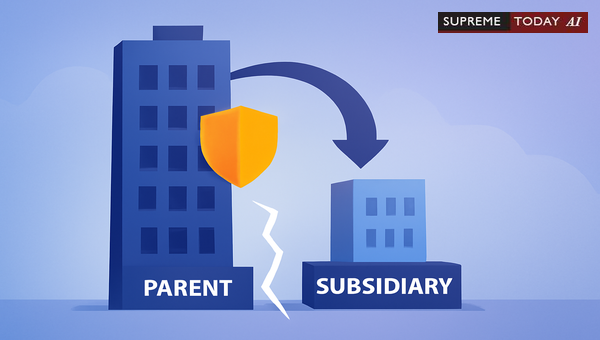
Core Legal Principles: Separate Legal Entities
At the heart of parent-subsidiary relationships is the principle of . A subsidiary company is recognized as a from its parent, regardless of share ownership. Thus, the winding up of a parent company does not automatically affect the existence or operations of its subsidiary 2015 0 Supreme(Cal) 539 2017 0 Supreme(All) 703.
Key aspects include:- : The parent is not liable for the debts or obligations of the subsidiary. During winding up, the subsidiary's liquidator manages its assets, and the parent does not assume responsibility for employees or financial obligations 2015 0 Supreme(Cal) 539 2017 0 Supreme(All) 703.- : Directors of the subsidiary owe duties to the subsidiary itself, not the parent, promoting operational autonomy even in wholly owned setups 2017 0 Supreme(All) 703 2017 0 Supreme(Mad) 1876.
This separation is enshrined in frameworks like the , which treats each company independently during proceedings. For instance, (relevant under prior regimes), protects a company's property, including actionable claims, post-winding up commencement to preserve assets for creditors 2023 0 Supreme(Mad) 458.
The : When Separation Holds Firm
The —the legal barrier shielding parent from subsidiary liabilities—remains intact in most cases. It can only be lifted under exceptional circumstances, such as fraud, tax evasion, or where the subsidiary acts as a mere agent of the parent 2017 0 Supreme(Mad) 1876. Courts generally uphold distinct identities, ensuring the parent's insolvency doesn't cascade 2017 0 Supreme(Mad) 1876.
Subsidiaries often enjoy autonomy: Subsidiaries typically operate with a degree of autonomy, even if they are wholly owned by the parent company 2017 0 Supreme(All) 703. This is reinforced by judicial views that a subsidiary is not just a puppet of the parent company, distinguishing between influence and outright agency 2022 0 Supreme(Pat) 477 2022 0 Supreme(Del) 996. Even if the parent manages the subsidiary's trade, it doesn't constitute a permanent establishment for taxation purposes, affirming independent status 2016 0 Supreme(Del) 2002.
Relevant Case Law: Judicial Precedents
Indian and international cases underscore these principles:
- Vodafone International Holdings BV Case: Emphasizes that a subsidiary retains its legal existence and assets; the parent does not automatically acquire them upon winding up 2017 0 Supreme(All) 703 2020 0 Supreme(Cal) 576.
- Renusagar Case: The Supreme Court held a wholly owned subsidiary could be treated as part of the parent only where the is lifted due to intertwined operations 2017 0 Supreme(Mad) 1876 2017 0 Supreme(Mad) 1876.
Additional precedents highlight limits:- In Smith, Stone and Knight v. The Roberta (), a parent was liable for a subsidiary's bill due to agency-like control, but this requires substantial evidence
.- The Meyer case () clarified that a subsidiary's assets during winding up are managed by its own liquidator, not the parent 2023 Supreme(Online)(NCLAT) 1727 2023 Supreme(Online)(NCLAT) 1306.
These rulings align with the , where winding up petitions focus on individual entities, not group-wide dissolution 2025 Supreme(Online)(NCLT) 5305.
Exceptions and Limitations: When Impact May Occur
While separation is the norm, exceptions exist:
- : Courts may intervene if the subsidiary is a mere agent or shows significant management overlap. This demands proof, as in cases of pervasive control treating subsidiaries as extensions of parents 2017 0 Supreme(Mad) 1876
.
- : Shared employee cadres between parent and subsidiary might imply joint responsibilities, though rare 2003 0 Supreme(AP) 66.
- : Holding companies creating subsidiary pyramids don't alter core separation unless agency is proven 2025 0 Supreme(All) 3349.
Winding up doesn't automatically trigger subsidiary proceedings: The winding up of a parent company does not automatically result in the winding up of its subsidiaries. Each subsidiary has its own legal identity
. However, substantial control can influence outcomes, as subsidiaries may draw on parent experience without sharing fates 2024 0 Supreme(Kar) 49.
Under the Companies Act, winding up preserves assets: The object and purpose of Section 536(2) is to ensure that the assets of a company are preserved for the general body of creditors 2023 0 Supreme(Mad) 458.
Practical Implications and Additional Insights
For businesses:- Asset Protection: Subsidiaries' assets stay ring-fenced, but monitor for veil-piercing risks in high-control scenarios.- Operational Continuity: A parent's termination doesn't doom subsidiaries, allowing them to leverage parent expertise independently 2024 0 Supreme(Kar) 49.
Creditors and employees should note: Prosecution under , targets officers of the specific company in winding up, not affiliates 2025 Supreme(Online)(NCLT) 5305. Liquidators handle dispositions post-commencement, safeguarding claims 2023 0 Supreme(Mad) 458.
Global views echo this: Parents hold persuasive power, but subsidiaries guard separate interests unless acting as agents 2022 0 Supreme(Pat) 477.
Conclusion and Key Takeaways
In summary, the winding up of a parent company does not typically affect the subsidiary company in terms of legal existence or obligations. Subsidiaries remain separate entities, with liabilities siloed and assets protected. Exceptions via piercing are narrow, requiring evidence of agency or fraud.
Key Takeaways:- Maintain clear delineation of operations and finances between parent and subsidiary.- Prepare for creditor claims by emphasizing separate status.- Stay updated on case law, especially veil-lifting trends.- In , independence holds unless proven otherwise.
References: 2015 0 Supreme(Cal) 539 2017 0 Supreme(All) 703 2017 0 Supreme(Mad) 1876 2003 0 Supreme(AP) 66
2020 0 Supreme(Cal) 576 2025 Supreme(Online)(NCLT) 5305 2025 0 Supreme(All) 3349 2024 0 Supreme(Kar) 49 2023 0 Supreme(Mad) 458 2022 0 Supreme(Pat) 477 2022 0 Supreme(Del) 996 2016 0 Supreme(Del) 2002
2023 Supreme(Online)(NCLAT) 1727 2025 Supreme(Online)(Chh) 10670 2023 0 Supreme(Del) 2919 2023 Supreme(Online)(NCLAT) 1306
By understanding these dynamics, businesses can better safeguard group structures during crises. For tailored guidance, seek expert counsel.
#CorporateLaw, #WindingUp, #ParentSubsidiary















