


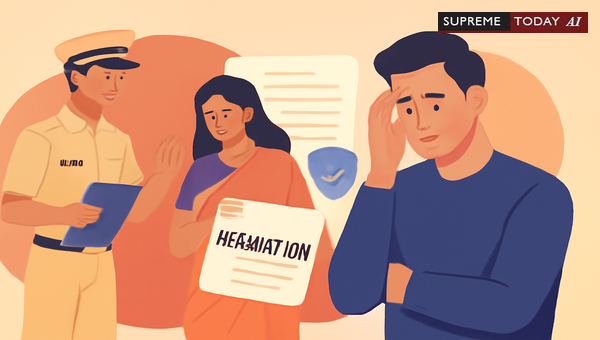
from Legitimate Police Complaints? Court Ruling
In today's digital age, where social media and YouTube channels amplify voices, disputes between social activists and local communities can quickly escalate into legal battles. Imagine a scenario where villagers accuse a social worker of harassing them under the guise of service, filing a formal complaint with the police. Does publicizing such grievances amount to ? A recent court ruling provides clarity on this nuanced issue.
The question at the heart of this case is: Saikchhik Sanstga Dawara Sewa Mevkami Ki Shikayat—translated and contextualized as complaints of service exploitation or harassment by an educational or social institution representative. This blog delves into the court's decision, legal procedures involved, and broader implications for filing complaints in .
Overview of the Complaint
The case revolves around allegations of leveled against villagers who complained to the Superintendent of Police (SP) about a woman purportedly harassing them while posing as a social worker. The villagers claimed she was troubling the community, making false reports under the , and using her YouTube channel to incite unrest in the district.
2021 0 Supreme(Del) 617
Key elements include:- Harassment under social service guise: The petitioner accused the woman of defaming villagers by negatively portraying them in media and online content, exploiting her position.
2021 0 Supreme(Del) 617- Media involvement: The complaint was filed in writing with the SP and subsequently covered by the press, reflecting the villagers' grievances.
The court examined whether these actions crossed into territory.
Legal Procedure and Court's Analysis
Filing a police complaint is a fundamental right for citizens seeking redress. However, when such complaints become public, they can invite countersuits. In this instance, the villagers adhered to proper protocol by submitting a written complaint to the SP. The court observed that the contents of the telecast merely reflect the grievances of the respondents and do not constitute since they were part of a legitimate complaint process.
2021 0 Supreme(Del) 617
Key Findings:
Nature of Allegations: The woman was accused of exploiting her position as a social worker to harass villagers. This included false SC/ST Act invocations, a serious charge that demands careful handling.
2021 0 Supreme(Del) 617
No in Legitimate Process: The court ruled that grievances aired through official channels and media reports mirroring those complaints do not qualify as . Actions were within rights to seek police intervention.
2021 0 Supreme(Del) 617
Dismissal Upheld: The complaint against the villagers was dismissed, with the court finding no procedural error. This underscores protection for complaints.
This ruling aligns with principles that complaints, even if publicized, are shielded if they follow legal norms. Typically, requires malice or falsehood beyond reasonable belief.
Broader Context: Handling Complaints Responsibly
While complaints are protected, courts emphasize procedural fairness to prevent abuse. Related judgments highlight pitfalls of improper complaints or threats.
Contempt Risks in Courtroom Conduct
In contempt cases, aggressive language during proceedings can backfire. For instance, an advocate threatening, Aise Shikayat Karoonga Ki Jeevan Bhar Yaad Rakhega (I'll file such a complaint you'll remember for life), was held guilty of under . The court stressed upholding judicial dignity, sentencing three months' imprisonment and a Rs. 20,000 fine, stayed for appeal. 2010 0 Supreme(All) 483 2010 0 Supreme(All) 472
These cases illustrate that while complaining is a right, disparaging courts or using threats undermines justice. Lawyers and complainants must cooperate respectfully.
Preliminary Inquiry Before Action
Courts have quashed hasty actions based solely on complaints without verification. In fair price shop allotment cancellations, orders were set aside for violating principles. The directive was clear: UCHIT DAR KI DUKAN KA NILAMBAN MATRA KISI VYAKTI KI SHIKAYAT KE ADHAR PAR NAHIN KIYA JAY. YADI KISI DUKANDAR KE VIRUDDHA KISI SROTA SE SHIKAYAT PRAPTA HOTI HAI TO PAHLE USAKI PRARAMBHIK JANCH KARAYEE JAY. (Fair price shop suspension not merely on one person's complaint; conduct preliminary inquiry first). No show-cause notice or hearing led to quashing under . 2009 0 Supreme(All) 353 2009 0 Supreme(All) 337
This mirrors the social worker case: Authorities must verify before acting, protecting against frivolous claims while safeguarding genuine ones.
Other sources touch on property disputes involving 'Thakur Dawara,' questioning public trust status and worship rights, reminding us complaints must be substantiated.
Practical Recommendations
For individuals facing similar disputes:- Document Everything: Maintain records of incidents, communications, and official filings.- Follow Procedure: Submit written complaints to appropriate authorities like SP for criminal matters.- Avoid Escalation: Refrain from threats or unsubstantiated public accusations to dodge contempt or countersuits.- Seek Preliminary Checks: Advocate for inquiries before drastic actions, as in allotment cases.
If tensions rise, consulting a lawyer for tailored strategy is wise. This is general information; specific cases may vary.
Key Takeaways
- Legitimate police complaints against alleged harassment, even publicized, typically do not constitute .
2021 0 Supreme(Del) 617
- protects complainants, but malice or procedural lapses invite reversal.
- Courts prioritize , preliminary probes, and judicial respect.
This decision empowers communities to voice grievances without fear, provided they act responsibly. In an era of social media activism, balancing free speech with reputation rights remains crucial.
References:-
- 2021 0 Supreme(Del) 617- 2010 0 Supreme(All) 483- 2010 0 Supreme(All) 472- 2009 0 Supreme(All) 353- 2009 0 Supreme(All) 337-
-
-
Disclaimer: This post provides general insights based on public judgments and is not legal advice. Consult a qualified attorney for your situation.
#DefamationLaw #SCSTAct #LegalComplaints












