


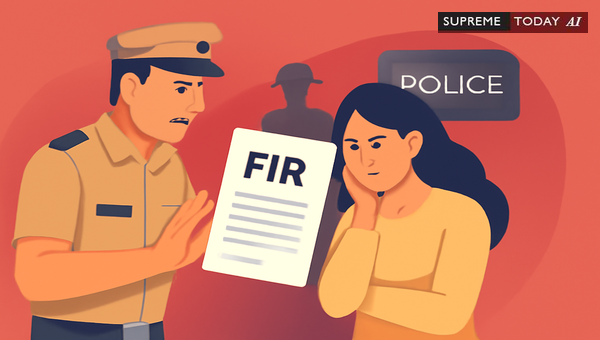
Police Harassment Without : Legal Rights in India
Introduction
Harassment by public officials, particularly the police, is a pressing issue in India. Imagine approaching the police with a complaint, only to face repeated summons, inquiries, and pressure without any formal action like registering a (). This scenario raises the question: Harassment by Public Officials – specifically, can police harass individuals without registering a crime? The answer lies in landmark judgments that safeguard citizens' rights while ensuring accountability.
This blog explores the legal framework governing police harassment without registration, drawing from key precedents like Lalita Kumari v. Government of Uttar Pradesh. We'll cover mandatory rules, guidelines to curb misuse, relevant case laws, and practical steps for protection. Note: This is general information and not specific legal advice; consult a lawyer for your situation.
Understanding Police Harassment Without Crime Registration
Police harassment often occurs during preliminary inquiries when no is formally acknowledged. The has addressed this in Lalita Kumari v. Government of Uttar Pradesh , mandating registration upon receiving information about a . The Court ruled that no is permissible in such cases 2005 0 Supreme(SC) 895 2017 0 Supreme(Mad) 3660.
Failure to register an violates the complainant's rights and may constitute a under , which punishes for disobeying law with intent to cause injury 2018 0 Supreme(Cal) 198. This provision underscores that police cannot indefinitely probe without formal steps, preventing undue harassment.
Key Legal Principles: Mandatory and Anti-Harassment Guidelines
Mandatory Registration of
Under (CrPC), police must register an for cognizable offenses. The Lalita Kumari judgment firmly establishes this as a legal obligation, eliminating discretion for preliminary inquiries in straightforward cases 2005 0 Supreme(SC) 895 2017 0 Supreme(Mad) 3660.
Non-registration empowers courts to intervene. As one source notes, A crime can be registered on receiving information from the very victim or any person who is acquainted with it or the police itself, on gaining knowledge of the incident. The registration of a crime constitutes the starting point for undertaking investigation and without the formal registration of a crime, any step taken by the police, cannot be treated as part of investigation 2014 0 Supreme(AP) 1105.
Directives to Prevent Harassment
To curb misuse, the has issued guidelines including:- Proper summoning procedures.- Recording of inquiry minutes.- Strict adherence to rules for preliminary inquiries and FIRs 2022 0 Supreme(Mad) 883 2020 0 Supreme(Mad) 322 2023 0 Supreme(Mad) 1749.
Courts can invoke under to harassment 2020 0 Supreme(Mad) 322. For instance, in cases of alleged abuse, judicial intervention ensures lawful police conduct 2022 0 Supreme(Mad) 2469.
Relevant Case Findings on Harassment Complaints
Courts have consistently recognized harassment claims. In multiple instances, individuals complained of police overreach during inquiries, prompting guidelines for boundary adherence 2022 0 Supreme(Mad) 1694 2020 0 Supreme(Mad) 313.
Conversely, some cases highlight the flip side: false FIRs used for harassment. Petitioners have argued, Without going into the merits of the case, the police simply registered the crime only to harass the petitioners. Absolutely, there are no ingredients of and the contents of the complaint are in casual manner and no dates were given 2020 0 Supreme(Telangana) 417. Here, courts weighed omnibus allegations but directed surrender and bail consideration, balancing rights.
In another context, recovery and investigation lapses were scrutinized, emphasizing that police actions must be credible. For example, doubtful weapon seizures led to acquittals, reinforcing procedural integrity 2018 0 Supreme(Bom) 668. These cases illustrate courts' reluctance to tolerate harassment, whether via non-registration or frivolous FIRs.
Exceptions and Limitations
While protections exist, limitations apply:- Disputes Over Facts: Courts may hesitate without clear evidence of harassment 2005 4 Supreme 282.- Ongoing Investigations: Interference is rare absent abuse proof 2023 0 Supreme(Mad) 1749.
In homicide probes, non-joining of public witnesses doesn't doom prosecution if chains are complete, but reluctance to join investigations highlights public wariness of police involvement 2018 0 Supreme(Del) 2888. Similarly, transparency gaps or contradictions can undermine cases, as seen in acquittals due to missing links 2014 0 Supreme(AP) 1105.
A case involving alleged chemical attack upheld conviction under (grievous hurt) over 307, showing courts distinguish intent while addressing victim harassment claims 2013 0 Supreme(Bom) 2625.
Practical Remedies and Recommendations
Facing police harassment without registration? Here's how to respond:- Document Everything: Record dates, times, officers' names, and interaction details. This is vital for proceedings.- File a Complaint: Lodge against non-registration and harassment, citing Lalita Kumari and Section 166A IPC.- Seek Court Intervention: Approach or under for direction or Section 482 for quashing abuse.- Monitor Conduct: Insist on recorded summons and minutes per guidelines 2022 0 Supreme(Mad) 883.
In scenarios, courts direct surrender within timelines, protecting innocents from harassment 2020 0 Supreme(Telangana) 417.
Conclusion and Key Takeaways
Police harassment without crime registration undermines justice, but precedents like Lalita Kumari provide robust safeguards. Key takeaways:- registration is mandatory for cognizable offenses 2005 0 Supreme(SC) 895 2017 0 Supreme(Mad) 3660.- Follow guidelines to prevent inquiry misuse 2020 0 Supreme(Mad) 322.- Courts protect via 2022 0 Supreme(Mad) 2469.- Document and seek legal recourse promptly.
By understanding these principles, citizens can assert rights effectively. Always consult a qualified lawyer for personalized guidance, as laws evolve and cases vary.
This post is for informational purposes only and does not constitute legal advice.
#PoliceHarassment #FIRIndia #LegalRights















