


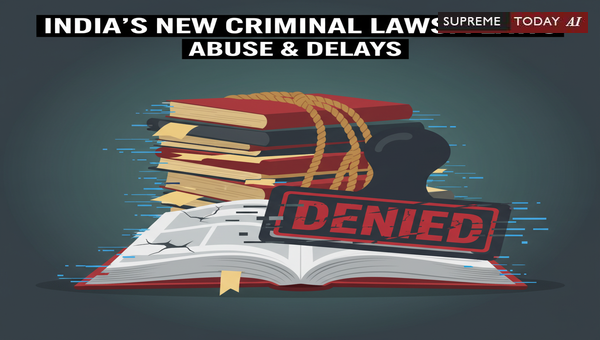
Demerits of India's New Criminal Laws: Critical Analysis
India's criminal justice system underwent a major overhaul with the introduction of the , , and , effective from . These laws aim to modernize procedures, enhance efficiency, and prioritize justice over punishment. However, like any reform, they come with challenges. A common query arises: What are the demerits of new criminal laws?
While these statutes promise progress, judicial interpretations and case law reveal potential drawbacks, including risks of abuse, delays, inconsistencies, and ambiguities. This post examines these issues based on legal documents and precedents, offering insights for better understanding. Note: This is general information, not legal advice. Consult a qualified lawyer for specific cases.
Potential for Abuse of Power
One significant concern is the potential for authorities to misuse powers, particularly in adding accused during trials or handling procedural stages. Courts emphasize safeguards, but gaps persist.
For instance, when adding a new accused mid-trial, the court must be reasonably satisfied that the new accused committed an offense and there is a reasonable prospect of conviction. Mere suspicion is not sufficient. 2000 2 Supreme 326 This highlights the risk of overreach if standards aren't strictly followed.
Similarly, ensuring a is crucial, especially at sentencing: The court must ensure that the accused has a , particularly at the sentencing stage. 1977 0 Supreme(SC) 135 Without vigilant oversight, such provisions could lead to unfair inclusions or rushed judgments.
Other cases echo this. In matrimonial disputes, summoning accused without merit evaluation can abuse process: It is also well settled that at the stage of summoning the accused, the court below is not required to go into the merit and demerit... The criminal proceeding against the applicants cannot be said to be an .
Yet, frivolous cases strain resources.
Procedural Complexities and Delays
New laws introduce complexities that may exacerbate court backlogs. Altering charges during trial, if prejudicial, often necessitates a new trial: If the altered or added charge is prejudicial to the accused, a new trial may be required, which can lead to delays and additional costs. 2016 4 Supreme 200
Complainant absence can further stall proceedings: The court may have to postpone proceedings if the complainant's presence is deemed necessary. 1998 1 Supreme 116 With India's overburdened judiciary, such hitches amplify delays.
The transition to BNSS adds layers. For FIRs before , but bail applications after, courts mandate BNSS compliance: The court ruled that bail applications filed after the BNSS's enforcement for FIRs registered before its enactment must comply with the BNSS provisions. 2024 0 Supreme(Gau) 1360 This retrospective procedural shift, while logical, creates confusion: Procedural laws are presumed to be retrospective unless stated otherwise. 2024 0 Supreme(Gau) 1360
No precedes such laws: Unfortunately before introduction of such legislations, no is undertaken by the legislature or the executive. Therefore, there can be no planning as to how many civil cases the proposed legislation may generate or how many criminal cases will go before the Courts. 2013 0 Supreme(Del) 1730 This oversight risks overwhelming courts, prolonging justice.
Inconsistencies in Application of Law
Applying new laws to pending cases breeds inconsistency. Documents note challenges in shifting from old CrPC to new provisions: This can lead to inconsistencies in the application of the law and create confusion for both the courts and the parties involved. 1975 0 Supreme(SC) 164
BNSS saving clauses clarify some aspects but spark debate: The in the BNSS only applies to pending matters before its enforcement, and thus, new applications must comply with the BNSS. 2024 0 Supreme(Gau) 1360 Courts disagree, as seen in references where single judges question precedents. 2024 0 Supreme(Gau) 1360
Internationally, similar federal-state tensions arise, like in Malaysia where state Islamic laws can't overlap federal penal codes: State legislatures have limited powers constrained by federal law.
Iki Putra bin Mubarrak vs Kerajaan Negeri Selangor & Anor
India's federal structure may face analogous issues with state adaptations.Lack of Clarity on Certain Provisions
Ambiguities persist, such as High Court jurisdiction under : This lack of clarity can lead to conflicting interpretations and inconsistent application of the law. 1994 0 Supreme(SC) 1187
New jurisprudence urges departure from old leniencies: For the new criminal jurisprudence must depart from the old canons, which make indulgent presumptions and favoured constructions benefiting accused persons. 2006 0 Supreme(AP) 511 1989 0 Supreme(Ker) 552 Yet, without precise guidelines, interpretations vary, as in food adulteration cases where delays in reports don't automatically prejudice if no re-analysis request is made. 2006 0 Supreme(AP) 511
Bail applications exemplify this: High Courts retain , but new sections like apply post-enforcement. 2024 0 Supreme(Gau) 1360 Such overlaps demand clearer legislative intent.
Broader Implications and Judicial Perspectives
Reforms aim to plug loopholes: Any narrow and pedantic, literal and lexical construction likely to leave loopholes for this dangerous criminal tribe to sneak out of the meshes of the law should be discouraged. 2006 0 Supreme(AP) 511 However, without balancing accused rights, it risks tilting toward prosecution.
Historical precedents warn against unchecked powers, even in religious contexts: Laws are made for the government of actions, and while they cannot interfere with mere religious belief and opinions, they may with practices. 1987 0 Supreme(SC) 793 New laws must navigate such balances.
Cases like abuse in dowry demands show process misuse: Therefore, they asked her to bring Rs. 5 lakhs from her parents... otherwise, she will g...
Reforms should prevent, not perpetuate, this.
Key Takeaways
- Abuse Risks: Strict satisfaction needed for adding accused 2000 2 Supreme 326 and fair hearings 1977 0 Supreme(SC) 135.
- Delays: Charge alterations 2016 4 Supreme 200 and transitions 2024 0 Supreme(Gau) 1360 prolong cases.
- Inconsistencies: Old vs. new law applications confuse 1975 0 Supreme(SC) 164.
- Clarity Gaps: Jurisdiction ambiguities 1994 0 Supreme(SC) 1187 invite disputes.
While new laws modernize India's justice system, addressing these demerits through amendments, training, and impact studies is vital. Courts play a key role in mitigating issues via .
Stay informed on evolving jurisprudence. For personalized guidance, seek professional legal counsel.
#NewCriminalLaws #LegalReformsIndia #BNSSIssues















