


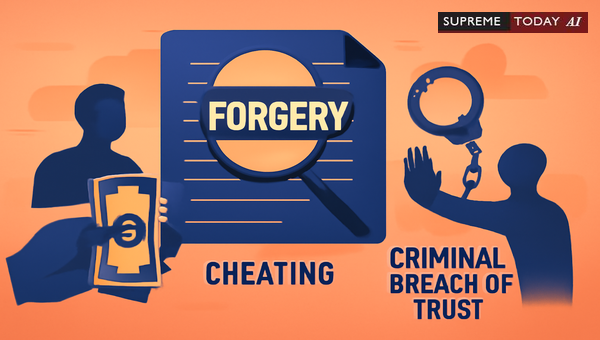
IPC Sections 420, 406, 465, 468, 471: Essential Judgments on Cheating, Breach of Trust, and Forgery
In the realm of Indian criminal law, charges under , 406 (criminal breach of trust), 465 (forgery), 468 (forgery for cheating), and 471 (using forged documents as genuine) of the (IPC) are commonly invoked in cases involving financial fraud, property disputes, and document manipulation. A frequent query from those facing such allegations or seeking justice is: u/s 420,406,465,468,471 IPC Relating vital Judgment. This post delves into pivotal judicial interpretations, highlighting the critical role of (guilty mind) and dishonest intent, drawing from landmark cases and related precedents.
These sections often intersect in scams, loan frauds, and property deals gone wrong. Understanding them can help navigate investigations, bail applications, or defenses. Note: This is general information based on case law and not specific legal advice. Consult a qualified lawyer for your situation.
Core Elements of These IPC Offences
Offences under these sections are distinct yet interconnected, revolving around cheating, forgery, and misuse of documents. Conviction requires proving at the time of the act, not just later outcomes. As clarified in key judgments, mere creation of a false document without such intent does not suffice. 2001 8 Supreme 216 2003 1 Supreme 537
Key Points from Judgments
- Sections 465, 468, 471 IPC (Forgery): Cover making false documents (465), forgery for cheating (468), and using forged documents as genuine (471). Proof of false making with intent to cause damage, injury, or fraud is essential. defines forgery as involving dishonest intent. 2001 8 Supreme 216
- Section 420 IPC (Cheating): Involves dishonest inducement to deliver property. Intent must exist at the time of inducement, not inferred from breach of promise later. 2024 0 Supreme(SC) 1376 2025 7 Supreme 626 2009 0 Supreme(SC) 925
- Section 406 IPC (Criminal Breach of Trust): Entrustment of property followed by dishonest misappropriation. Often paired with 420 in financial cases.
- Interconnection: Forged documents frequently aid cheating schemes, but each offence needs specific proof of (act) and . 2003 1 Supreme 537 1999 2 Supreme 291
Detailed Analysis: Forgery Under Sections 465, 468, 471
Forgery hinges on creating or using false documents/records with fraudulent intent. In 1999 2 Supreme 291, the court held that a forged bail order in the accused's handwriting, even without a signature, constituted forgery under , as it was made dishonestly with intent to deceive, causing injury or benefit. This underscores that the act must aim to defraud.
For Section 471, the accused must know or have reason to believe the document is forged and use it as genuine. Mere possession isn't enough without knowledge and intent. 2003 1 Supreme 537 The judgment emphasizes: To convict under Sec. 471, it must be proven that the accused knew or had reason to believe the document was forged and used it as genuine.
Courts repeatedly stress that not every false document is forgery; intent separates from crimes. In property fraud cases, like those involving bogus sale deeds, lack of proven dishonest intent leads to . 2022 0 Supreme(Guj) 1527
Cheating and Breach of Trust: Sections 420 and 406
Section 420 requires:- (promise/representation).- Delivery of property or detriment to victim.- Dishonest intent from the outset. 2009 0 Supreme(SC) 925
A mere broken promise doesn't qualify; prosecution must show initial fraud. In 2025 7 Supreme 626, the court noted: Mere failure to fulfill a promise later does not automatically establish cheating; dishonest intent must be proved at the time of inducement.
Section 406 often arises in misappropriation, like loan defaults or job scams. In financial frauds, such as promising government jobs for money, courts scrutinize intent. 2021 0 Supreme(P&H) 509 Here, was denied to an alleged mastermind due to gravity and public interest, highlighting concealment of prior cases as a factor.
Insights from Related Cases: Bail, Quashing, and Exceptions
These charges frequently lead to bail pleas or quashing petitions. Key trends from precedents:
- Bail Granted on Conditions: In misappropriation from co-operative banks under 406, 420, 465, etc., bail was allowed post-surrender, with warnings against violations. 2025 0 Supreme(Ker) 1311 Prolonged custody (e.g., 18 months) and compliance favor regular bail under . 2021 0 Supreme(Raj) 2236
- : Amicable settlements lead to quashing, as in a Surat case under 406, 420, 465, etc., plus violations. 2022 0 Supreme(Guj) 1527 Courts quash if disputes are civil, like property sales. 2022 0 Supreme(Guj) 1396 In 2025 Supreme(Online)(KAR) 11598, cognizance was restricted to 420 IPC where cheating evidence existed, dropping other forgery charges for lack of proof.
- Denied: In large-scale job frauds (406, 420, 467, etc.), needs outweigh bail if public interest is high. 2021 0 Supreme(P&H) 509
- Recovery Aids Bail: Full recovery of duped amounts, as in loan conspiracies (406, 409, 420, 465), justifies regular bail. 2022 0 Supreme(Guj) 907
Exceptions clarify limits:- No conviction without proof. 1999 2 Supreme 291- masquerading as crimes get dismissed. 2022 0 Supreme(Guj) 1396- Evidence beyond suspicion required; delays don't prove guilt. 2025 7 Supreme 626
Practical Recommendations
For accused:- Challenge lack of dishonest intent evidence.- Highlight settlements or recoveries for bail/quashing.
For victims/prosecution:- Gather contemporaneous proof of fraud (communications, witnesses).- Differentiate civil breaches from criminal intent.
Courts urge scrutiny: The prosecution must establish clear evidence of at the time of the act. 2003 1 Supreme 537
Conclusion: Key Takeaways
Vital judgments under IPC 420, 406, 465, 468, 471 emphasize proving dishonest intent at inception and specific acts. Forgery needs fraudulent making/use; cheating demands inducement with . While interconnected, each stands alone on proof. Bail is common with conditions, especially post-recovery or long custody, but serious frauds demand caution.
- Always prove – cornerstone of convictions.
- Bail viable if no flight risk, compliance history.
- Quashing possible for settlements/civil nature.
Stay informed, but seek professional advice. These principles guide courts toward justice without presuming guilt on allegations alone.
References (select case IDs): 2024 0 Supreme(SC) 1376, 2025 7 Supreme 626, 2003 1 Supreme 537, 1999 2 Supreme 291, 2009 0 Supreme(SC) 925, 2025 0 Supreme(Ker) 1311, 2022 0 Supreme(Guj) 1527, 2021 0 Supreme(P&H) 509
#IPCLaw, #CheatingForgery, #IPCJudgments












