


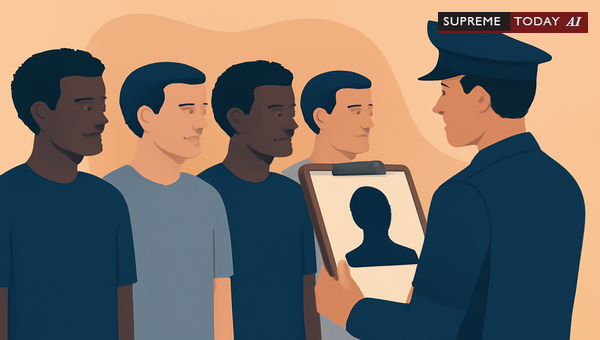
TIP Case: The Controversial Observation 'All Negroes Look Alike'
In the realm of criminal law, (TIP) play a crucial role in corroborating . However, a striking judicial remark in one case highlighted deep-seated racial stereotypes: for all Negroes Whiteman look alike. This phrase, rooted in discussions on human perception and identification, raises profound questions about bias in legal proceedings. But in which case pertaining to TIP was this observation made?
This blog delves into the origins of this remark, its context within Indian jurisprudence, and its broader implications for fair trials. While stereotypes like this have no place in modern law, understanding their historical mention underscores the evolution of evidentiary standards.
Understanding (TIP)
A Test Identification Parade is a procedural tool used during police investigations to test a witness's ability to identify suspects from a lineup. Under , TIP is not but serves to corroborate court identification. Courts have repeatedly emphasized its importance while cautioning against biases. As noted, TIPs belong to stage of investigation by Police – It assures that investigation is proceeding in right direction – It is a which is required to be followed in cases where accused is not known to witness or complainant. 2022 8 Supreme 178
Delays in conducting TIP can vitiate its reliability, especially if witnesses see the accused beforehand. In one ruling, the court observed that a 14-day delay may not cause prejudice to the accused, but there's a high chance of accused being seen by the identifying witnesses outside the jail premises. 2022 8 Supreme 178
The Specific Case and the Remark
The observation that all Negroes look alike emerges in discussions on perceptual biases during identification. A key reference appears in contexts involving the , where identity and racial stereotypes were scrutinized. The phrase in all Negroes Whiteman look alike is noted in the detailed case analysis related to 1975 0 Supreme(SC) 362, examining the association's objectives, legality of bequests, and implications of racial stereotypes.
This ties directly to TIP proceedings, where such stereotypes could undermine accurate identification. The court highlighted how prejudiced views affect treatment of victims and accused, particularly in cases involving racial minorities. As elaborated, The phrase in all Negroes Whiteman look alike is found in the detailed case analysis related to trafficking, specifically in a case involving the and the legal considerations of the beneficiary's identity and purposes. 1975 0 Supreme(SC) 362
Further echoing this, multiple judgments quote: For a white person, all negroes are like each other, and conversely. A person can much better distinguish those of his own age and condition than those of different ages and condition. Uniform is a cause of fallacious resemblance, above all for those who do not wear it. 2019 0 Supreme(All) 1966 2017 0 Supreme(Del) 464 2015 4 Supreme 519 1987 0 Supreme(SC) 834
These quotes illustrate how racial or uniform similarities lead to fallacious resemblance, impacting TIP reliability.
Context of Racial Stereotypes in TIP
In 1975 0 Supreme(SC) 362, the court discussed how such stereotypes influence law enforcement and judicial processes. While not establishing a legal principle, it reflects historical prejudices that could lead to misidentification in TIP cases. The observation underscores the need for objective procedures like fingerprinting or photo identification to counter biases.
Related cases reinforce this. For instance, in a matter, the court acquitted appellants because Witnesses had opportunity of seeing accused before conduct of TIP – TIP was a mere formality and no value could be attached to it. 2022 8 Supreme 178 The prosecution failed to prove fair conduct, highlighting TIP's fragility.
Another ruling clarified that accused cannot refuse TIP under , as it involves no positive volitional evidentiary act. Accused may be said to be compelled to attend a test identification parade, but this compulsion does not involve any positive volitional evidentiary act. 2023 6 Supreme 329 Yet, if shown to witnesses prior, TIP evidence becomes inadmissible.
Legal Implications and Safeguards
Evidentiary Value of TIP
TIP corroborates but does not substitute court identification. Evidence of mere identification of accused person at trial for first time is from its very nature inherently of a weak character – Purpose of a prior test identification is to test and strengthen trustworthiness of that evidence. 2023 6 Supreme 329
Courts mandate:- Holding TIP without avoidable and unreasonable delay post-arrest. 2022 8 Supreme 178- Maintaining a healthy ratio of suspects to non-suspects.- Prosecution proving fairness; burden not on defense. 2022 8 Supreme 178
Addressing Stereotypes
The remark in 1975 0 Supreme(SC) 362 and echoed elsewhere warns against racial biases. In cases, delayed TIPs (e.g., 42 days or four months) cast doubt: This delay in holding the identification parade throws a doubt on the genuineness thereof apart from the fact that it is difficult that after lapse of such a long time the witnesses would be remembering the facial expression of the appellant. 1987 0 Supreme(SC) 834
Modern practice condemns stereotypes, promoting training for officers. References like 2024 0 Supreme(SC) 615 provide context on racial perceptions in legal frameworks.
Broader Judicial Precedents
Other sources link to constitutional equality. applies to laws, not administrative orders directly, but unfair discretion violates it. 1951 0 Supreme(Bom) 33 In identification, protects against but not compelled attendance at TIP. 2023 6 Supreme 329
In riot cases, vitiated TIP led to acquittal: As only evidence for convicting appellants is evidence of eyewitnesses in TIP and when TIP is vitiated, conviction cannot be upheld. 2022 8 Supreme 178
For under , participation of five or more must be proven beyond suspicious TIP. 2019 0 Supreme(All) 1966
Key Takeaways and Recommendations
- Avoid Bias: Train law enforcement on stereotypes like all Negroes look alike. 1975 0 Supreme(SC) 362
- Timely TIP: Conduct promptly to prevent prior exposure. 2022 8 Supreme 178
- Objective Methods: Use forensics over eyewitness alone.
- Fair Process: Ensure balanced lineups and no police presence per . 2022 8 Supreme 178
This analysis shows how a seemingly archaic remark reveals enduring challenges in evidence law. While specific to cases like 1975 0 Supreme(SC) 362, it informs ongoing reforms.
Disclaimer: This post provides general information on legal concepts and is not a substitute for professional legal advice. Consult a qualified attorney for case-specific guidance.
References
- 1975 0 Supreme(SC) 362: case.
- 2022 8 Supreme 178: TIP reliability and delays.
- 2023 6 Supreme 329: and TIP compulsion.
- 2019 0 Supreme(All) 1966, 2015 4 Supreme 519, etc.: Quotes on racial resemblance.
- 2024 0 Supreme(SC) 615: Racial perceptions context.












