
Searching Case Laws & Precedent on Legal Query.....!
Scanned Judgements…!
Searching Case Laws & Precedent on Legal Query.....!
Scanned Judgements…!
RBI Guidelines for Recovery - The Reserve Bank of India (RBI) has issued clear guidelines to ensure that recovery agents do not harass or intimidate borrowers. These guidelines specify that recovery agents must conduct their activities within prescribed hours (7 am to 7 pm), avoid violence, and maintain decency during interactions ["2023 0 Supreme(Cal) 800"]. Several judgments, including the Supreme Court case of Shanti Devi Sharma, emphasize that banks and financial institutions must follow these RBI directives strictly during recovery processes ["2025 Supreme(Online)(Tel) 24480"], ["2025 Supreme(Online)(Tel) 62055"], ["2025 Supreme(Online)(Tel) 35510"], ["2025 Supreme(Online)(Tel) 27579"], ["2025 Supreme(Online)(Tel) 24479"], ["2025 Supreme(Online)(Tel) 35508"], ["2025 Supreme(Online)(Tel) 24482"], ["2025 Supreme(Online)(Tel) 35511"], ["2025 Supreme(Online)(Tel) 27374"], ["2025 Supreme(Online)(Tel) 24476"], ["2025 Supreme(Online)(Tel) 62060"], ["2025 Supreme(Online)(Tel) 35512"], ["2025 Supreme(Online)(Tel) 62048"], ["2025 Supreme(Online)(Tel) 35503"], ["2025 Supreme(Online)(Tel) 35507"], ["2025 Supreme(Online)(Tel) 62052"], ["2025 Supreme(Online)(Tel) 27580"].
Prohibition of Harassment and Trespassing - The courts have directed that recovery agents should not trespass into borrowers' homes or resort to coercive tactics. Continuous calls, intrusions, threats, or any form of harassment are contrary to RBI guidelines and Supreme Court directions ["2025 Supreme(Online)(Tel) 24476"], ["2025 Supreme(Online)(Tel) 35510"], ["2025 Supreme(Online)(Tel) 62048"], ["2025 Supreme(Online)(Tel) 35503"], ["2025 Supreme(Online)(Tel) 62052"], ["2025 Supreme(Online)(Tel) 27580"]. The judgment by Shanti Devi Sharma explicitly states that banks must not harass borrowers or violate their privacy ["2025 Supreme(Online)(Tel) 24476"].
Enforcement of Due Process - The courts have underscored the importance of following due legal procedures for loan recovery, emphasizing that recovery activities must be lawful, respectful, and within the bounds of RBI instructions and judicial rulings ["2025 Supreme(Online)(Tel) 24482"], ["2025 Supreme(Online)(Tel) 35515"], ["2025 Supreme(Online)(Tel) 35507"], ["2025 Supreme(Online)(Tel) 35511"], ["2025 Supreme(Online)(Tel) 27374"]. Borrowers are entitled to protection against unlawful conduct by recovery agents.
Court Orders and Directions - Several judgments have explicitly directed banks and recovery agencies to adhere to RBI guidelines, refrain from harassment, and conduct recovery in a lawful manner. Courts have also considered petitions where borrowers complained of threats, intimidation, and intrusion, and have mandated compliance with prescribed standards ["2025 Supreme(Online)(Tel) 23933"], ["2025 Supreme(Online)(Tel) 24476"], ["2025 Supreme(Online)(Tel) 35515"].
Analysis and Conclusion:The consistent judicial stance, supported by RBI guidelines and Supreme Court judgments, is that recovery agencies must not harass or intimidate borrowers. They are required to follow due process, conduct activities within legal and decency standards, and refrain from unlawful practices such as trespassing or coercion. The courts have reinforced that borrowers' rights must be protected, and recovery efforts should be lawful and respectful ["2023 0 Supreme(Cal) 800"] ["2025 Supreme(Online)(Tel) 24480"]. This ensures a balanced approach where banks can recover dues without violating borrowers' rights or the rule of law.
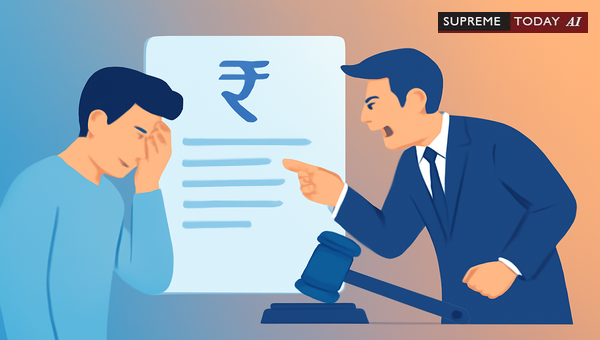
In the world of banking and loans, debt recovery can sometimes turn aggressive, leaving borrowers feeling intimidated. A common query arises: Has the RBI directed recovery agencies not to harass defaulters? The answer is a resounding yes. The Reserve Bank of India (RBI) has issued a series of binding guidelines over nearly two decades, explicitly prohibiting banks and their recovery agents from using harassment, intimidation, or muscle power during loan recovery processes. These rules apply across various loan types, including personal loans, credit cards, and vehicle financing. This post breaks down the key directives, timelines, legal principles, and practical advice, drawing from official RBI circulars and court interpretations.
Important Disclaimer: This article provides general information based on RBI guidelines and related legal documents. It is not legal advice. Consult a qualified lawyer for advice specific to your situation.
RBI's stance is clear: recovery must follow legal and ethical channels, not strong-arm tactics. Early guidelines under the Fair Practices Code set the tone. For instance, the RBI circular dated 5.5.
Key prohibitions include:- Verbal or physical intimidation- Calls at odd hours (before 8:00 a.m. or after 7:00 p.m.)- Threatening or anonymous calls- Public humiliation or use of abusive language- Employment of musclemen or undue force 2007 2 Supreme 422
PolaKonda Sai Raj vs The Union of India - 2025 Supreme(Online)(Tel) 9082
The latest guidelines from 12.8.
PolaKonda Sai Raj vs The Union of India - 2025 Supreme(Online)(Tel) 9082
2025 0 Supreme(Telangana) 777.RBI's directives have evolved consistently:- 2003: Fair Practices Code introduces no-harassment rule 2008 3 Supreme 682 2023 0 Supreme(Mad) 1879.- 2005: Detailed guidelines deprecate musclemen; banks vicariously liable 2007 2 Supreme 422.- 2008: Due diligence for agents; legal processes only 2011 0 Supreme(SC) 1072 2008 3 Supreme 682.- 2009: NBFC repossession via notice and courts 2011 0 Supreme(SC) 1072.- Ongoing Master Circulars: Mandatory training, bans for violations 2019 0 Supreme(Ker) 482.- 2022: Specific call timings and no intimidation
PolaKonda Sai Raj vs The Union of India - 2025 Supreme(Online)(Tel) 9082
.This progression shows RBI's commitment to borrower protection, applicable to all banks, including foreign ones 2019 0 Supreme(Ker) 482.
Banks cannot wash their hands of agent misconduct. They are vicariously liable for agents' acts. RBI mandates:- Due diligence: Verify antecedents with police 2023 0 Supreme(Mad) 1879.- Training: 100-hour course for agents 2023 0 Supreme(Mad) 1879.- Identification: Inform borrowers of agency details 2019 0 Supreme(Ker) 482.- Call recording and no high incentives tempting unethical behavior 2007 2 Supreme 422.
Violations trigger serious supervisory disapproval or ban on engaging agents 2019 0 Supreme(Ker) 482. Courts echo this: Banks be held vicariously liable for such acts of agents 2007 2 Supreme 422.
Indian courts have consistently upheld RBI guidelines, directing banks to use legal remedies like SARFAESI Act, courts, or Lok Adalats instead of harassment. In one case, courts deprecated strong arm tactics and emphasized: The Banks should resort to procedure recognized by law 2007 2 Supreme 422. For credit cards, banks or the recovery agents should not resort to intimidation or harassment... Police to register complaints 2007 0 Supreme(AP) 1261 2007 0 Supreme(AP) 1264.
Even foreign banks must comply: no recovery agency... permitted to perpetrate criminal offences 2019 0 Supreme(Ker) 482. This aligns with RBI's broader regulatory powers, as seen in directives under the RBI Act, 1934, where courts affirmed RBI's authority to issue business directives without infringing rights, provided they follow due process 2017 0 Supreme(Cal) 360.
RBI's oversight extends beyond recovery to ensure financial stability and public interest. For example, in demonetization challenges, courts recognized RBI's role in measures curbing black money and terror financing, upholding proportionality where public interest is served 2023 0 Supreme(SC) 1. Similarly, in tax attachment cases involving banks, courts protected revenue interests while navigating RBI approvals, underscoring compliance with RBI norms 2017 0 Supreme(SC) 1413. These cases illustrate RBI's consistent enforcement approach, reinforcing that recovery guidelines carry supervisory weight, even if not always statutorily binding like some others.
In foreign exchange matters, post-FEMA, payments without prior RBI nod shifted paradigms, but recovery remains governed by ethical codes 2016 0 Supreme(Del) 1967. RBI's coin distribution guidelines also highlight procedural fairness, prohibiting illegal middlemen—paralleling bans on unethical recovery practices
India's Smile VS Union of India
.While strict, guidelines allow controlled use of agents if trained and supervised. They do not override legal repossession under SARFAESI but mandate no harassment during it 2008 3 Supreme 682. Wilful defaulters face separate processes, yet harassment is banned 2011 0 Supreme(SC) 1072. No absolute agency abolition; instead, effective control is key 2007 2 Supreme 422.
PolaKonda Sai Raj vs The Union of India - 2025 Supreme(Online)(Tel) 9082
.Facing recovery pressure? Know your rights under RBI rules. Stay informed, act promptly, and seek professional guidance. RBI's framework protects borrowers while enabling fair debt recovery.
PolaKonda Sai Raj vs The Union of India - 2025 Supreme(Online)(Tel) 9082
2025 0 Supreme(Telangana) 777: 2022 call prohibitions.

Merely because the Agency System is convenient to the banks, and has been approved by RBI, it should not lead to lawlessness and conduct resulting in challenge to rule of law. ... This should be manned by persons who will not resort to violence or force when they are in the process of recovery of the dues. ... They must not harass or intimidate borrowers and are only allowed to meet with borrowers at a convenient time and place. They must schedule their visits between....
the respondents, to ensure that the agent engaged by them for recovery of the loan amounts, shall strictly follow the guidelines and instructions issued by the Reserve Bank of India and also the judgments of the Hon’ble Supreme Court in ICICI Bank Ltd., vs.
Shanti Devi Sharma, 2(2008) 7 SCC 532 directed the banks and financial institutions to strictly follow the RBI guidelines for recovery of loans, and therefore the respondents No.3 to 13 may be directed to follow the guidelines and not to trespass into petitioner’s house or not ... to harass him. ... for recovery of loans, and therefore the petitioner seeks a direction to the respondents No.3 to 13 to follow due process of law for recovery#H....
the respondents, to ensure that the agent engaged by them for recovery of the loan amounts, shall strictly follow the guidelines and instructions issued by the Reserve Bank of India and also the judgments of the Hon’ble Supreme Court in ICICI Bank Ltd., vs. ... for recovery of loans, and therefore the petitioner seeks a direction to the respondents No.3 to 9 to follow due process of law for recovery of loans.
the respondents, to ensure that the agent engaged by them for recovery of the loan amounts, shall strictly follow the guidelines and instructions issued by the Reserve Bank of India and also the judgments of the Hon’ble Supreme Court in ICICI Bank Ltd., vs.
the respondents, to ensure that the agent engaged by them for recovery of the loan amounts, shall strictly follow the guidelines and instructions issued by the Reserve Bank of India and also the judgments of the Hon’ble Supreme Court in ICICI Bank Ltd., vs. ... for recovery of loans, and therefore the petitioner seeks a direction to the respondents No.3 to 12 to follow due process of law for recovery of loans.
Shanti Devi Sharma, 2(2008) 7 SCC 532 directed the banks and financial institutions to strictly follow the RBI guidelines for recovery of loans, and therefore the respondents No.3 to 12 may be directed to follow the guidelines and not to trespass into petitioner’s house or not ... to harass him. ... Counter affidavits have been filed byrespondent No.7-Ugro Capital Ltd., and respondent No.10-Shriram Finance, contending that the respondentsare adhering to the #HL_STAR....
the respondents, to ensure that the agent engaged by them for recovery of the loan amounts, shall strictly follow the guidelines and instructions issued by the Reserve Bank of India and also the judgments of the Hon’ble Supreme Court in ICICI Bank Ltd., vs.
the respondents, to ensure that the agent engaged by them for recovery of the loan amounts, shall strictly follow the guidelines and instructions issued by the Reserve Bank of India and also the judgments of the Hon’ble Supreme Court in ICICI Bank Ltd., vs. ... Circular dated 12.08.2022 for recovery of loans, and the allegations of harassment, intimidation, coercive recovery, or any unlawful conduct by the Bank staff agents are categorically denied. ... Guidelines for recovery of loans, and therefore th....
Perusal of Volume I thereof would reveal that, in 1946, it is not known when the Government Authorities started thinking on the demonetization measure, but the final consultation could take place with the Governor and Deputy Governor. It appears that the RBI authorities were not enthusiastic about the scheme.
RBI, however, did not issue any communication permitting the Bank to do so. By its letter dated May 5, 2014, the Axis Bank wrote to RBI, inter alia, highlighting various issues regarding the LCs and its obligations therein and also the fact that its failure to honour the invocation thereof by RBS would undermine the international reputation of the Bank in banking circles, and further requested RBI to permit the Bank to make the payment under the LCs.
31. National Textile Workers’ Union (supra) is concerned with a right of hearing of workers in respect of a winding up of a company incorporated under the provisions of the Companies Act, 1956. It is not the same thing as directing winding up of the respondent company. In the present case, the respondent company has not been directed to be wound up under the RBI Act, 1934. A power under Section 45K(3) of the RBI Act, 1934 has been exercised by RBI to direct the respondent company to transit from RNBC business.
The mere non-payment of the said expenses by the Assessee to HIAI during the AY in question will postpone the accrual of the liability. After the enactment of FEMA, the payment in question by the Assessee to HIAI would fall in the category of current account transaction. Therefore, such payments did not call for any permission from the RBI. As per the mercantile system of accounting, the Assessee claimed the expenditure accrued for the relevant financial year.
The fact remains that at some sections of the society are finding it extremely difficult to secure the small currency and small coins. It could be due to middlemen who are taking good chunk of the small currency and small coins creating second line of distribution in the society resulting in the problems faced by the general public including some of the transport operators. This may not be directly attributable to the procedure adopted by the RBI. Though there is a procedure and guidelines how small currency and small coins are distributed to the Small Coins Depots, the com....
Login now and unlock free premium legal research
Login to SupremeToday AI and access free legal analysis, AI highlights, and smart tools.
Login
now!
India’s Legal research and Law Firm App, Download now!
Copyright © 2023 Vikas Info Solution Pvt Ltd. All Rights Reserved.






