


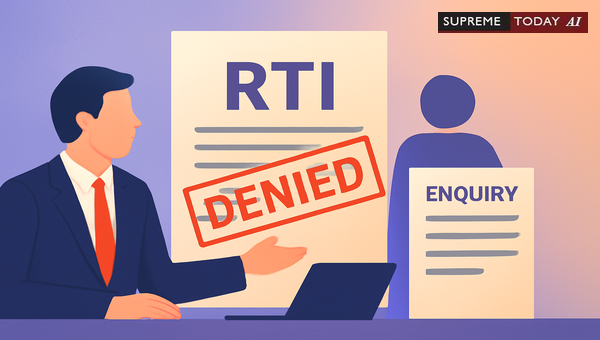
Can Employers Deny RTI Copies in Ongoing Enquiries?
In today's transparent world, employees often turn to the Right to Information (RTI) Act to seek copies of disciplinary enquiry proceedings against them. But what happens when the enquiry is still ongoing? Can an employer deny a copy of proceedings under RTI if the enquiry is ongoing? This question arises frequently in employment disputes, balancing the right to information with the need to protect .
This blog post breaks down the legal framework, key exemptions, relevant case laws, and practical considerations. While this provides general insights based on Indian jurisprudence, it is not legal advice. Consult a qualified lawyer for your specific situation.
Understanding the RTI Act and Its Scope
The (RTI Act) empowers citizens to request information from , fostering transparency and accountability. Public sector employers, being , fall under its purview.
However, the RTI Act is not absolute. Section 8 lists exemptions where information can be denied. These are crucial in employment contexts involving disciplinary actions.
- Promotion of transparency: RTI allows access to records like enquiry proceedings.
- Limits on disclosure: Exemptions protect sensitive processes, such as ongoing investigations.
Key Exemptions: Ongoing Enquiries and Investigations
Employers can typically deny RTI requests for copies of ongoing enquiry proceedings under Section 8(1)(h) of the RTI Act. This provision exempts information that would impede the process of investigation or apprehension or prosecution of offenders.
The rationale? Disclosure could:- Compromise informant safety.- Taint witness statements.- Undermine the enquiry's fairness. 2019 0 Supreme(SC) 1889
In , the clarified that documents from domestic enquiries are not personal information under Section 8(1)(j), making them disclosable unless other exemptions apply—like ongoing probes. 2013 0 Supreme(SC) 377
Yet, denial must be justified. Blanket refusals without invoking specific exemptions may not hold up on appeal.
Integrating
Disciplinary enquiries must adhere to , including the right to know charges and respond. However, RTI requests during ongoing stages differ from post-enquiry access.
From case insights:- In one matter, the petitioner sought the enquiry report under RTI after it was submitted but not supplied. The response noted the record was forwarded elsewhere, highlighting procedural gaps but not mandating immediate RTI disclosure during pendency. 2024 0 Supreme(All) 216- Courts have quashed terminations where enquiries violated natural justice, such as failing to provide findings or disagreeing with the enquiry officer's report. The employee was awarded 50% backwages, underscoring fairness post-enquiry. 2024 0 Supreme(All) 216
Even under , employers retain the right to adduce evidence on enquiry validity before tribunals, but this doesn't override RTI exemptions for live processes. 2010 0 Supreme(Mad) 1786 2007 0 Supreme(Mad) 636
RTI Denials in Practice: CIC and Court Rulings
decisions reinforce employer protections:
Fiduciary and third-party exemptions: Internal approvals in disciplinary matters are exempt under Sections 8(1)(e), 8(1)(j), and 8(1)(g). Copy of the approval cannot be provided as the same is not germane to the issue and also as the same is internal in nature. 2025 Supreme(Online)(CIC) 4423
Ongoing legal cases: Disclosure was denied where proceedings were pending, upholding PIO replies to protect confidentiality. 2022 Supreme(Online)(CIC) 584
Third-party info: Requests for employee declarations on criminal cases were rejected under Sections 8(1)(e) and (j), as they involved fiduciary relationships. 2024 Supreme(Online)(CIC) 5314
Conversely, once enquiries conclude, denials weaken. In one case, the CIC directed providing certified copies of reports, rejecting unsubstantiated exemption claims. 2024 Supreme(Online)(DEL) 16627
When Denial May Not Hold: Post-Enquiry Scenarios
If the enquiry ends, employees gain stronger RTI grounds:- Reports must often be shared for natural justice.- Courts direct disclosure if no valid exemption persists. 2024 Supreme(Online)(DEL) 16627
In labour disputes, challenging enquiry validity shifts the burden to the employee, but RTI aids evidence gathering post-facto. For instance, rejected candidatures can be probed via RTI if copies aren't provided otherwise. 2011 0 Supreme(Mad) 684
Domestic enquiries allow employers to lead fresh evidence before Labour Courts if initial ones are flawed, per . Tribunals frame preliminary issues on validity first. 1999 0 Supreme(Mad) 983 1997 0 Supreme(All) 814
Case Study: Balancing Rights
Consider a Class IV employee's termination: The court vitiated the process for natural justice breaches, like no findings from the enquiry officer. Yet, during ongoing stages, RTI wouldn't compel disclosure to avoid prejudice. 2024 0 Supreme(All) 216
In violent misconduct cases, upheld dismissals followed fair enquiries, but RTI timing matters—pre-conclusion denials stand. 2024 0 Supreme(All) 843
Practical Recommendations for Employees and Employers
For Employees:
- File RTI post-enquiry completion for better success.
- Appeal denials to , then CIC.
- Pair RTI with industrial dispute references under .
For Employers:
- Cite specific exemptions like Section 8(1)(h) in responses.
- Assess if info truly impedes investigations.
- Ensure enquiries follow natural justice to withstand scrutiny.
Assess circumstances: Nature of info and enquiry stage dictate outcomes. 2013 0 Supreme(SC) 377 2019 0 Supreme(SC) 1889
Conclusion and Key Takeaways
Generally, yes, an employer may deny copies of proceedings under RTI if the enquiry is ongoing, invoking Section 8(1)(h) to safeguard processes. However, post-enquiry, disclosure is more likely unless fiduciary or privacy exemptions apply.
Key takeaways:- RTI exemptions protect integrity but require justification. 2019 0 Supreme(SC) 1889- Natural justice mandates fairness, influencing post-enquiry access. 2024 0 Supreme(All) 216- Case-specific: Kerala HC and CIC rulings guide applications. 2013 0 Supreme(SC) 377 2025 Supreme(Online)(CIC) 4423
Stay informed, but seek professional advice. Transparency evolves with jurisprudence—monitor updates.
References:2013 0 Supreme(SC) 377 2019 0 Supreme(SC) 1889 2024 0 Supreme(All) 216 2022 Supreme(Online)(CIC) 584 2025 Supreme(Online)(CIC) 4423 2024 0 Supreme(All) 843 2024 Supreme(Online)(CIC) 5314 2024 Supreme(Online)(DEL) 16627 2011 0 Supreme(Mad) 684 2010 0 Supreme(Mad) 1786 2007 0 Supreme(Mad) 636 1999 0 Supreme(Mad) 983 1997 0 Supreme(All) 814
#RTIAct #EmploymentLaw #OngoingEnquiry












