


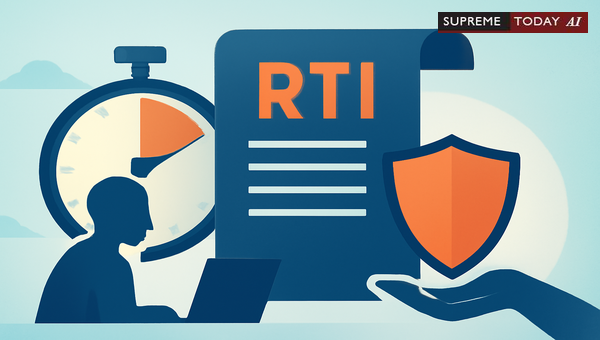
RTI 48-Hour Rule: When CIC Must Respond in Life & Liberty Cases
In urgent situations where a person's life or liberty hangs in the balance, timely access to information can be a lifesaver. Imagine facing a threat to your safety or freedom and needing public records immediately—does the , compel the (CIC) to reply within 48 hours? This question, often phrased as RTI Reply to be Given in 48 Hours by CIC when Life and Liberty is at Stake, strikes at the heart of India's transparency laws and constitutional rights.
This blog post breaks down the legal framework, key provisions, judicial insights, and practical guidance. While this information is for educational purposes and generally reflects established principles, it is not specific legal advice—consult a qualified lawyer for your situation.
The RTI Act's 48-Hour Mandate for Life and Liberty
The RTI Act, 2005, is designed to promote transparency but includes special timelines for critical cases. typically requires a decision within 30 days of receiving a request. However, carves out an exception: The time limit for providing such information shall be forty-eight hours from the receipt of the request when it concerns the life or liberty of a person. 2023 0 Supreme(SC) 1051
This statutory mandate ensures rapid disclosure, recognizing that delays could exacerbate harm. For instance, if an RTI seeks details on threats, detentions, or safety measures, public authorities—including those under CIC oversight—must prioritize it. The CIC, as the appellate body enforcing the Act, is bound by these timelines to uphold its spirit. 2023 0 Supreme(SC) 1051
Constitutional Foundations: Articles 21 and 22
The 48-hour rule aligns with fundamental rights under the Constitution. guarantees the right to life and personal liberty, which the has interpreted to include the right to speedy information and justice. Delays in such disclosures could violate these protections, causing irreparable harm like mental agony. 2019 0 Supreme(SC) 165 1989 0 Supreme(SC) 400
Similarly, mandates prompt communication of detention grounds and opportunities for representation, reinforcing timely access to information. The Court has stressed procedural safeguards to prevent rights erosion. 1981 0 Supreme(SC) 451
CIC's Role in Enforcing the 48-Hour Deadline
The (CIC) oversees RTI compliance across central public authorities. When life or liberty is invoked, PIOs and appellate bodies like CIC must act swiftly. CIC decisions echo this urgency; for example, in one matter, the Commission noted a request claiming considerable threat to my and my family’s life and liberty and the information sought is required to be provided within 48 hours. 2022 Supreme(Online)(CIC) 282
Another CIC observation highlighted that even modified requests tied to life/liberty claims demand adherence to the 48-hour limit, dismissing cosmetic changes as irrelevant. 2022 Supreme(Online)(CIC) 282 In a case involving a blocked ATM card framed as a life/liberty issue, the applicant urged: According to the RTI Act 2005, It is mentioned that the information about the right to life and liberty of an individual should be provided within 48 hour. 2024 Supreme(Online)(CIC) 1615
CIC must furnish information or decisions promptly, or risk under the Act, opening avenues for complaints.
Judicial Precedents Reinforcing Speedy Disclosure
Courts have consistently upheld the 48-hour proviso. The noted: The Proviso to of the RTI Act, contemplates information relating to life or liberty of a person to be disclosed within 48 hours, thereby stressing on the need for disclosing such information with alacrity and promptness. 2023 Supreme(Online)(DEL) 2584
In privacy and defamation contexts, timelines like 48 hours appear for responses before publication, balancing rights under and 21. One ruling stated: If no response is received within the 48 hours, the respondents will be at liberty to go ahead and published the article. If any response is received within 48 hours, the response shall also be published with the same prominence of the article. 2018 0 Supreme(Mad) 1386 2018 0 Supreme(Mad) 1628
The 's privacy judgment (Justice K.S. Puttaswamy) emphasized protecting personal intimacies while allowing public interest publications with safeguards, indirectly supporting urgent information rights. Courts have also clarified timelines in third-party notices, extending to 40 days max, but 48 hours remains sacrosanct for life/liberty. 2013 0 Supreme(Mad) 1990
In enforcement cases, if CIC directs disclosure, authorities must comply or appeal legally; petitioners retain RTI remedies for breaches. 2016 0 Supreme(All) 1955
Exceptions and Limitations
Exemptions under (e.g., privacy, security) generally do not override the 48-hour rule for direct life/liberty threats. Disclosure is mandated unless explicitly barred, prioritizing urgency. However, applicants must substantiate the claim—frivolous invocations may not qualify. PIOs assess genuineness, as seen in cases rejecting unsubstantiated ATM or vague claims. 2024 Supreme(Online)(CIC) 1615
If involving third parties, additional 10 days may apply under , but life/liberty trumps to 48 hours. 2013 0 Supreme(Mad) 1990
Practical Recommendations for RTI Applicants
To leverage the 48-hour rule effectively:- Clearly state the urgency: Explicitly link the request to life/liberty threats, providing brief justification.- File with PIO first: Target the relevant Central/State PIO; escalate to CIC if delayed.- Follow up rigorously: No response in 48 hours deems refusal—file within 30 days, then /Complaint to CIC.- Seek judicial recourse: Approach via for non-compliance, citing precedents. 2016 0 Supreme(All) 1955- Train and prioritize: Public authorities should implement protocols, training PIOs on identification and expedited processing.
In one High Court ruling, failure to supply documents was deemed illegal, allowing third-party RTI access under court rules. 2013 0 Supreme(Mad) 1990
Key Takeaways
- RTI mandates 48-hour responses for life/liberty cases, binding CIC and authorities. 2023 0 Supreme(SC) 1051
- Backed by Articles 21 & 22, with emphasis on speed. 2019 0 Supreme(SC) 165
- CIC decisions and courts reinforce compliance, rejecting delays. 2022 Supreme(Online)(CIC) 282 2023 Supreme(Online)(DEL) 2584
- Exceptions are narrow; substantiate claims to avoid rejection.
In conclusion, when life and liberty are at stake, the RTI Act empowers citizens with a powerful tool for urgent information. CIC must honor the 48-hour deadline to fulfill constitutional duties. Stay informed, act promptly, and protect your rights—transparency saves lives.
References:1. 2023 0 Supreme(SC) 1051 - RTI Act provisions on 48-hour timeline.2. 2019 0 Supreme(SC) 165 - Constitutional right to speedy information.3. 1981 0 Supreme(SC) 451 - Article 22 safeguards.4. 1989 0 Supreme(SC) 400 - Harms of delay.5. Additional CIC/High Court cases as cited.
#RTIAct, #LifeLibertyRTI, #CIC48Hours












