


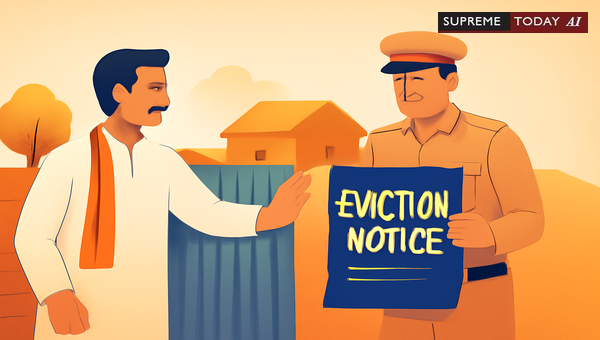
SDM & Powers to Evict Land Encroachers in UP
Land encroachment remains a persistent issue in Uttar Pradesh, affecting private landowners, Gram Sabhas, and local authorities alike. If you're a property owner dealing with unauthorized occupants on your land, you might wonder: Under what Provision of UPZALR Act and under Uttar Pradesh Revenue Code , Sub Divisional Magistrate or has the Power to Dispossess or Evict any Person Encroaching a Private Land?
This blog post breaks down the key legal provisions, procedures, and judicial insights to help you understand these powers. While this information is drawn from statutory provisions and court judgments, it is for general educational purposes only—always consult a qualified lawyer for advice specific to your situation.
Understanding the Legal Framework for Eviction
The and the , provide robust mechanisms for revenue authorities like the or to address . These laws empower them to evict encroachers without always needing prior orders, particularly for against unauthorized use. 2016 0 Supreme(All) 2669
Generally, these powers target lands vested in Gram Sabhas, local authorities, or even private lands where encroachment causes damage or misappropriation. The process emphasizes , including notices and hearings, to ensure fairness.
02500085150329
Key Provisions:
Section 122-B of the UPZALR Act is a cornerstone for eviction actions. It allows the or local authority to report damage, misappropriation, or of property vested in a or local authority to the (typically the SDM or ). 2016 0 Supreme(All) 2669
The provision states:
Where any property vested under the provisions of this Act in a or a local authority is damaged or misappropriated or where any or a local authority is entitled to take or retain possession of any land under the provisions of this Act, the or local authority, as the case may be, shall inform the concerned in the manner prescribed. ... If from the information received under sub-section (1) or otherwise, the is satisfied that any property referred to in sub-section (1) has been damaged or misappropriated or any person in occupation of any land referred to in that sub-section, in contravention of the provisions of this Act, he shall issue notice to the person concerned to show-cause why compensation for damage, misappropriation or as mentioned in such notice be not recovered from him or, as the case may be, why he should not be evicted from such land. 2016 0 Supreme(All) 2669
This summary procedure enables quick action: issue a , evaluate responses, and proceed to eviction if warranted. Courts have upheld this as a comprehensive statutory scheme, not requiring prior adjudication in revenue or civil courts for clear encroachments. 2016 0 Supreme(All) 2669
Powers under Section 67 of
Complementing the UPZALR Act, , explicitly grants the Sub-Divisional Officer (SDM) or authority to reclaim land from wrongful occupants. This applies to illegal occupation, damage, or misappropriation, often triggered by reports from , Lekhpal, or other sources.
02500085150329
A key excerpt from judicial analysis:
The Sub-Divisional Officer of the concerned Sub-Division is empowered to take action on the information received from the or other authority or the Lekhpal concerned about such illegal occupation or damage or misappropriation of the Gram Sabha Land. In case, any person is found in occupation of any such land in contravention of the provisions of the Revenue Code, the Sub-Divisional Officer has to issue notice to the person concerned to show cause as to: (i) why compensation for damage, misappropriation or specified in the notice be not recovered from him? (ii) why he should not be evicted from such land?
02500085150329
The step-by-step procedure typically includes:- Receiving information about encroachment.- Issuing a .- Reviewing the encroacher's reply and evidence.- Passing a reasoned order.- Executing eviction, if necessary, with police assistance.
This administrative process is efficient for unauthorized cases but must adhere to principles to withstand challenges.
02500085150329
Judicial Precedents and Real-World Applications
Courts in Uttar Pradesh have consistently affirmed these powers. For instance, proceedings under Section 67 have been initiated and upheld against encroachers, as seen in cases where authorities acted on Lekhpal reports.
In one matter, it was noted: It is further submitted that the concerned authorities have already proceeded against the applicants under (hereinafter referred to as 'the Code, ') which is pending...
Similarly, Learned Standing Counsel on the basis of the instructions submits that the proceedings have been taken out under the relevant provisions of the Uttar Pradesh Land Revenue Code, against the persons, who have ... the proceedings initiated under ...
These examples illustrate how SDMs and Tehsildars routinely handle such cases, even for specific plots like , without immediate judicial interference if procedures are followed.
Related laws, such as those on ceiling surplus land, also intersect: or the State Government or the surplus land defined in the . 2024 Supreme(Online)(ALL) 308 This reinforces the broad scope for revenue officers in protecting vested lands.
Exceptions, Limitations, and Best Practices
While powerful, these provisions have boundaries:- Primary Focus: of public or Gram Sabha lands; private land encroachments may qualify if reported as damage or misappropriation.- Not for Title Disputes: Ownership claims require civil or revenue courts—eviction is for possession only.- Mandatory: Skipping notices or hearings invites quashing by higher courts.
Landowners or authorities should:- Gather evidence (Lekhpal reports, ).- File formal complaints with SDM/.- Ensure notices specify grounds for action.
Failure to follow steps can lead to prolonged litigation, as seen in stayed proceedings.
Key Takeaways and Recommendations
- Core Provisions: Rely on Section 122-B (UPZALR Act) for Gram Sabha/local authority lands and Section 67 (Revenue Code, ) for broader wrongful occupations. 2016 0 Supreme(All) 2669
02500085150329
- Efficient Remedy: Summary eviction without prior suits for clear encroachments.
- Seek Professional Help: Procedures vary by facts; engage a local advocate familiar with UP revenue laws.
In conclusion, UP's revenue framework equips SDMs and Tehsildars with targeted tools to combat land encroachment, promoting orderly land use. Stay informed, act promptly, and prioritize compliance to safeguard your property rights. This overview is general—legal outcomes depend on individual circumstances.
References:1. 2016 0 Supreme(All) 2669: UPZALR Act Section 122-B powers.2.
02500085150329
: Revenue Code Section 67 procedures.3.,
,
, 2024 Supreme(Online)(ALL) 308: Supporting case insights. #UPLandEviction, #UPZALRAct, #RevenueCode2006












