


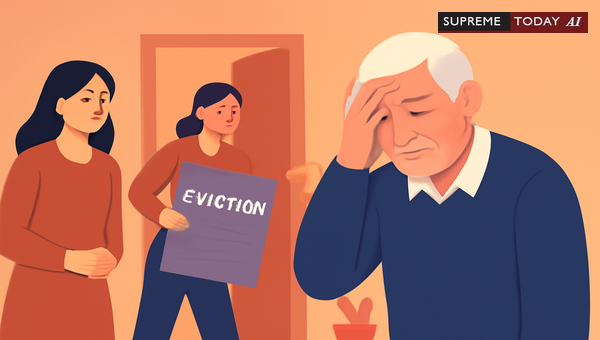
Senior Citizens Act vs Daughter-in-Law: Can You Seek ?
In India, family disputes often intersect with legal protections for the elderly. A common question arises: Can a senior citizen invoke the (Senior Citizens Act) against a daughter-in-law? This query typically involves or from property. While the Act empowers seniors to seek support and protection, its application against daughters-in-law is nuanced, influenced by and overlapping laws like the (DV Act).
This blog post breaks down the legal framework, key principles, court rulings, and practical advice. Note: This is general information based on judicial interpretations and not specific legal advice. Consult a qualified lawyer for your situation.
Overview of the Senior Citizens Act
The Senior Citizens Act aims to provide maintenance, welfare, and protection for parents and seniors aged 60+. It allows tribunals to order maintenance from children or relatives and even from property if seniors face neglect, ill-treatment, or . However, daughters-in-law are not straightforwardly children under the Act.
Section 2(g) defines relative broadly, potentially including daughters-in-law, but obligations kick in primarily for childless seniors: It is only in case of a childless senior citizen that the other relatives, who are referred to in clause (g) of Section 2, are obligated to maintain the senior citizen... A daughter-in-law may well come within the expression relative in clause (g) of Section 2; but no order can be sought against her for that reason by a senior citizen who has a child or grand-child, who is not a minor. 2020 0 Supreme(Bom) 407
The Act's scope prioritizes direct descendants like sons or daughters, limiting broader applications. Tribunals can order against those neglecting seniors, including daughters-in-law if evidence shows misconduct 2024 0 Supreme(Mad) 2607 2023 0 Supreme(Del) 1570.
Maintainability of Claims Against Daughter-in-Law
Applications
under the Act is typically maintainable only against a son, daughter, or legal heir. Courts have ruled that if the senior's son (husband of the daughter-in-law) is alive, applications against the daughter-in-law alone are not maintainable: An application for filed by a senior citizen against a daughter-in-law is generally not maintainable if her husband (the son of the senior citizen) is alive. The Act specifies that applications are maintainable only against a son, daughter, or legal heir of a senior citizen. 2017 0 Supreme(P&H) 2106
Daughters-in-law do not fall within the heir hierarchy for purposes 2017 0 Supreme(P&H) 2106. Yet, in cases of proven neglect, tribunals may still direct vacation: The fact remains that the daughter-in-law has to move out of the house belonging to Respondent No.1/Senior Citizen. 2023 0 Supreme(Del) 1677
Maintenance Obligations
Daughters-in-law may be liable if they possess or stand to inherit property, but only if the senior is childless or children fail duties 2024 0 Supreme(Bom) 405 2025 0 Supreme(Ker) 2262. Property rights yield to senior welfare; tribunals avoid title disputes 2024 0 Supreme(Del) 409.
Daughter-in-Law's Rights Under the DV Act
Daughters-in-law enjoy robust protections. The DV Act grants a right to reside in the , often overriding senior convenience claims: Under the , a daughter-in-law has a right to reside in the , which may prevail over the senior citizen's convenience. 2022 0 Supreme(P&H) 1606
Courts demand evidence of misconduct for : otherwise, applications fail 2018 0 Supreme(P&H) 1573. Shared households include residences where the daughter-in-law lived with her husband: A would have to be interpreted to include the residence where the appellant had been jointly residing with her husband. 2021 0 Supreme(Del) 522
In-laws' bids under the Senior Citizens Act have been scrutinized for : Courts have identified instances where senior citizens and their children may collude to evict a daughter-in-law, which undermines the intent of the Domestic Violence Act. 2022 0 Supreme(P&H) 1606
and Limitations
Appeal Rights (Section 16): Only seniors or parents can appeal tribunal orders. Daughters-in-law cannot unless they qualify as such: Section 16 Limitation - Only a senior citizen or a parent can file an appeal under Section 16... daughters-in-law are not eligible unless they are senior citizens or parents themselves. 2025 0 Supreme(Kar) 805 2024 0 Supreme(Bom) 1037 The question that falls for consideration is, whether the daughter-in-law can file appeal under section 16... 2024 0 Supreme(Bom) 1084
Misuse Prevention: Provisions aren't for property grabs but genuine protection: The courts have also noted that the provisions of the Act should not be misused to evict individuals without substantial evidence of wrongdoing. 2018 0 Supreme(P&H) 1573
In-Laws' Applications: Cases like in-laws seeking of daughter-in-law and granddaughter highlight tensions, but DV Act remedies prevail 2021 0 Supreme(Del) 522. Tribunals focus on life/property protection, not just maintenance 2020 0 Supreme(Telangana) 69.
: Seniors can bypass tribunals via under Article 226 if delays loom 2023 0 Supreme(Cal) 789.
Practical Recommendations
For Senior Citizens
- Gather substantial evidence of neglect, ill-treatment, or misconduct before filing.
- Target primary obligors (sons/daughters) first; include daughter-in-law only if justified.
- Consider writs for urgency 2023 0 Supreme(Cal) 789.
- Explore mediation to avoid protracted battles.
For Daughters-in-Law
- Invoke DV Act for residence rights; file counter-applications if needed.
- Challenge via civil courts or appeals (if eligible).
- Document good conduct to counter misuse claims 2018 0 Supreme(P&H) 1573.
Both sides should prioritize amicable resolutions, as courts frown on abuse of elderly or women protection laws.
Conclusion and Key Takeaways
The interplay between the Senior Citizens Act and DV Act creates a balanced yet complex framework. Seniors can seek or maintenance against daughters-in-law in limited scenarios—typically with strong evidence and absent direct children—but courts protect rights and prevent misuse. Key takeaways:
- against daughter-in-law alone: Generally not maintainable if son alive 2017 0 Supreme(P&H) 2106.
- DV Act trumps in residence disputes 2022 0 Supreme(P&H) 1606.
- Appeals limited to seniors/parents 2024 0 Supreme(Bom) 1037.
- Always substantiate claims 2018 0 Supreme(P&H) 1573.
Navigating these requires understanding precedents. For tailored guidance, consult legal experts. Stay informed to protect family harmony and rights.
References:2023 0 Supreme(Cal) 789 2017 0 Supreme(P&H) 2106 2022 0 Supreme(P&H) 1606 2018 0 Supreme(P&H) 1573 2023 0 Supreme(Del) 1677 2024 0 Supreme(Bom) 1084 2021 0 Supreme(Del) 522 2020 0 Supreme(Telangana) 69 2020 0 Supreme(Bom) 407 2025 0 Supreme(Kar) 805 2024 0 Supreme(Mad) 2607 2023 0 Supreme(Del) 1570 2024 0 Supreme(Bom) 405 2025 0 Supreme(Ker) 2262 2024 0 Supreme(Del) 409 2024 0 Supreme(Bom) 1037 2023 0 Supreme(All) 1313
#SeniorCitizensAct #DaughterInLawRights #EvictionLawsIndia












