


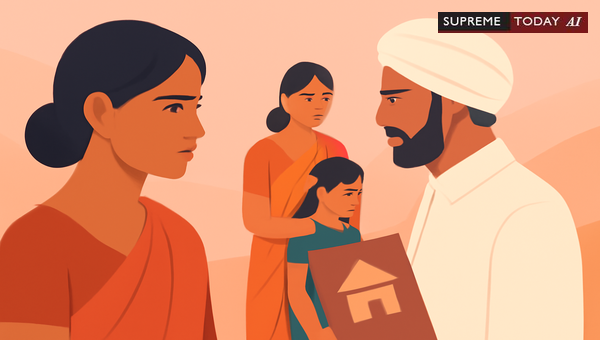
Does Second Wife's Daughter Have Rights to Stepfather's Property?
In blended families, questions about inheritance often arise, especially in India where personal laws like the , govern property rights. Imagine a scenario: a man marries a second time, and his new wife has a daughter from a previous relationship. Does this stepdaughter have a legal claim to her stepfather's property upon his death? This is a common query: Does Second Wife Daughter have Right to Claim in Step Father Property?
This blog post breaks down the legal nuances, drawing from statutory provisions, case law, and judicial interpretations. Note: This is general information based on Indian law and should not be considered personalized legal advice. Consult a qualified lawyer for your specific situation.
Legal Framework Under Hindu Succession Act
The (HSA), primarily dictates inheritance for Hindus, including property distribution among heirs. Rights depend on whether the property is ( or ) or , and the relationship between the claimant and the deceased.
Key distinction: from a second marriage are treated differently from . Children born from a second marriage are considered legitimate for claiming a share in their biological father's property, but they do not automatically inherit property unless specified by law or agreement. 2017 0 Supreme(Mad) 1853
However, for —like a second wife's daughter to her stepfather—the rules are stricter. , including daughters from a second marriage, do not automatically inherit property from their stepfather unless a specific provision is made in a will or by law. 2011 0 Supreme(Del) 439
: No Inclusion for Stepdaughters
Under Section 15(1)(a) of the HSA, property devolves first to the sons, daughters, and the husband of a female Hindu dying . Crucially, the term daughter here does not include step-daughter. Thus, a stepdaughter does not have a legal claim to her stepfather's property under this provision. 2011 0 Supreme(Del) 439
The rights of a stepdaughter are limited; she is not considered a direct heir to her stepfather's estate unless explicitly included in a will or other legal document. 2014 0 Supreme(Mad) 749
Rights of Daughters from Second Marriages: Biological vs. Step
To clarify, let's differentiate:
Biological Daughter of Father from Second Wife: Such daughters have inheritance rights in their father's property. Pre-2005, daughters had limited in property and could not demand during the father's lifetime. Post the (effective ), daughters are coparceners with equal rights to sons in property, even during the father's lifetime. 2023 0 Supreme(Mad) 3403 2024 0 Supreme(Bom) 184 2024 0 Supreme(Mad) 2248
Stepdaughter to Stepfather: No such automatic rights. Courts emphasize that step-relations do not confer inheritance unless formalized. For instance, in cases involving partitions, admissions that property is the mean wives and daughters have no claim over property if partitioned earlier. 2014 0 Supreme(Mad) 1625
From judicial precedents:- A plaintiff could not claim any right over the property due to a prior by the father, highlighting limits on claims post-settlement. 2024 0 Supreme(Mad) 961- In family partitions involving a second wife, shares were allotted excluding step-relations unless specified. 2023 0 Supreme(Chh) 625
Pre- and Post-2005 Changes: Impact on Claims
The 2005 amendment revolutionized daughters' rights but applies prospectively:
- Pre-2005: Daughters (even biological from second marriages) generally lacked during father's lifetime. No automatic claim in property. 2023 0 Supreme(Mad) 3403 2024 0 Supreme(Mad) 2248
- Post-2005: Daughters can claim shares as coparceners. However, for stepdaughters, this doesn't extend to stepfathers' property. Rights depend on property nature ( vs. ) and timing. If property was sold pre-2005, claims may fail. 2023 0 Supreme(Mad) 3341 2024 0 Supreme(Mad) 1060
Example: Once such or relinquishment of right is claimed coupled with admission that the suit property is the , the 1st defendant cannot claim that the suit property is the property and the wife and daughters have no claim over it.2014 0 Supreme(Mad) 1625
Rights: A Possible Alternative
While inheritance is off-limits, a stepdaughter may claim if unable to maintain herself, under certain conditions. This does not equate to property ownership. 1972 0 Supreme(Cal) 150
is distinct from inheritance and applies in limited scenarios, such as dependency. Definitions of close relations sometimes include step-daughter, but this is contextual (e.g., government rules). 2006 0 Supreme(Pat) 415
Judicial Interpretations and Case Insights
Courts consistently limit 's claims:- In succession lists, heirs are biological: e.g., son's daughter's daughter, but no step-relations. 2023 0 Supreme(Mad) 3097- Binna married daughters may inherit father's property, but step-status changes this.
- Vendors' rights don't extend to spouses post-divorce or custom. 2024 0 Supreme(Mad) 717
Post-amendment cases stress timing: Daughters born pre-2005 have retrospective coparcenary if property undisposed, but step-links weaken claims. 2023 0 Supreme(Mad) 3403
Key Takeaways and Recommendations
- No Automatic Right: A second wife's daughter typically has no right to claim stepfather's property without a will or deed. 2011 0 Supreme(Del) 439 2017 0 Supreme(Mad) 1853
- Biological vs. Step: Stronger for bio-daughters post-2005.
- Options: Seek wills, settlements, or claims.
- Plan Ahead: Families should draft wills to include explicitly.
In conclusion, Indian law prioritizes blood relations for succession, leaving stepdaughters reliant on or . The 2005 amendment empowers daughters broadly but not step-relations. For tailored advice, consult a legal expert—property disputes can be complex.
References
- 2017 0 Supreme(Mad) 1853 2011 0 Supreme(Del) 439 2014 0 Supreme(Mad) 749 1972 0 Supreme(Cal) 150 2023 0 Supreme(Mad) 3403 2024 0 Supreme(Bom) 184 2024 0 Supreme(Mad) 2248 2024 0 Supreme(Mad) 961 2023 0 Supreme(Chh) 625 2023 0 Supreme(Mad) 3097 2024 0 Supreme(Mad) 717
2014 0 Supreme(Mad) 1625 2006 0 Supreme(Pat) 415












