


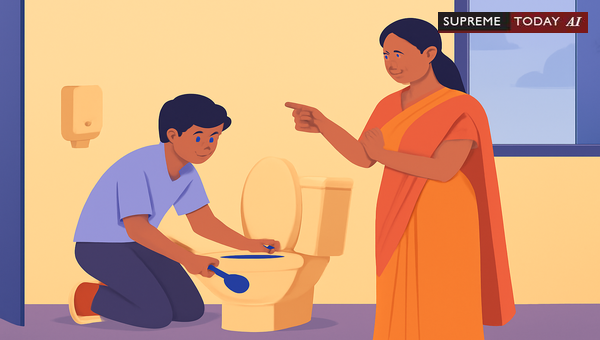
Is Asking a Student to Clean a Toilet an Offence?
In today's schools, discipline and hygiene go hand in hand. But what happens when a teacher asks a student to clean a toilet? Is this a simple lesson in responsibility or a potential legal violation? The question Asking Student to Clean Toilet is an Offence has sparked debates among parents, educators, and legal experts. While it may seem humiliating at first glance, Indian courts have generally viewed such instructions as lawful when aimed at teaching cleanliness, provided there's no malice or abuse involved.
This blog dives into the legal nuances, drawing from court precedents and principles under Indian law. We'll examine when it's acceptable, when it might cross the line, and practical recommendations. Note: This is general information, not legal advice. Consult a lawyer for specific cases.
Legal Overview: Context is Key
The act of asking a student to clean a toilet isn't inherently criminal. Courts emphasize the context—was it coercive, humiliating, or part of harassment? Without these elements, it's often seen as promoting hygiene.
highlights the need for a , stressing , though not directly addressing toilets.
Similarly, 2023 0 Supreme(Mad) 800 underscores school authorities' , extending to . If the task is excessive or degrading, it could be challenged, but routine hygiene lessons typically pass muster.
Under the , minors are protected from exploitation. However, non-sexual, educational tasks like cleaning don't usually fall here unless framed as punishment causing humiliation. 2023 0 Supreme(Gau) 1471 notes no when a teacher calls a girl student to the staff room near a toilet, as teachers can inquire about family background to offer help.
Key Precedents: Courts Side with Hygiene Education
Indian judgments consistently dismiss prosecutions against teachers for such instructions, viewing them as responsible parenting extensions.
In one case, a student's improper toilet use led to a cleaning directive. The court ruled: the son of the complainant gone to the toilet, had not cleaned it properly. Therefore, he was asked to clean it. Being aggrieved, the petitioner has called the defacto complainant and advised her to teach clean bowel habits to her son... Therefore, this Court is of the view that the teacher in a School cannot be prosecuted for .... 2024 Supreme(Online)(MAD) 37755
Multiple cases involve teachers or staff near toilets supervising cleaning of soiled clothes: The petitioner went to the toilet and knocked at the door of the toilet and when the door was opened, she found three students therein. One of the student replied that they had gone inside to clean the soiled cloth of one of the student. Courts acquitted, stating no offence like . 2024 0 Supreme(Chh) 668 2025 Supreme(Online)(Chh) 10640 2024 Supreme(Online)(Chh) 16541
of misconduct, like peeping or harassment near toilets, were quashed due to lack of evidence and good reputations. 2023 0 Supreme(Gau) 1471 2024 0 Supreme(Kar) 367
These rulings affirm: Teachers instructing students on toilet hygiene isn't an offence when intent is educational. 2024 0 Supreme(Raj) 1399 addresses sanitation woes, noting women defer urination due to unclean toilets, underscoring hygiene's public health role.
When Could It Become Problematic?
While generally lawful, context matters:
Humiliation or Coercion: If used as punishment causing emotional distress, it may violate minor protections or . Schools must ensure a safe and respectful environment.
Pattern of Abuse: Repeated tasks targeting specific students could indicate harassment, potentially under POCSO or general child rights laws.
Gender Sensitivity: Directing girls to unclean areas raises concerns, as in 2021 0 Supreme(Mad) 2798, where a headmaster directed a victim to clean a toilet amid other allegations—though isolated, it warranted scrutiny.
Public Health Angle: Poor facilities affect health, but mandating cleaning teaches responsibility without infringing rights. 2022 0 Supreme(Pat) 269 states sanitation impacts rights to health and life.
In
, toilet-related contexts didn't lead to offences absent malice.
School Responsibilities and Best Practices
Schools owe a . Disciplinary actions must be proportionate. Courts advise:
Policy Alignment: Review policies for legal compliance. 2023 0 Supreme(Mad) 491 notes are fine if supervised.
Staff Training: Educate on boundaries. Asking about family for aid is okay 2023 0 Supreme(Gau) 1471, but avoid excess.
Facilities Maintenance: Ensure clean toilets to prevent issues. 2022 0 Supreme(Del) 286 outlines penalties for unclean outlets; schools should prioritize this. 2015 0 Supreme(Bom) 2359 urges affordable, proper public facilities.
Parents: If concerned, document incidents and approach school committees before legal routes, as courts dismiss baseless claims.
Conclusion and Key Takeaways
Asking a student to clean a toilet is not categorically an offence in India. It's often a valid hygiene lesson, backed by precedents like 2024 Supreme(Online)(MAD) 37755, where prosecution was deemed unwarranted. However, are crucial—if abusive, it may invite challenges under child protection laws.
Key Takeaways:- Hygiene education trumps minor inconveniences; courts protect teachers acting in .- Prioritize safe environments and proper facilities to avoid disputes.- harm reputations; evidence is key. 2024 0 Supreme(Chh) 668- Schools: Train staff, review policies.- Parents/Educators: Focus on dialogue.
For tailored advice, consult legal experts. Stay informed on evolving school laws to foster positive learning spaces.
References:-
2023 0 Supreme(Mad) 800 2024 Supreme(Online)(MAD) 37755 2023 0 Supreme(Gau) 1471 2024 0 Supreme(Raj) 1399 2024 0 Supreme(Kar) 367 2024 0 Supreme(Chh) 668 2025 Supreme(Online)(Chh) 10640 2024 Supreme(Online)(Chh) 16541 2021 0 Supreme(Mad) 2798 #SchoolLaw #StudentRights #TeacherDiscipline












