


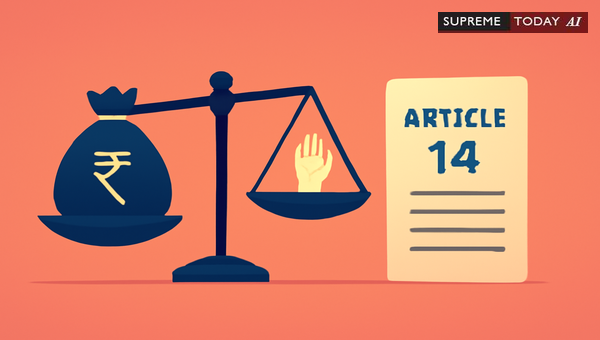
Is Unequal Political Fund Distribution ?
In the vibrant democracy of India, political parties rely heavily on funds to campaign, organize, and influence voters. But what happens when funds are unequally distributed among parties? Is this unequal distribution of funds by political parties ? This question strikes at the heart of under , raising concerns about fairness in elections and the role of big money. While inequalities in party affluence are a reality, courts have scrutinized whether such disparities distort democratic processes or veer into arbitrariness.
This post examines key , constitutional principles, and related insights to provide a balanced view. Note: This is general information based on and not specific legal advice. Consult a qualified lawyer for personalized guidance.
Constitutional Framework: and Arbitrariness
of the Indian Constitution guarantees and , striking down state actions. Courts have repeatedly held that where an act is , it is implicit in it that it is unequal both according to political logic and constitutional law. 2006 0 Supreme(All) 945 1997 0 Supreme(Kar) 728 1986 0 Supreme(J&K) 83
In political funding contexts, unequal distribution isn't inherently if based on rational, . As one ruling notes: All political parties are not equally affluent and therefore those that command big money get an unfair advantage over the others... Election laws are not designed to produce economic equality amongst citizens. 1985 0 Supreme(SC) 190 However, when big money skews the , it may violate equality principles. 1974 0 Supreme(SC) 308
further mandates that the state directs material resources to serve the common good, requiring fair, transparent distribution without favoritism. 2024 8 Supreme 387 Unequal allocations, like funds or resources, must align with public interest to avoid challenges.
Key Judicial Pronouncements on Political Funding
cases provide nuanced guidance:
Reasonable Classifications Upheld: Inequalities among parties don't automatically breach if classifications are broadly reasonable. 1985 0 Supreme(SC) 190 Courts recognize pre-existing disparities not created by law.
Big Money's Perils: The pernicious influence of big money would then play a decisive role in controlling the democratic process... This would inevitably lead to the worst form of political corruption. 1974 0 Supreme(SC) 308 Unequal resources can deny equal voice, stultifying democracy.
Electoral Bonds Scrutiny: Schemes enabling unlimited corporate funding were struck down for promoting quid pro quo and skewing equality: The huge difference in the funds received by ruling parties... vitiates a between different parties. 2024 2 Supreme 342
Analogous resource cases reinforce this. In water allocation disputes, unequal distribution was non- when based on rational policy and expertise: The matters affecting the policy and requiring technical expertise be better left to the decision of those who are entrusted... This Court shall step in only when it finds that the policy is inconsistent with the Constitutional laws or or irrational. 2013 5 Supreme 763
Distribution of state largesse must be equitable: The distribution of largesse... should always be done in a fair and equitable manner and the element of favoritism or nepotism shall not influence the exercise of discretion. 2015 0 Supreme(SC) 39
Impact on Democratic Processes
Unequal funds can undermine the '' principle. Affluent parties gain undue advantages, potentially leading to corruption. 1974 0 Supreme(SC) 308 2024 2 Supreme 342 Other sources echo this: Political parties need regulation on fund collection to prevent affluent ones from gaining unequal and unfair advantage. 1985 Supreme(Online)(SC) 47
In the (for comparative insight), unequal treatment of parties versus independent bodies has raised Equal Protection concerns, highlighting limits on fund transfers. 2024 Supreme(US)(ca2) 125 Similarly, Georgia law distinguishes parties from political bodies, affecting funding powers. 2024 Supreme(US)(ca11) 105
Indian courts emphasize that acts violate , especially in public employment or resource allocation. 1986 0 Supreme(J&K) 83 For instance, rejecting tribunal recommendations without reasons was quashed for lacking . 1986 0 Supreme(J&K) 83
Exceptions, Limitations, and Counterarguments
Not all unequal distributions are :- Policy Deference: Courts defer to executive expertise unless irrational. 2013 5 Supreme 763- Private Funds: If not state action, scrutiny may be limited, though electoral impact invites review.- Rational Basis: Allocations considering multiple factors (e.g., population, needs) are upheld. 2013 5 Supreme 763
Counterarguments note that parties aren't state entities, but documents treat funding as affecting public elections. Exceptions arise for fraud or discrimination. 2024 8 Supreme 387
Additional cases illustrate: A recruitment rule capping age at 50 was for lacking nexus to merit. 1997 0 Supreme(Kar) 728 Policy decisions like municipal acts are presumed constitutional unless clearly transgressing principles. 2000 0 Supreme(AP) 574
Broader Insights from Related Judgments
Transparency committees in schemes ensure fairness, aiming to reconstruct unequal social orders through . 2007 0 Supreme(Mad) 1884 Auditors can't question policy but review implementation post-execution.
In development funds, unequal distribution for schemes was flagged as without reasons. 2011 0 Supreme(Gau) 49 Nazul land conversions highlight that unreviewed applications persist, preventing lapses. 2006 0 Supreme(All) 945
These reinforce that arbitrariness equals inequality under political and constitutional logic, demanding reasoned, fair processes. 2000 0 Supreme(AP) 574
Recommendations for Political Parties and Regulators
To mitigate risks:- Adopt transparent disclosure of fund sources.- Base internal distributions on rational criteria (e.g., performance, needs).- Comply with expenditure limits to level the field.
Challengers should prove specific discrimination or irrationality. Regulators could enhance audits, as in television distribution schemes where post-performance review applies. 2007 0 Supreme(Mad) 1884
Key Takeaways
- Unequal political fund distribution may not be if rational and non-discriminatory, per . 1985 0 Supreme(SC) 190
- It typically becomes if fostering corruption, big money dominance, or unfair advantages. 1974 0 Supreme(SC) 308 2024 2 Supreme 342
- balances deference with intervention against clear arbitrariness.
- Transparency and fairness are paramount for democratic integrity.
As electoral reforms evolve, these principles guide balanced funding. Stay informed on developments for the latest.
References:1. 1985 0 Supreme(SC) 190 - Unequal party funds and .2. 1974 0 Supreme(SC) 308 - Big money's anti-democratic effects.3. 2024 8 Supreme 387 - Non- resource distribution.4. 2013 5 Supreme 763 - Rational policy in allocations.5. 2024 2 Supreme 342 - Electoral Bonds and .6. 2015 0 Supreme(SC) 39 - Fair largesse distribution.7. Additional: 2006 0 Supreme(All) 945, 1997 0 Supreme(Kar) 728, 1986 0 Supreme(J&K) 83, 1985 Supreme(Online)(SC) 47, etc.
#PoliticalFunding, #Article14, #ElectoralReforms















