


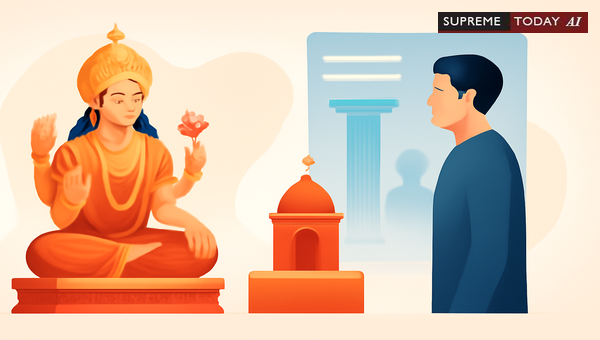
Can a Private Party Represent a Deity in Court?
In the intricate world of Hindu religious endowments, deities are often treated as with rights to property and protection under the law. But who speaks for the deity in court? Typically, the —the manager or trustee—handles this role. However, what happens when the neglects duties, acts against the deity's interests, or abandons responsibilities? This raises a critical question: whether a private party can represent a deity in legal proceedings.
This blog post delves into the legal principles governing such representation, drawing from established case law. We'll examine when private parties, such as worshippers or beneficiaries, gain standing as 'next friends' to protect the deity. Note that this is general information based on precedents and not specific legal advice—consult a qualified lawyer for your situation.
Main Legal Finding: Standing for Deities
Generally, a private party like a worshipper or beneficiary has standing to represent a deity in court as a when the is negligent, hostile to the deity's interests, or fails in duties. This allows suits for protective relief, such as recovering properties dedicated to the deity. Courts scrutinize the 's if challenged, distinguishing these from personal suits limited to . 2024 0 Supreme(Raj) 733 2024 0 Supreme(Mad) 1030
As one ruling notes: Ordinarily a alone will be entitled to bring a suit on behalf of the idol... But there may be cases where the conduct of a is in question. In certain cases, where the itself is negligent or sets up a claim hostile to the idol, it is open for a worshipper or a interested in protecting the properties of the idol to file a suit to remedy the situation. 2024 0 Supreme(Raj) 733 2024 0 Supreme(Mad) 1030
Key Points on Private Party Representation
- 's Primary Role: The holds possession, management, and suing rights for the deity's properties. Private intervention is exceptional.
- Trigger for Standing: Mismanagement, hostile claims (e.g., compromising temple lands as personal property), or abandonment.
- vs. Personal Suits: suits enable full remedies like possession recovery; personal suits by worshippers only yield declarations. If a has improperly alienated trust property a suit can be brought by any person interested for a declaration that such alienation is not binding upon the deity but no decree for recovery of possession can be made in such a suit unless the Plaintiff in the suit has the present right to the possession. 2024 0 Supreme(Raj) 733
- Court Safeguards: Courts examine the 's fitness (as a duty of justice) if contested—no prior appointment needed. 2024 0 Supreme(Raj) 733
Detailed Analysis: When and How Private Parties Step In
Ordinary Representation and Exceptions
Under Hindu law, the acts as the deity's representative. However, exceptions arise for . A worshipper or interested can sue on the deity's behalf directly: a must be permitted to sue on behalf of the idol—directly exercising the deity's right to sue. 2024 0 Supreme(Raj) 733
This upholds the deity's while curbing abuse. In public trusts like Thikana Galta Ji, worshippers or entities like Jaipur Shahar Hindu Vikas Samiti qualify under statutes (e.g., ) to challenge mismanagement. 2024 0 Supreme(Raj) 733
Suits vs. Personal Capacity
Personal suits lack the deity's suing power, restricting relief to declarations. actions invoke the deity's rights fully, ensuring robust remedies. This distinction protects endowed properties effectively.
Scrutiny and Oversight
To prevent abuse, courts probe the 's intentions: where a acts adverse to the interests of the deity, a worshipper can, as of the deity, sue on behalf of the deity itself, provided that if the 's are contested, the court must scrutinise the intentions and capabilities of the to adequately represent the deity. 2024 0 Supreme(Raj) 733
No prior court nod is required, easing access for proximate worshippers.
Insights from Related Cases
Other precedents reinforce these principles. For instance, deities have been represented by temple committees in disputes over practices like animal sacrifices, showing organized groups acting akin to next friends. SRI YELUNDANDE MUNESHWARA SWAMY DIETY, REPRESENTED BY ITS TEMPLE COMMITTEE... has taken all measures for preventing sacrifice of animals.
In another context, courts recognize deity representation in endowments: the grant was given only to the 1st defendant Diety... to show that the deity was represented.
While some cases limit private complaints in criminal matters (e.g., under , only public servants may complain 2014 0 Supreme(All) 1719), civil suits for deities follow distinct equitable rules favoring protection.
Limits appear in appeals: redundant representation fails if prior standing exists, like by Hindu public reps. 2022 0 Supreme(Ori) 546
Exceptions and Limitations
Private standing isn't absolute:- Requires default; otherwise, exclusivity holds. 2024 0 Supreme(Mad) 1030- Statutory interest alone may falter if challenged (e.g., malice). 2024 0 Supreme(Raj) 733- Remedies tailor to facts—no automatic possession without intermediate rights. 2024 0 Supreme(Raj) 733- In proceedings with authorized reps, additional prayers may be denied. 2022 0 Supreme(Ori) 546
Practical Recommendations
Litigants should:- Frame suits explicitly as , alleging fault with evidence.- Document worshipper/beneficiary status.- Anticipate challenges and seek early court validation if needed.- For public endowments, cite acts like the 1959 Act.
Conclusion: Protecting the Divine Through Justice
Private parties play a vital role as next friends, ensuring deities aren't left vulnerable to neglect. Courts balance access with safeguards, prioritizing the idol's interests. This framework, rooted in equity, sustains Hindu religious traditions.
Key Takeaways:- Worshippers can represent deities when shebaits fail.- Opt for suits for comprehensive relief.- Courts oversee rigorously.
Always seek professional advice, as outcomes depend on specific facts.
References
- 2024 0 Supreme(Raj) 733: Core on standing and scrutiny.
- 2024 0 Supreme(Mad) 1030: primacy and exceptions.
- 2022 0 Supreme(Ori) 546: Limits in appeals.
,
: Deity representation examples.












