Back
Back





2026 Supreme(Bom) 33
IN THE HIGH COURT OF JUDICATURE AT BOMBAY NAGPUR BENCH
URMILA JOSHI-PHALKE, NANDESH S. DESHPANDE, JJ.
Mahesh S/o Natthuji Devgune – Appellant
Versus
The State of Maharashtra – Respondent
Criminal Appeal Nos. 80, 110 of 2014
Decided On : 14-01-2026
For the Appellants : R.K. Tiwari, Avinash Gupta, Akash Gupta
For the Respondent: M.J. Khan
The court affirmed that all members of an unlawful assembly are liable for actions taken in support of their common objective, showcasing the interplay between direct and circumstantial evidence in establishing culpability.
Headnote:(A) IPC - Sections 143, 144, 147, 148, and 302 read with 149 - Conviction and life imprisonment for murder on grounds of unlawful assembly - Convicted for various terms of imprisonment and fines for offenses during a group assault case - Evidence includes eyewitnesses corroborating presence and identity of accused with weapons at the scene, and circumstantial evidence from postmortem reports and forensic analysis, despite alleged defective investigation - The trial court's identification of the accused affirmed. (Paras 1-4, 12-37, 72-112)
(B) Evidence - Eyewitnesses - Credibility assessed alongside circumstantial evidence - Testimony from relatives of the deceased considered trustworthy as they were not shown to have motives against the accused - Reliability of evidence reinforced by corroborating medical and forensic evidence. (Paras 6, 19, 21, 45, 70-72)
Facts of the case:
Accused persons involved in a local feud confronted the deceased, leading to a violent ambush where the deceased sustained multiple fatal injuries from sharp weapons wielded by the accused. (Paras 2-3)
Findings of Court:
The overwhelming evidence supports the trial court's conclusions regarding the culpability of the accused, supported by testimonies and forensic results. (Paras 4, 13-19)
Issues: The court addressed the legality of the FIR registration timing and whether eyewitnesses were credible despite delays in their testimonies due to intimidation - legality of evidence collection and its implications on prosecution. (Paras 4, 13-19)
Ratio Decidendi: The ruling emphasized that a clear connection exists between the accused's actions and the unlawful assembly. The court upheld that a member of an unlawful assembly is guilty of the actions taken by any member of that assembly. The evidence of eyewitnesses against the accused was deemed credible despite challenges to its integrity. (Paras 25, 43-72)
Result: Appeals dismissed; convictions upheld with penalties affirmed.
| Table of Content |
|---|
| 1. conviction and sentencing of the accused. (Para 1 , 2) |
| 2. overview of the factual background and evidence. (Para 3) |
| 3. court hears and considers both sides. (Para 4 , 11 , 12) |
| 4. arguments and evidential support from both parties. (Para 5 , 6 , 20) |
| 5. establishment of guilt beyond reasonable doubt. (Para 57 , 112) |
| 6. evaluation of witness credibility and evidence reliability. (Para 60 , 86) |
JUDGMENT :
URMILA JOSHI-PHALKE, J.
1. By these appeals, appellants (the accused persons) have challenged judgment and order dated 14.2.2014 passed by learned Additional Sessions Judge, Nagpur (learned Judge of the trial court) in Sessions Trial No.219/2011.
2. By the said judgment impugned in these appeals, the accused persons are convicted for offence punishable under Section 143 of the IPC and sentenced to undergo three months rigorous imprisonment and pay fine Rs.200/-, in default, to undergo further rigorous imprisonment for 15 days.
They are further convicted for offence punishable under Section 144 of the IPC and sentenced to undergo rigorous imprisonment for 6 months and pay fine Rs.200/-, in default, to undergo further rigorous imprisonment for 15 days.
They are also convicted for offence punishable under Section 147 of the IPC and sentenced to undergo rigorous imprisonment for 6 months and pay fine Rs.200/-, in default, to undergo further rigorous imprisonment for 15 days.
They are also convicted for offence punishable under Section 148 of the IPC and sentenced to undergo rigorous imprisonment for 6 months and pay fine Rs.300/-, in default, to undergo further rigorous imprisonment for 15 days.
They are convicted for offence punishable under Section 302 read with 149 of the IPC and sentenced to undergo life imprisonment and pay fine Rs.300/-, in default, to undergo further rigorous imprisonment for 15 days.
3. Brief facts of the prosecution case emerge from police papers, are as under:
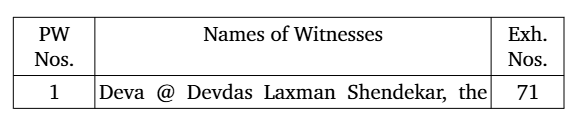
(A) The FIR came to be registered on the basis of a report lodged by Deva @ Devdas Laxman Shendekar, the brother of Dinesh (the deceased), on an allegation that the deceased was his younger brother. The accused persons are residents of the same locality and residing in front of his house and, therefore, he is acquainted to them. On 17.1.2011, there was a quarrel between brother of the deceased Guddu Laxman Shendekar and accused Rajesh Ramprasad Kuhikar on account of money. On 19.1.2011, at about 9:30 pm, when informant Deva was standing in front of his house, the accused persons came in front of his house possessing in their hands swords. Accused Devanand Chaitram Kuhikar has hit glass of window and broken it and they disclosed that they have killed his brother. After hearing the same, immediately, informant Deva rushed to the spot at Rajgire Lane. He saw the deceased lying in pool of blood who has sustained swords injuries on his abdomen, throat, fingers, and hands. Amol Kumbhalkar was also there, who has also sustained injuries and was sitting near the dead body of his brother. Amol Kumbhalkar informed him that the accused persons killed his brother by assaulting him by weapons. When he intervened in the quarrel, he was also assaulted by them on his abdomen. He immediately rushed to the police station. The police have already received the information about the incident. Thereafter, the police came along with him at the spot and prepared spot panchanama. The police have seized various articles there and, thereafter, they have obtained his report. On the basis of the said report, the police registered the crime against the accused persons.
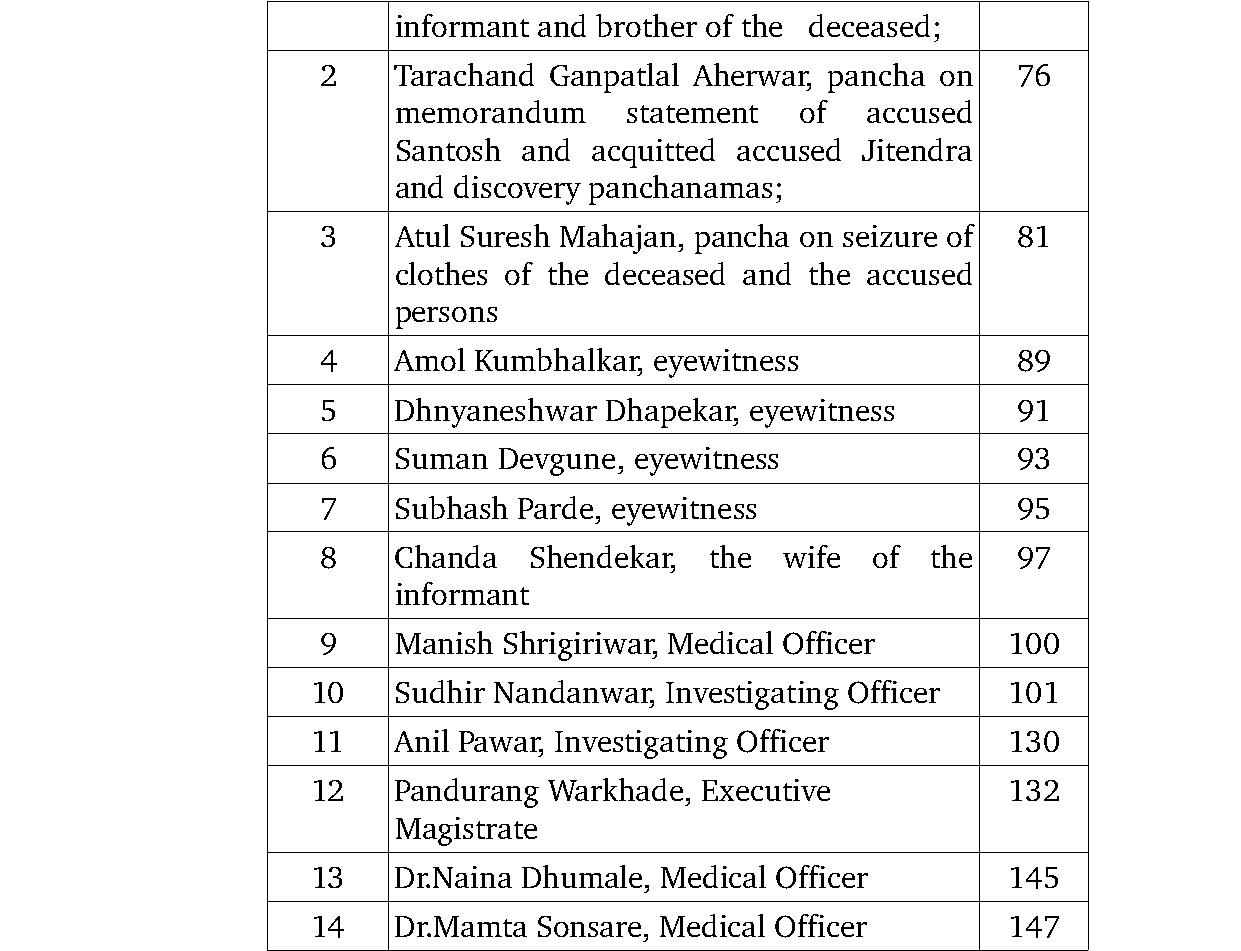
(B) After registration of the crime, wheels of investigation started rotating. During the investigation, the investigating officer has visited the alleged spot of the incident and has drawn spot panchanama. They have also drawn inquest panchanama and forwarded the dead body of the deceased for conducting postmortem examination. They have seized clothes of the deceased and the accused persons. The accuse