
 Back
Back





IN THE HIGH COURT OF JUDICATURE AT MADRAS
D. BHARATHA CHAKRAVARTHY, J.
The Management of Manali Petrochemicals Limited – Appellant
Versus
The Presiding Officer, Industrial Tribunal, Chennai – Respondent
W.P. Nos. 5850, 5851 of 2016, 2731 of 2023, W.M.P. Nos. 12155 of 2016, 10654, 10655, 35004, 35005, 32589 of 2017, 219 of 2021, 14318, 20262, 20531 of 2022, 2836 of 2023
Decided On : 25-03-2026
| Table of Content |
|---|
| 1. factual background of the case (Para 2) |
| 2. arguments from trade unions regarding service conditions (Para 3) |
| 3. counter-arguments from management (Para 4) |
| 4. management's assertions pertaining to industrial peace and financial capacity (Para 6) |
| 5. workmen's counter to management's arguments (Para 7) |
| 6. legal reasoning about individual settlements and their applicability (Para 9) |
| 7. court's analysis on wage revision authority (Para 10) |
| 8. court's reasoning on pension scheme (Para 11) |
| 9. discussion regarding 12(3) settlements (Para 12) |
| 10. final decision on the case outcomes (Para 13) |
ORDER :
1. These three Writ Petitions are connected and, as such, are taken up and disposed of by this common order.
A. The Factual Matrix:
2. The factual background in which these Writ Petitions arise is that the Government of India set up a petroleum refinery unit, currently known as ‘Chennai Petrochemicals Limited’ at Manali. As a result, several private persons also established related units in and around Manali to make use of available chemicals and by-products and to benefit from Manali's proximity to the port. The petitioner management, namely Manali Petrochemicals Limited, was one such unit started in 1990, dealing with products such as Propylene Oxide, Propylene Glycol, and Polyol.
2.1. In the same year, another company named UB Petroproducts Limited was also established, which competed with the petitioner – management. In 1997, it was stated that UB Petroproducts Limited was taken over by Southern Petrochemical Industries Corporation Limited and was renamed SPIC Organics Limited (shortened as ‘SPIC’). It is important to note that SPIC is the major shareholder of the petitioner - management, namely Manali Petrochemicals Limited, which is part of the SPIC group of companies.
2.2. In the year 2000, the second company mentioned above, namely SPIC, was also merged with the petitioner-management by an order of this Court in C.P.No.581 of 2000 dated 20.12.2000. Thereafter, the original Manali Petrochemicals Limited was referred to as Plant -1, and the merged company’s unit was called Plant -2. Under these circumstances, as was the regular practice, a wage revision was effected through a settlement under Section 12 (3) of the Industrial Disputes Act, 1947 (in short ‘the Act’), which was entered into on 09.09.1999, covering the period of four years from 01.01.1997 to 31.12.2000.
2.3. Since a merger also took place in the same year, it appears that the workmen and management did not enter into any Section 12 (3) settlement for the wage revision. Manali Petrochemicals Employees Union submitted a charter of demands, which included a wage revision for the period from 01.01.2001 to 31.12.2004 on 01.04.2000. On 13.12.2002, the management proposed to alter the service conditions by issuing a notice under Section 9A of the Act, concerning both Plant -1 and Plant -2, which included reducing the retirement age from 60 to 58 years, reducing casual leave from 10 to 7 days, sick leave from 15 to 7 days, and ordinary leave from 24 to 22 days. Another notice regarding Plant -2 was issued. It was proposed to alter the pension scheme, while in Plant -1, there was a pension scheme operated by the trust established under the scheme known as ‘Defined Pension Scheme’, under which the pension was calculated as follows:-
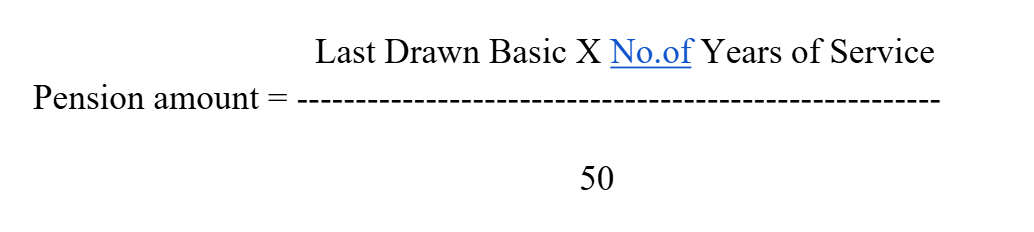
2.4. By the 9A notice, it was decided to change the above ‘Defined Pension Scheme’ to a ‘Defined Contribution Scheme’, under which 12% of basic pay will be contributed to LIC, and a pension will be paid based on the scheme. Similarly, with reference to Plant–2, which was already under a defined contribution scheme where 10% of Basic Pay plus Dearness Allowance was Contributed, it was also proposed to make this contribution 12% of basic pay alone.
2.5. On 03.01.2003, the union objected to the above-mentioned change in service conditions, and on 18.12.2003, a dispute was raised. Similarly, the trade unions submitted a charter of demands, including a pay
The court affirmed existing employee benefits under the Industrial Disputes Act, maintaining retirement age at 60 and rejecting unjustified pension scheme modifications by management.

The Tribunal must conduct a thorough evidentiary analysis to justify decisions concerning wage revisions and additional allowances under the Industrial Disputes Act, ensuring all material evidence is....


The main legal point established in the judgment is that the retirement age can be increased based on factors such as the nature of work, financial aspects, global trends, and judicial opinion, and e....

Wage adjudication must balance the employer's financial capacity and fair compensation for workmen, ensuring accurate evidence of financial claims is presented.


Wage fixation must adhere strictly to statutory definitions and principles, especially concerning minimum wage and workman status, or risk being deemed invalid.

The principle of 'equal work for equal pay' was upheld, with the court modifying the effective date of wage benefits to 01.01.2012.



An indispensable Tool for Legal Professionals, Endorsed by Various High Court and Judicial Officers
Please visit our Training & Support
Center or Contact Us for assistance

Scan Me!
India’s Legal research and Law Firm App, Download now!


For Daily Legal Updates, Join us on :



 Back to top


