
 Back
Back





2025 SHC 102
THE HIGH COURT OF SIKKIM : GANGTOK
Meenakshi Madan Rai, J.
Mani Kumar Rai and Others – Petitioners
Versus
State of Sikkim and Others – Respondent
WP(C) No.03 of 2021
Decided On : 29-08-2025
Advocates Appeared :
For the Petitioner : Mr. A. Moulik, Senior Advocate with Mr. Ranjit Prasad and Ms. Neha Kumari Gupta, Advocates
For the Respondent : Mr. Zangpo Sherpa, Additional Advocate General with Mr. Sujan Sunwar, Assistant Government
| Table of Content |
|---|
| 1. dispute over promotional avenues and classification differences in government service. (Para 1 , 2 , 3) |
| 2. applicability of specific service-related rules and mandated educational requirements for promotion. (Para 4 , 5 , 6) |
| 3. validity of educational qualifications for job classification and adequacy of acp schemes as stagnation relief. (Para 7 , 8) |
| 4. final determination that service rules are binding and the petition lacks merit. (Para 9 , 10 , 11) |
JUDGMENT :
Meenakshi Madan Rai, J.
1. The Petitioners were employed in the Respondent No.2, Department, of the Respondent No.1 (State of Sikkim), having been appointed variously through the years 1985 to 2012 as 'Mali(s)'. They are aggrieved by the fact that, although they have completed about eight to thirty-five years of service, in the same post (depending on their date of appointment), no promotional avenues are afforded to them whatsoever, while at the same time, persons in the posts of Field Assistants, which are posts equivalent to that of 'Mali', held by the Petitioners, and discharging similar duties have been promoted as Lower Division Clerks (LDC). They inter alia seek the following reliefs;
(i) Rule upon the Respondents and each of them to show-cause as to why the Petitioners shall not be promoted either as Village Level Workers (VLW) or as Lower Division Clerk (LDC) with retrospective effect from the time their counterparts/other 'Malis'/Field Assistants were promoted;
(ii) A writ or order or direction that the posts of Malis be treated as a member of the 1984 Service Rules and promote the Petitioners accordingly;
(iii) A writ or order or direction that the post of Field Assistant and 'Mali' are equivalent post and therefore to order redesignation of the post of 'Mali' as Field Assistant and that, the Petitioners therefore be made members of the relevant service rules for promotion as VLWs;
(iv) An alternative prayer has also been sought for viz., a writ or order or direction that the Petitioners holding the post of 'Malis' be promoted as Field Assistants with retrospective effect from the time they were found eligible for promotion and thereafter to promote them as VLW w.e.f the date their Juniors in the rank of Field Assistant were promoted as VLW;
(v) A writ or order or direction that the posts held by the Petitioners being equivalent to the post of Field Assistants be promoted as VLW with all service benefits;
(vi) A writ or order or direction that the post of 'Mali' be incorporated as a cadre post under the 2001 Service Rules and promotional avenue may be ordered to be provided in the Service Rules for the persons holding the post of 'Mali';
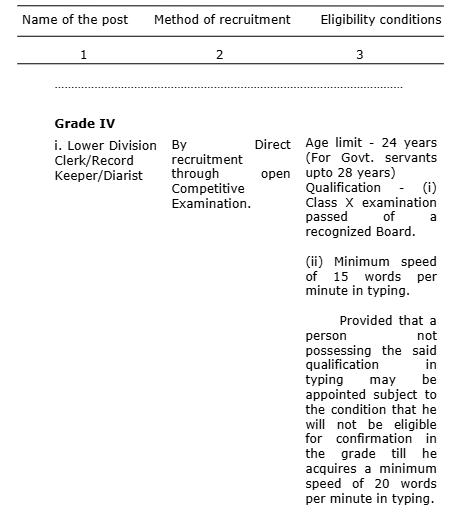
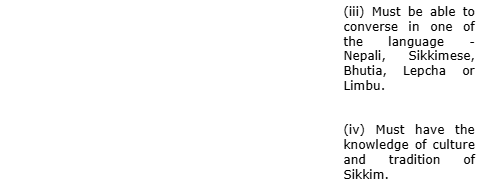
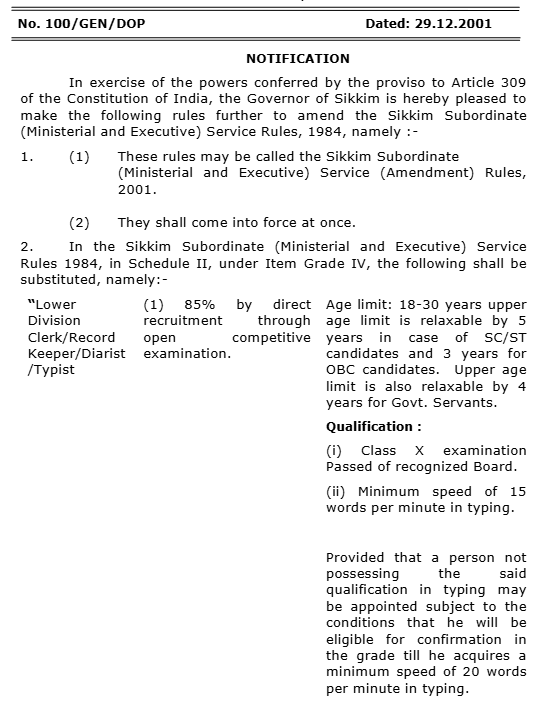
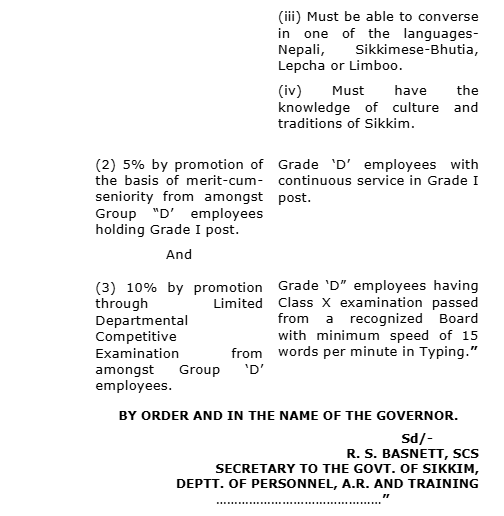
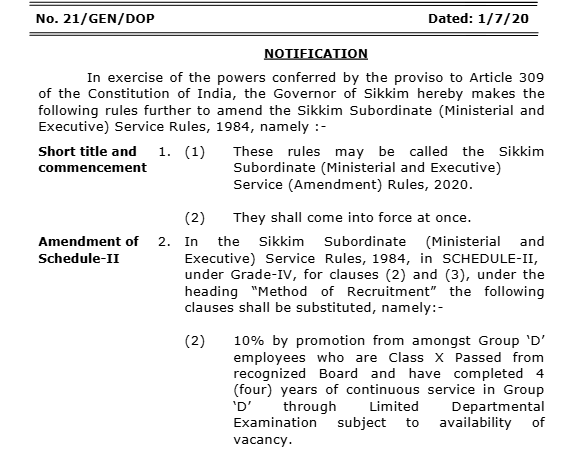
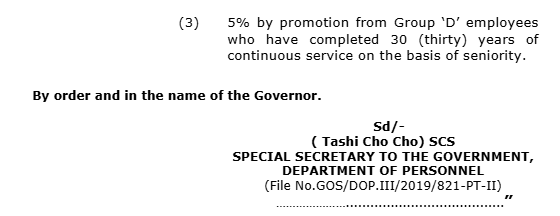
(vii) A writ or order or direction that Rule 2(2) and Rule 2(3) of the Sikkim Sub-ordinate (Ministerial and Executive) Service (Amendment) Rules, 2020, requiring Class X pass qualification and thirty years continuous service for Group "D" employee for promotion is bad and hence to set aside the retrospective provision from Rule 2(2) and Rule 2(3) of Amended Rules.
2. The Petitioners case is that, during the year 1976, employees working under the Agriculture and Horticulture Departments were governed by different Service Rules. Now, both departments fall under the ambit of Sikkim State Agriculture Service Rules, 1994 (hereinafter, "Agriculture Service Rules, 1994"), which does not include the post of 'Mali', despite 'Malis' being employed in the Horticulture Department. Similarly, the Sikkim State Subordinate Agriculture Service Rules, 2001 (hereinafter, "Subordinate Agriculture Service Rules, 2001") has left out the post of 'Mali', but includes the post of Village Level Workers (VLW's). The Sikkim Subordinate (Ministerial and Executive) Service Rules, 1984 (hereinafter, the "Ministerial Service Rules, 1984") amended in 2001 and 2020, governs all Group "C" and "D", employees of all departments of the Respondent No.1, including 'Malis', who fall in Group D category of Government employees. The salaries of both 'Malis' and
AI
Classification based on educational qualifications for promotion is a valid exercise of administrative authority that does not violate constitutional equality protections. Financial career progressio....

Promotions within public service must adhere to established criteria to uphold equality under Articles 14 and 16 of the Constitution, prohibiting arbitrary decisions that favor select individuals.

(1) Classification between persons must not produce artificial inequalities. The classification must be founded on a reasonable basis and must bear nexus to the object and purpose sought to be achiev....

Fixing eligibility for a particular post or even for admission to a course falls within exclusive domain of legislature/executive and cannot be subject matter of judicial review.


when a new post is created, the concept of Rules obtaining when the vacancies arose is inappiicable as what is created is a new post on account of re-structuring of the cadre.


The court established that the right to promotion is determined by the rules in force at the time of consideration, and the Service Rules of 2020 do not permit promotion from Grade-IV to Junior Assis....

Promotion to Government service must prioritize merit and ability over seniority; no legal right to promotion exists.



An indispensable Tool for Legal Professionals, Endorsed by Various High Court and Judicial Officers
Please visit our Training & Support
Center or Contact Us for assistance

Scan Me!
India’s Legal research and Law Firm App, Download now!


For Daily Legal Updates, Join us on :



 Back to top


